Velora Health is a small team building iOS apps for chronic conditions that are too specific for the big trackers and too small for the big companies. One condition per app, so it can ask the right questions instead of generic ones. Nothing about your health leaves your phone, and every app ends in a report your doctor can read in under a minute.
Is there a condition nobody has built for? If you or the community you are part of needs an app that does not exist yet, tell us and we will look at it seriously. If you want one built for you, we take that work too.
"I spent 3 years thinking stress was my trigger. Turns out it was red wine - every single time."
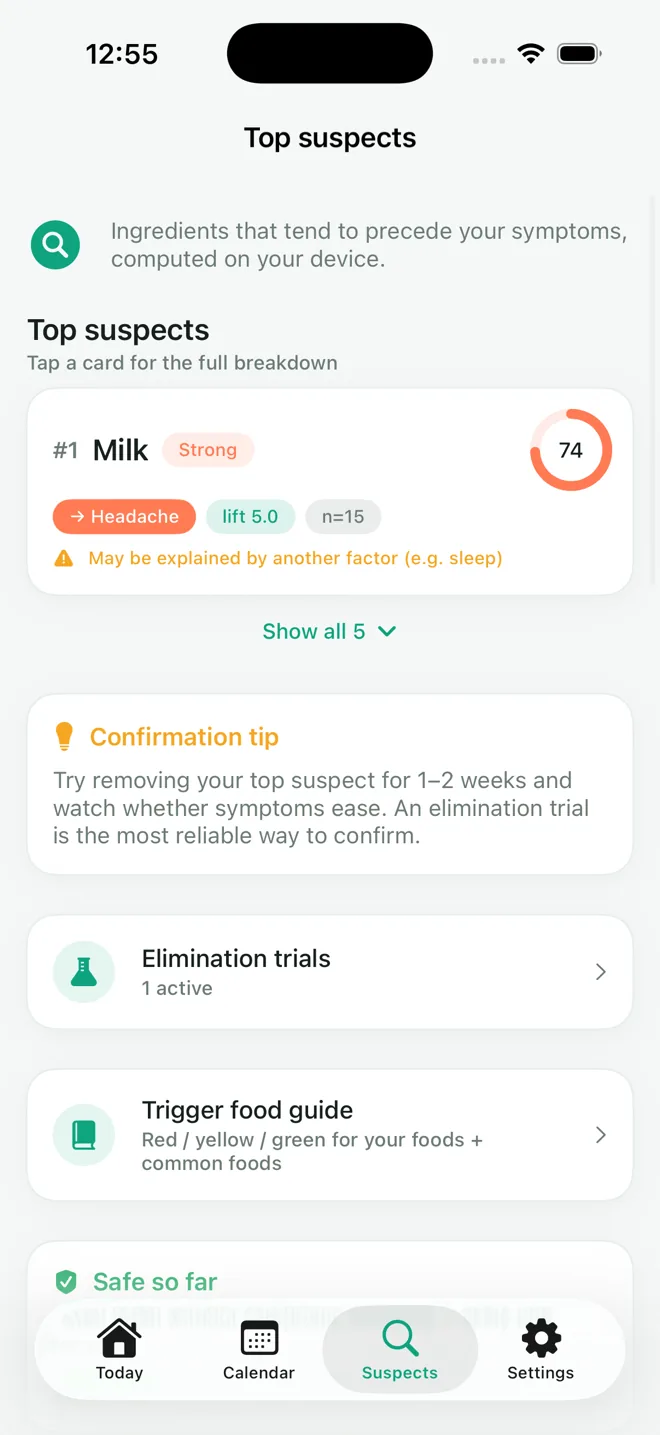
- Sarah, 34, Rosacea · using Flarewell for 6 weeksVelora is a food intolerance tracker for iPhone. Photograph a meal and its AI breaks it into ingredients, including the ones you would never think to write down, then ranks your Top Suspects: the ingredients that keep turning up before your bloating, headaches or reflux. Correlation, not a diagnosis, but it is a list worth testing.

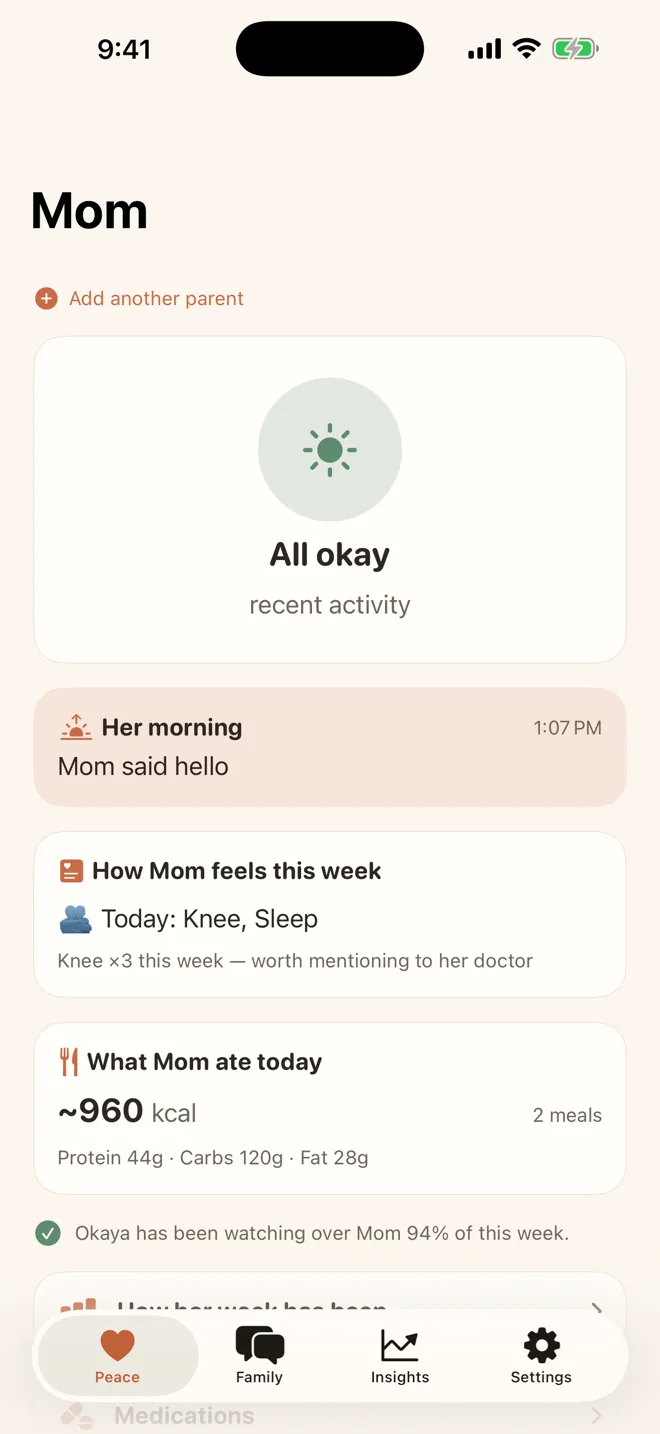
Okaya is a gentle check-in app for elderly parents and the people who love them. One tap from her each morning, a quiet card on your phone, and a Silence Alarm that notices when her phone goes still - free, forever, on every plan.

Focused apps for the chronic conditions you live with - food and gut, pain and autoimmune flares, and women's health. Private by design, one condition per app.
When eating feels like a gamble: find the foods behind your symptoms, or manage a digestive condition meal by meal.
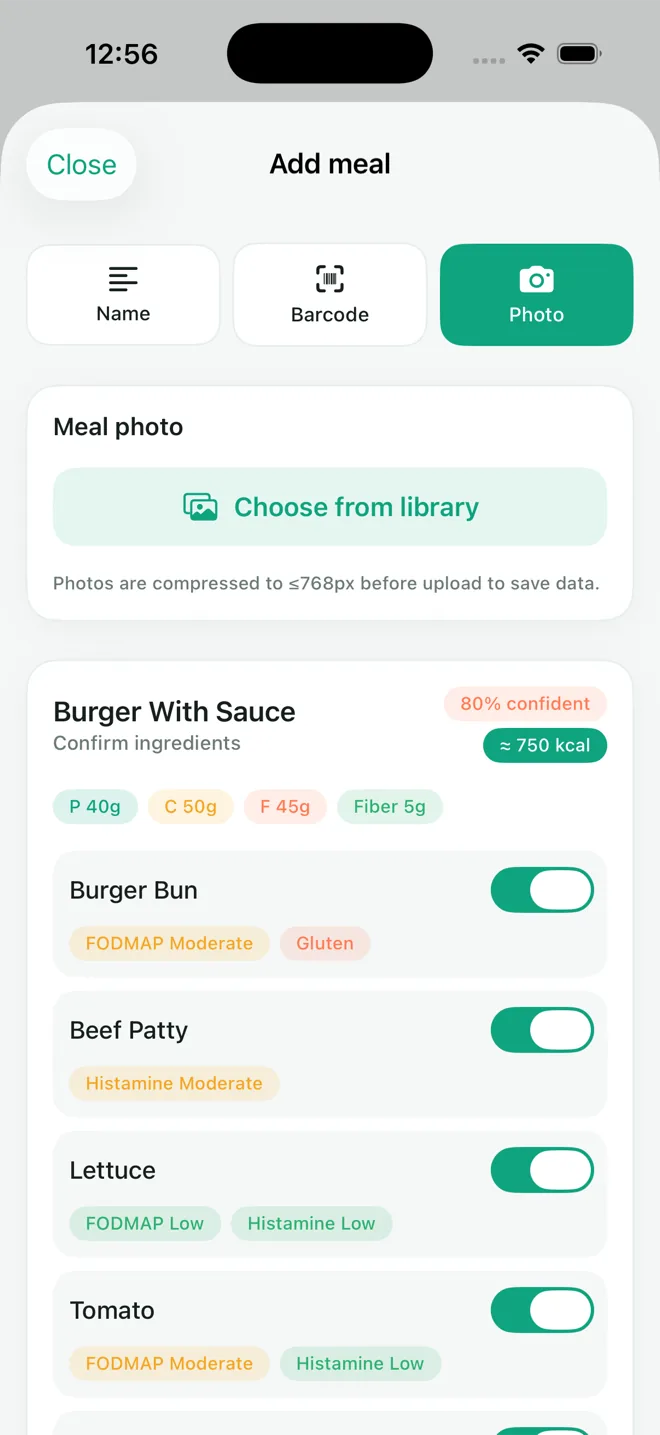
Snap a photo of your meal and Velora's AI finds the ingredients - even hidden ones - then statistics reveal your "Top Suspects": the foods most often linked to your bloating, headaches or reflux. Correlation, not causation: real suspects to investigate, not guesswork.

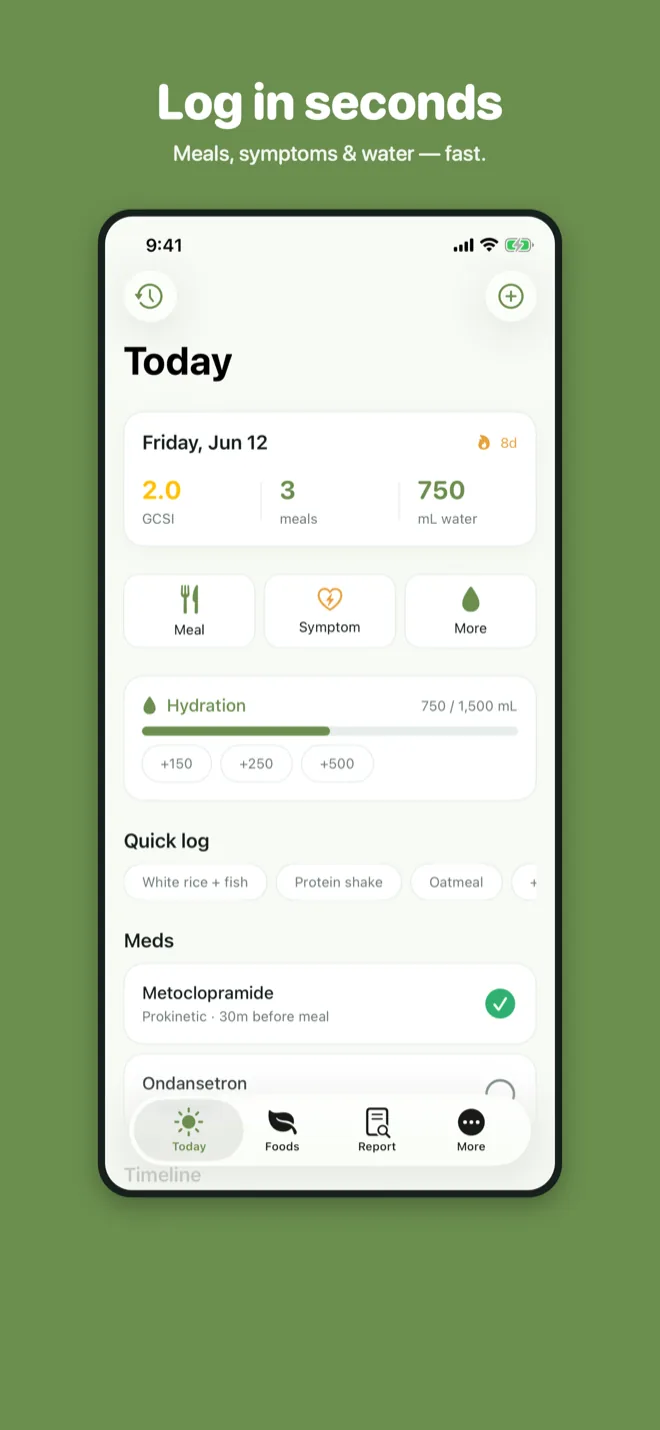
Log meals by texture - liquid, soft, solid - and track your GCSI symptoms to learn what your stomach actually tolerates. Each month, Mello turns your log into a Tolerance Report you can bring to your GI specialist.

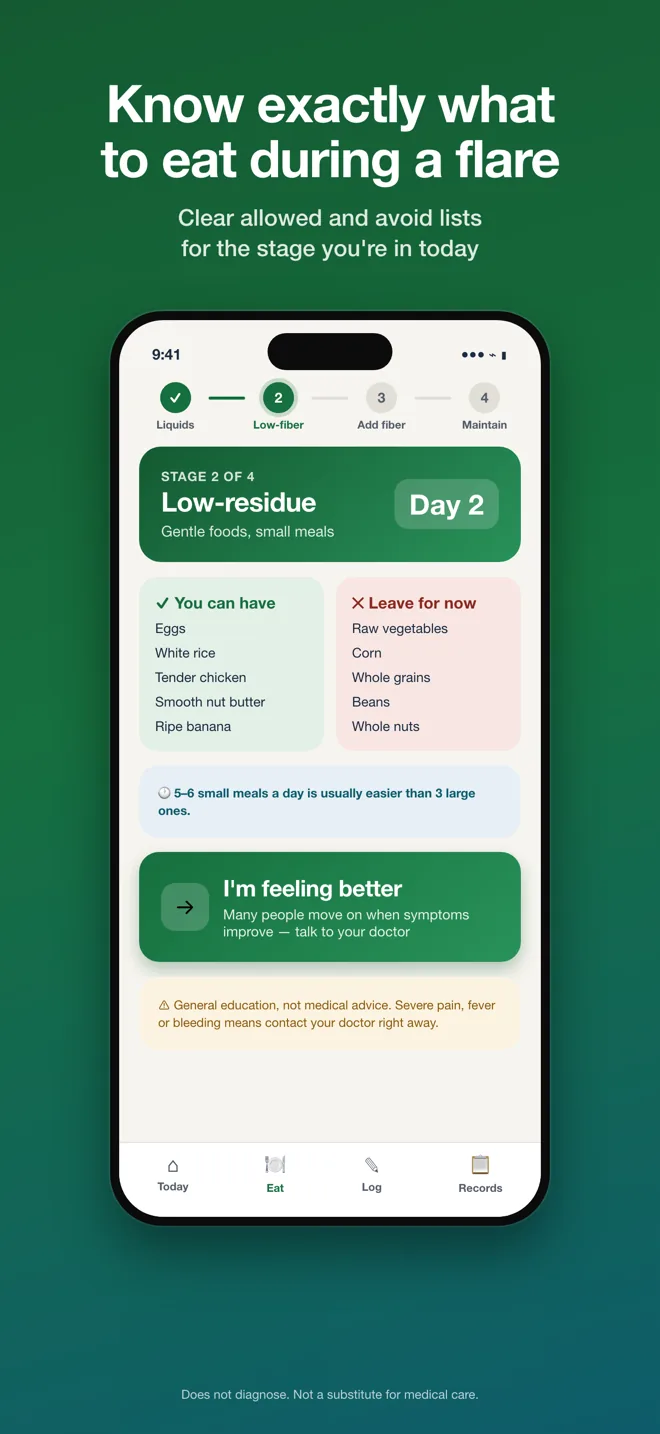
Mid-flare, the scariest question is the simplest one. A guided route through clear liquids, low-residue and back to fiber, with 568 foods answered for the stage you are in today. Your first flare is free.

For conditions that flare and fade: track episodes, find your triggers, and walk into every specialist appointment with evidence.
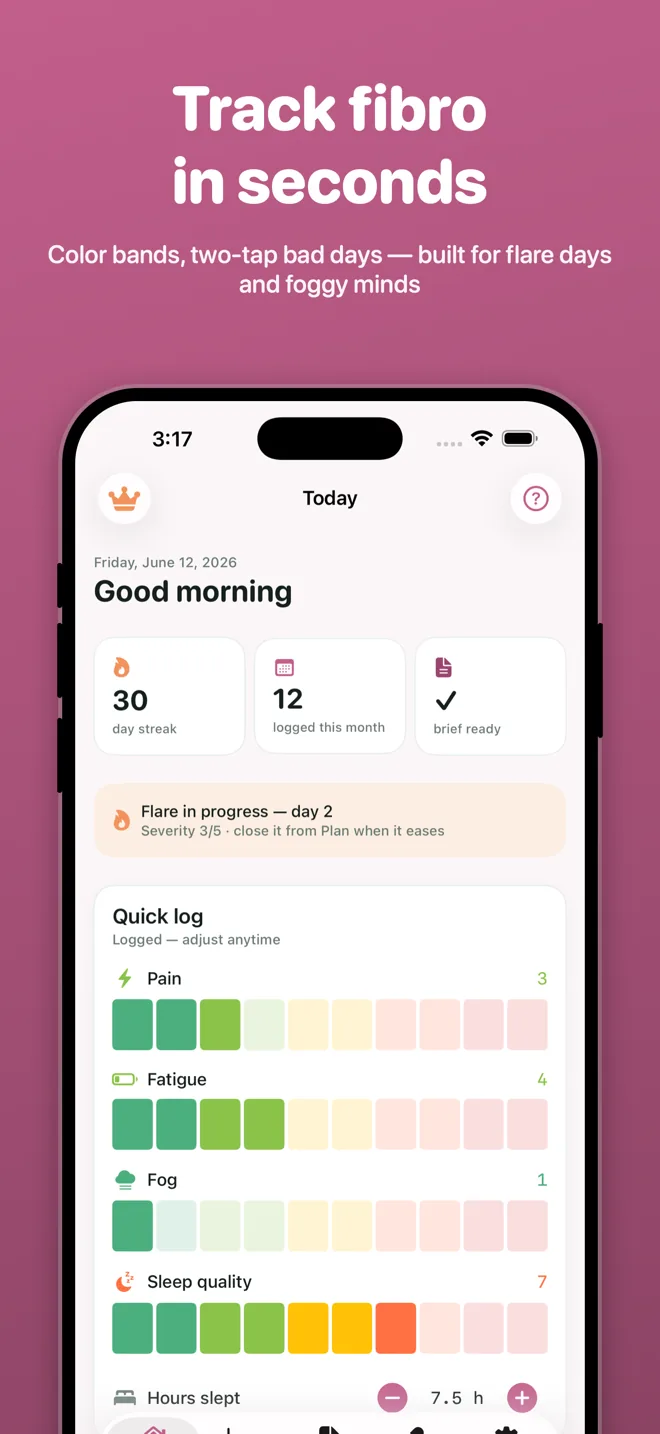
Built for low-energy days: log pain and fatigue in under 30 seconds, one-handed. Clinical scales (FIQR, WPI/SSS) plus weather-pressure context, and a monthly AI Visit Brief written for your doctor.

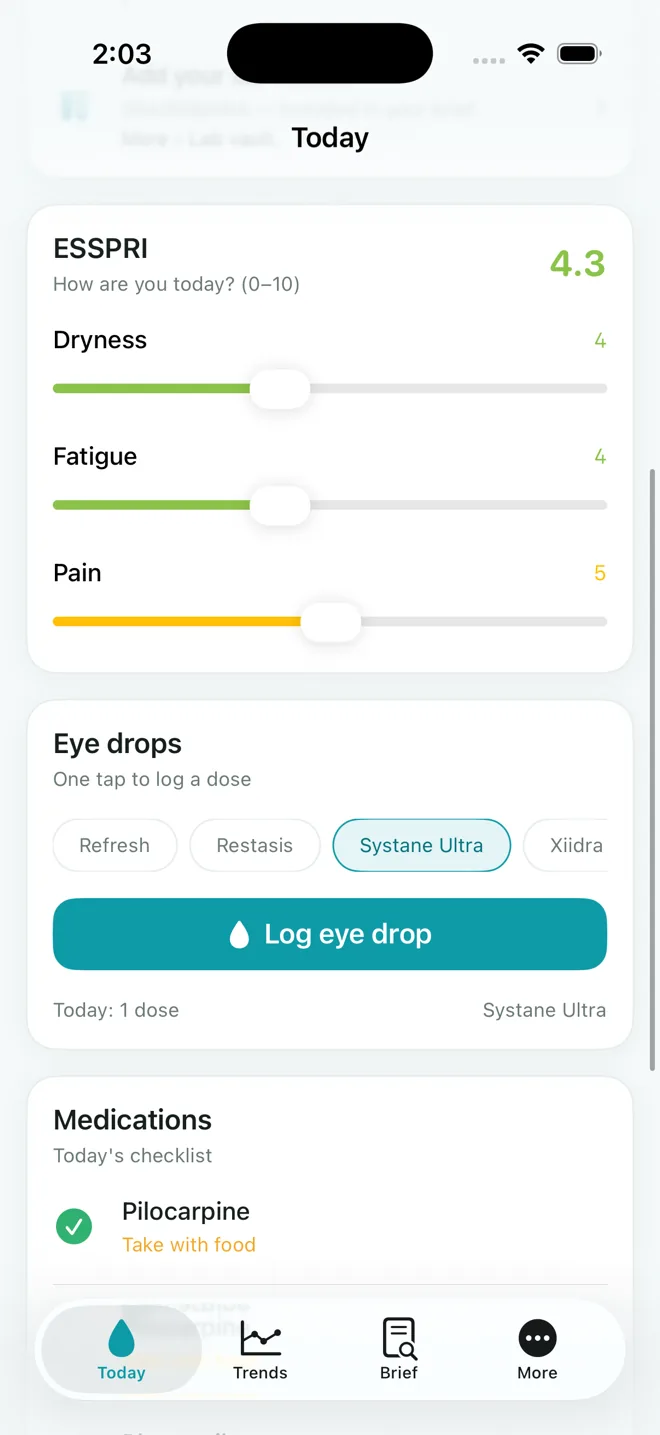
Log dryness, fatigue and pain on the validated ESSPRI scale in 10 seconds, find which eye drops actually relieve you, and generate an AI Rheumatology Visit Brief each month to bring to your appointment.

The only Raynaud's app on iOS. Set your personal cold threshold and get a warning before temperatures drop. Log episodes by finger or toe, track how long they last, and see your seasonal patterns.
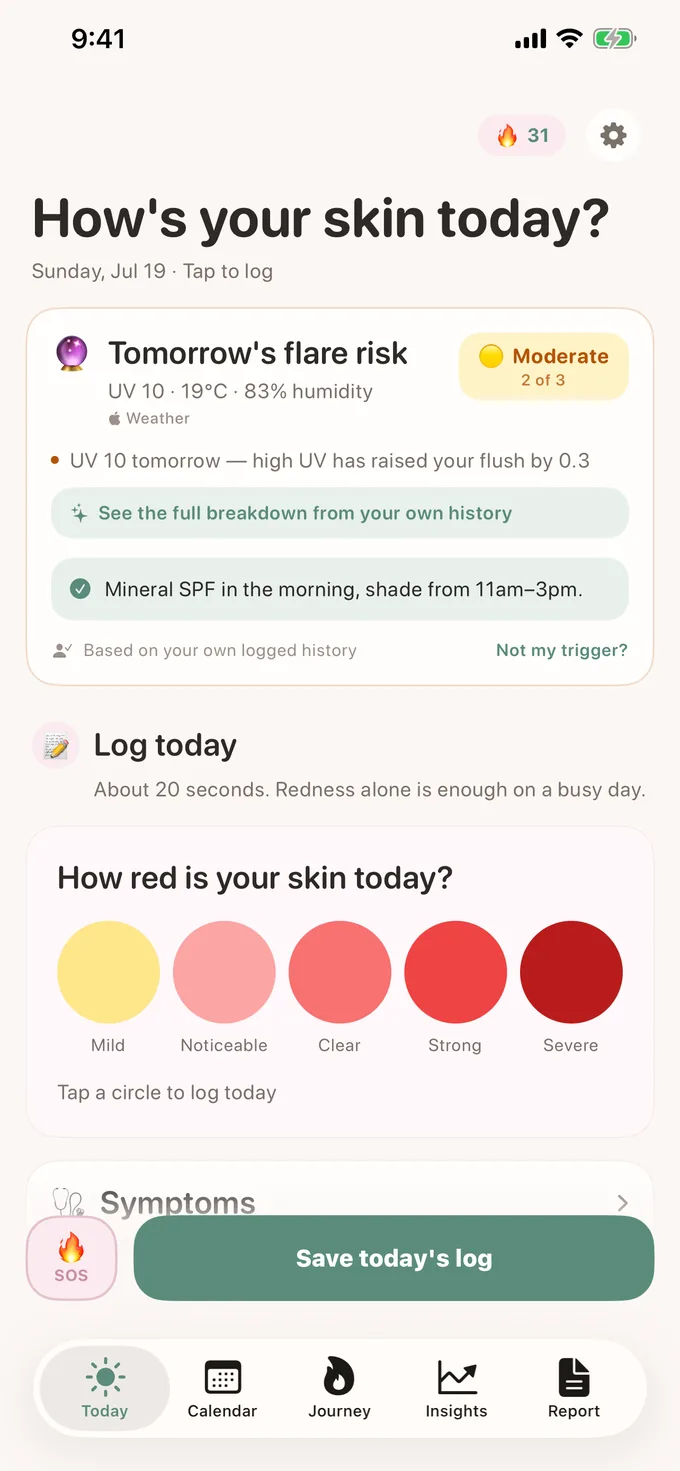
Log your flush level, triggers, skincare, and photos. Weather and UV index auto-fetch so you can find the environmental patterns that drive your worst flare-ups - without thinking about it.

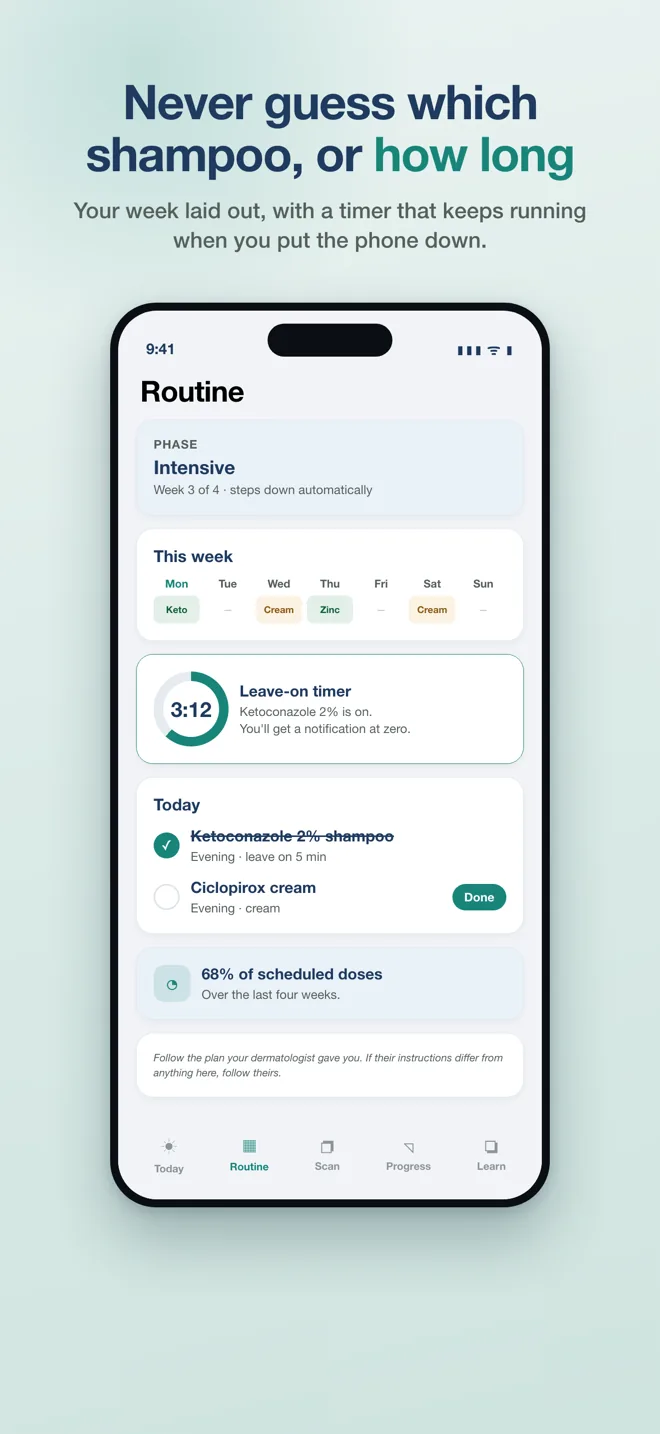
Three shampoos, three schedules, and every new product a gamble. SebDerm lays your antifungal rotation across the week with a leave-on timer, scans ingredient lists for Malassezia triggers, and counts steroid days on facial skin.

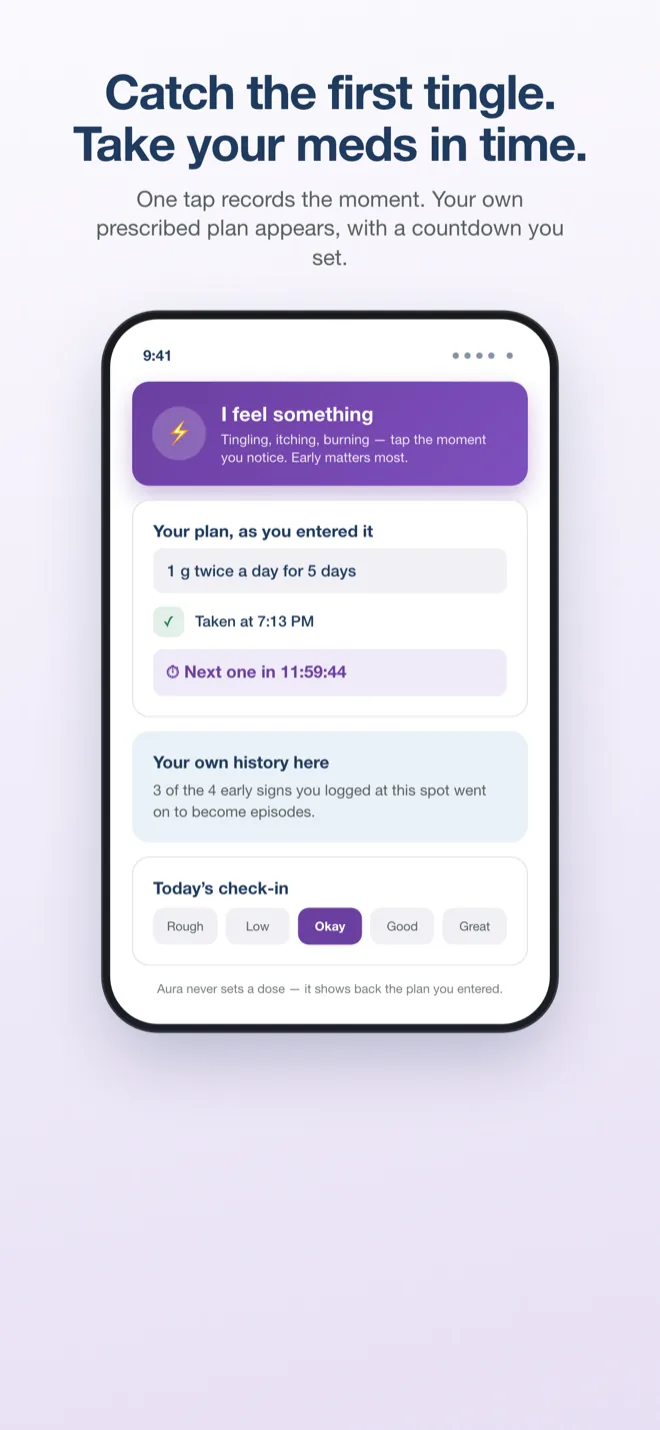
Antivirals work best in the first hours of a tingle. One tap records the moment and shows back the plan your own clinician gave you. No account, no server, Face ID and a disguised icon.

From PCOS to menopause to pelvic floor strength: apps built around the conditions medicine too often waves away.
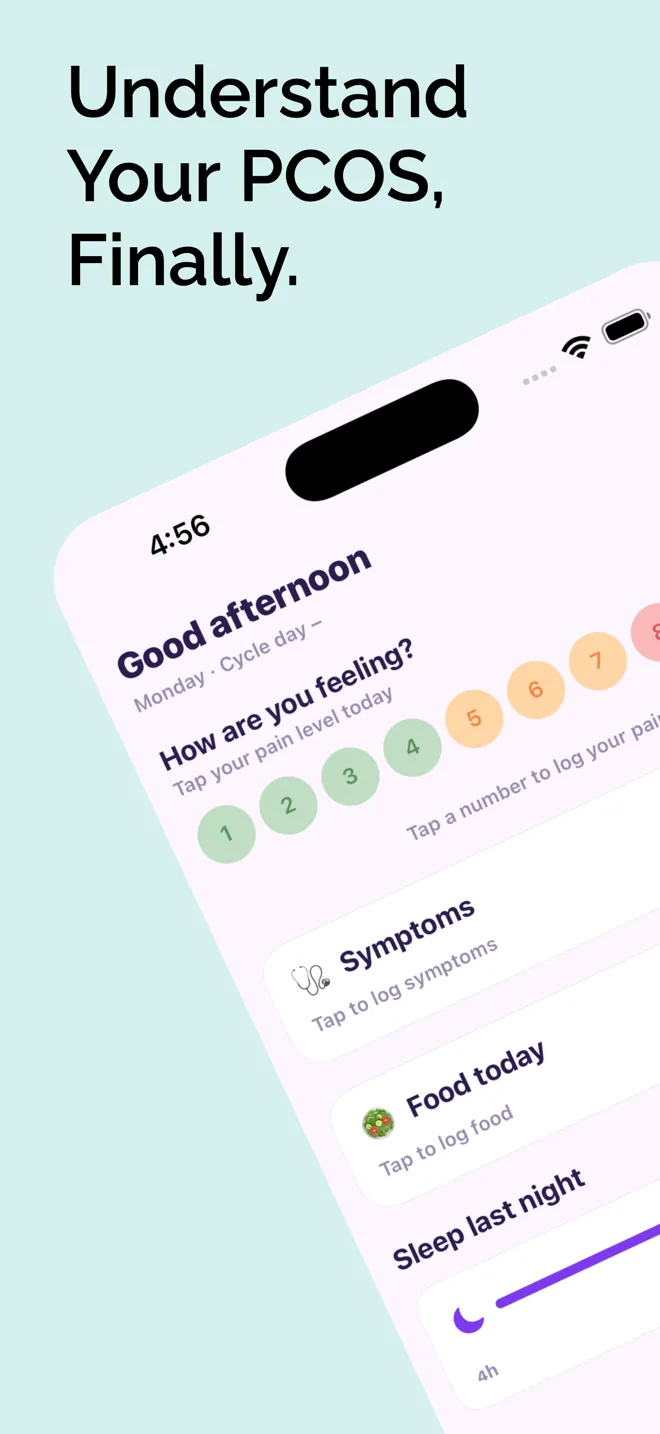
Track your symptoms, food, sleep, and cycle. See which foods spike your pain. Generate a PDF for your gynecologist that shows your full pattern - not just what you can remember.

Track hot flashes, mood, sleep and 25+ menopause symptoms. Aster reads your Apple Health metrics on-device and finds what's driving your worst days - then turns it into a report for your doctor.
Guided pelvic floor training for postpartum recovery, post-surgery, bladder control and prevention. A quick assessment picks your program; audio coaching guides every session. Log symptoms as you go.
The only IC tracker with the official IC food list built in. Quick-tap bathroom frequency from the lock screen. Track fluid intake. Know which foods are safe - and share the pattern with your urologist.
You lost the weight and your legs did not change. Willow measures six points per leg, charts your weight against your own circumferences, and turns months of compression and therapy into a doctor-ready PDF with the documentation insurers ask for.
You were handed a printed food list and told to watch your diet. BladderCalm sorts foods into bladder friendly, try it and caution, logs a flare in ten seconds, and after a few weeks ranks the foods that actually came before your own flares.
Drops, masks, supplements and in-office procedures, tried several at once and never separated. TearLog tracks your OSDI score weekly, records every treatment with its start date, and tells you plainly which ones moved the number.
You left hospital with one sentence about eating low fat. GallWise gives you a budget for the meal in front of you, a week-by-week reintroduction plan, and a safe foods list that builds itself from how you actually felt after eating.
Because the patient you worry about most might sleep at the foot of your bed. The same privacy-first care, built for dogs and cats with chronic conditions.
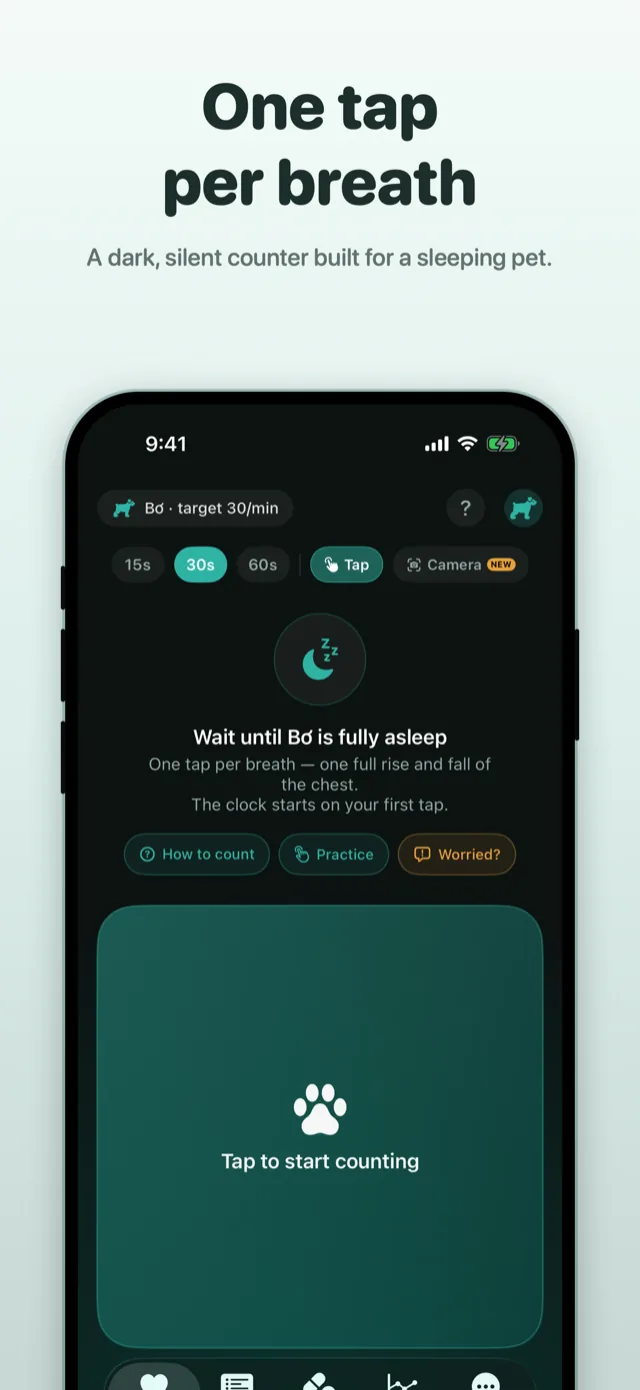
When your vet says "count their breaths while they sleep," PawBeat makes it effortless: a silent one-handed counter that works in the dark, alerts when readings cross the threshold your vet set, plus medication tracking and a clinical report for your next visit.

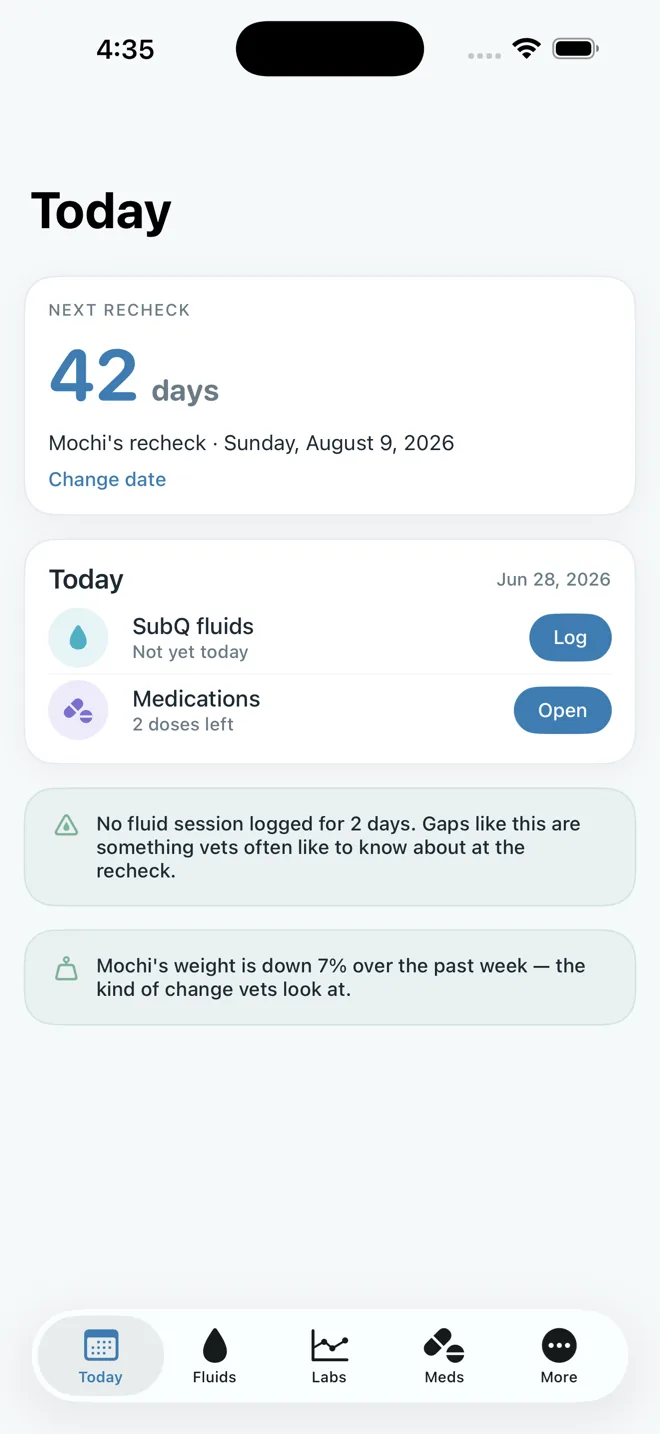
A CKD diagnosis is overwhelming. RenalPaw makes daily subcutaneous fluids effortless, charts labs against IRIS stages, keeps every caregiver in sync, and turns it all into a recheck brief for your vet.

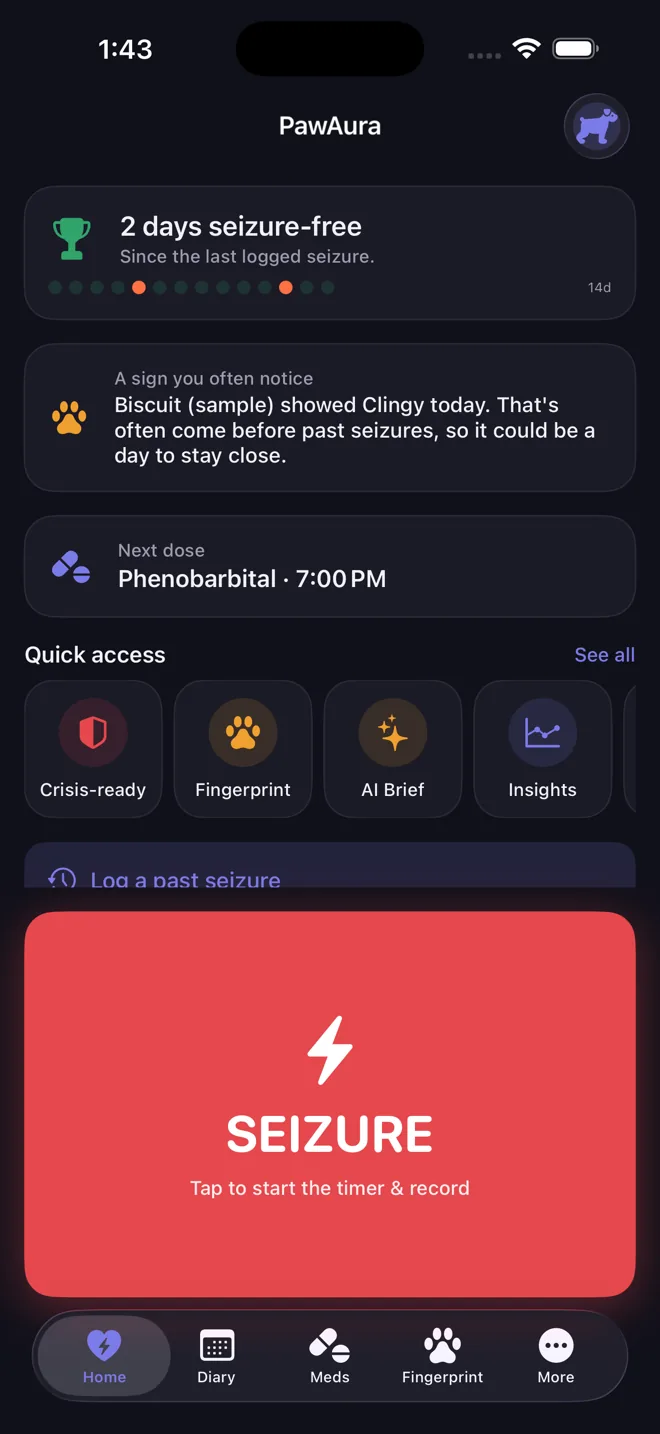
Every other app just logs the seizure that already happened. PawAura prepares your whole family for the next one: a one-tap timer with video, a crisis plan, your dog's own pre-seizure pattern from your logs, and an AI vet brief.

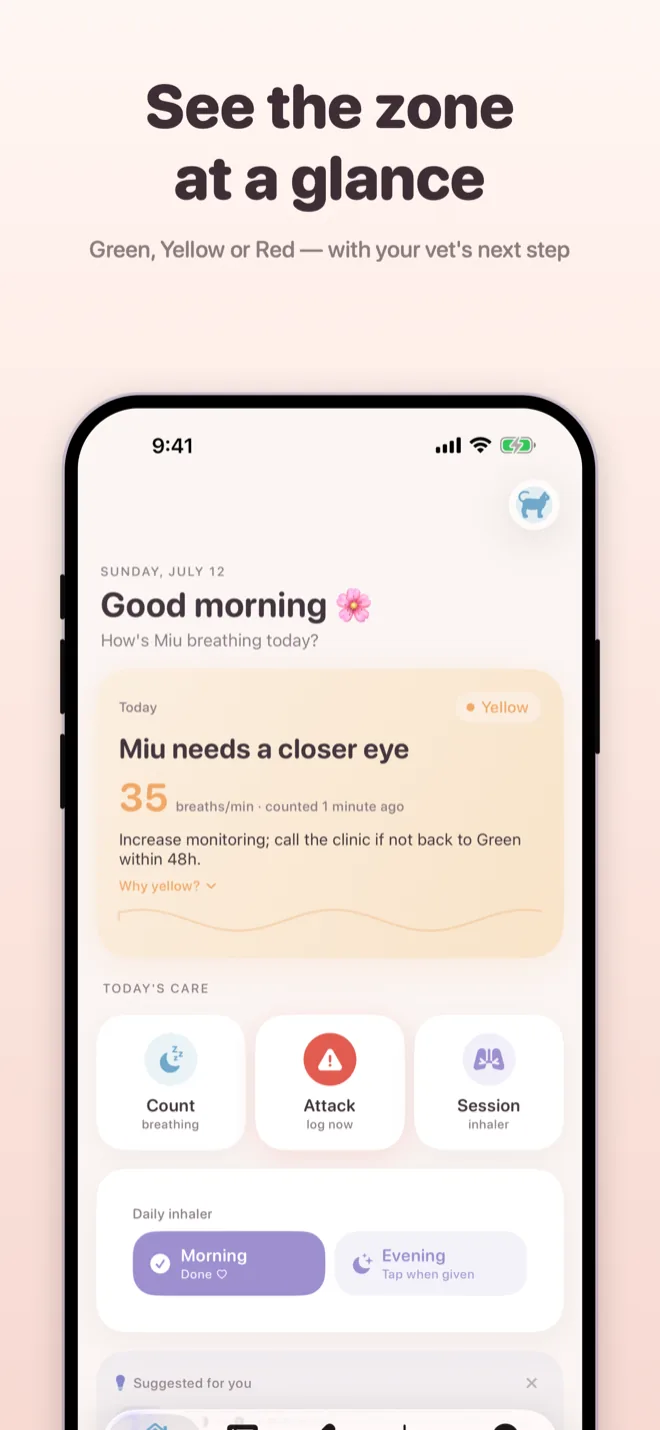
Cat asthma is a daily treatment, not just monitoring. PawBreeze makes the AeroKat inhaler routine easy, maps breathing rate to green/yellow/red zones, and listens on-device for cough-like sounds through the night - audio never leaves your phone.

You walk in, try to recall three months of symptoms from memory, and walk out with the same advice as last time. It's not their fault - they just don't have your data.
Good days and bad days feel random. But they usually aren't - there's a pattern buried in your food, weather, sleep, and stress. You just need the right lens to see it.
We don't run servers that collect your health data - no accounts, no tracking, no ads. Your symptoms live on your phone (and, for a couple of apps, your own private iCloud). Only you can see them.
"I always blamed stress for my flare-ups. The app showed me it was actually sugar - specifically within 2 days of eating it."
After 6 weeks, Maya brought her Luna report to her gynecologist. Her doctor adjusted her treatment plan based on the trigger correlation data - something she'd never been able to show before.
"The weather correlation blew my mind. On days when UV index was above 6, I flushed 80% of the time - even indoors."
Sarah used Flarewell's automatic UV tracking to figure out that her "random" flare-ups were almost always on high-UV days. She now checks the UV forecast every morning like a weather report.
Most of our apps generate a clean, structured PDF you can share with your specialist. Trigger patterns, symptom trends, medication notes - all in one page your doctor can read in 60 seconds.
Tap your symptoms and severity. Select what you ate. Weather and UV auto-fill in the background. That's it - no journaling, no essays.
After a few weeks, the app shows you correlations you'd never notice manually. "Your worst days happen 2 days after eating X." Real, personal, specific.
Export a structured PDF before your appointment. Your specialist sees your full pattern at a glance - not just whatever you happen to remember in the waiting room.
Putting AI in a health app is easy and mostly pointless. We use it in three places where it removes real work, and there is a fourth place we deliberately keep it out of.
Point the camera at a plate and Velora breaks the meal into ingredients, including the ones nobody thinks to write down. The photo is compressed on your phone, analysed, and discarded: what is kept is the ingredient list, not the picture.
Nobody reads a spreadsheet of 90 days of symptoms, least of all in a 15 minute appointment. Each of these apps produces a monthly brief that compresses everything you recorded into a single page written to be read in under a minute.
Where the work can be done on the device, it is. Trigger analysis in these apps runs locally, which means no upload, no account, and nothing to breach. Where an app does send something, its privacy policy names exactly what: Willow, for instance, sends aggregated numbers with no name, no raw logs and no photos.
And the one thing we will not point it at: you. Nothing in any of these apps diagnoses anything, estimates how likely you are to have a condition, or tells you what your results mean. The AI describes what you recorded and hands it to you in a form your clinician can use. Deciding what is wrong is their job, and we are not going to let a language model have a go at it first.
The long version, including a table of what leaves your phone in each app and the three questions worth asking of any health app that says it uses AI: how we use AI in health apps.
We know chronic conditions are hard to explain - even to the people who are supposed to help. Our apps give you the evidence to have better conversations with your doctors.
No accounts, no tracking, no servers of ours storing your symptoms. Your data lives on your device - and only syncs to your own private iCloud where it applies.
We don't build generic "health trackers." Each app is built exclusively for one condition - with the right triggers, the right language, the right data points.
Weather, UV index, Apple Health metrics - pulled in automatically where it helps. Environmental triggers are real. We log them so you don't have to.
Not a screenshot of a chart. A structured PDF with your pattern summary, top triggers, and symptom timeline - designed to be read in under a minute.
Plain-English answers to the questions people arrive with, written before any app is mentioned.
Every app on this page is built for a single condition, the kind people otherwise manage with a notebook, a photocopied sheet or a general tracker that asks the wrong questions. If you know of another one, or you want something built, this is the way to reach us.
Tell us what you or your community are managing without a decent app, and what the existing ones get wrong. We read every one of these.
Suggest a condition ->We take on commissioned builds in this space: patient tools, condition trackers, companion apps. Tell us roughly what you have in mind and we will tell you honestly whether we are the right people.
Start a conversation ->If you look after a group of patients living with the same condition, there is usually something worth building together. We are open to partnerships and to shaping an existing app around what your people actually need.
Talk about a partnership ->A bug, a wrong food in a database, a screen that does not make sense. Reports from people who actually live with the condition are the fastest way any of this gets better.
Report it ->How we decide which condition to build for sets out the four questions we ask before starting an app, and what we refuse to build.
Straight about what we do not do: we build wellness and self-management apps, not
regulated medical devices, and nothing we make diagnoses anything. If your idea needs regulatory clearance,
say so early and we will tell you plainly whether we can help.