How does the AI read my food? +
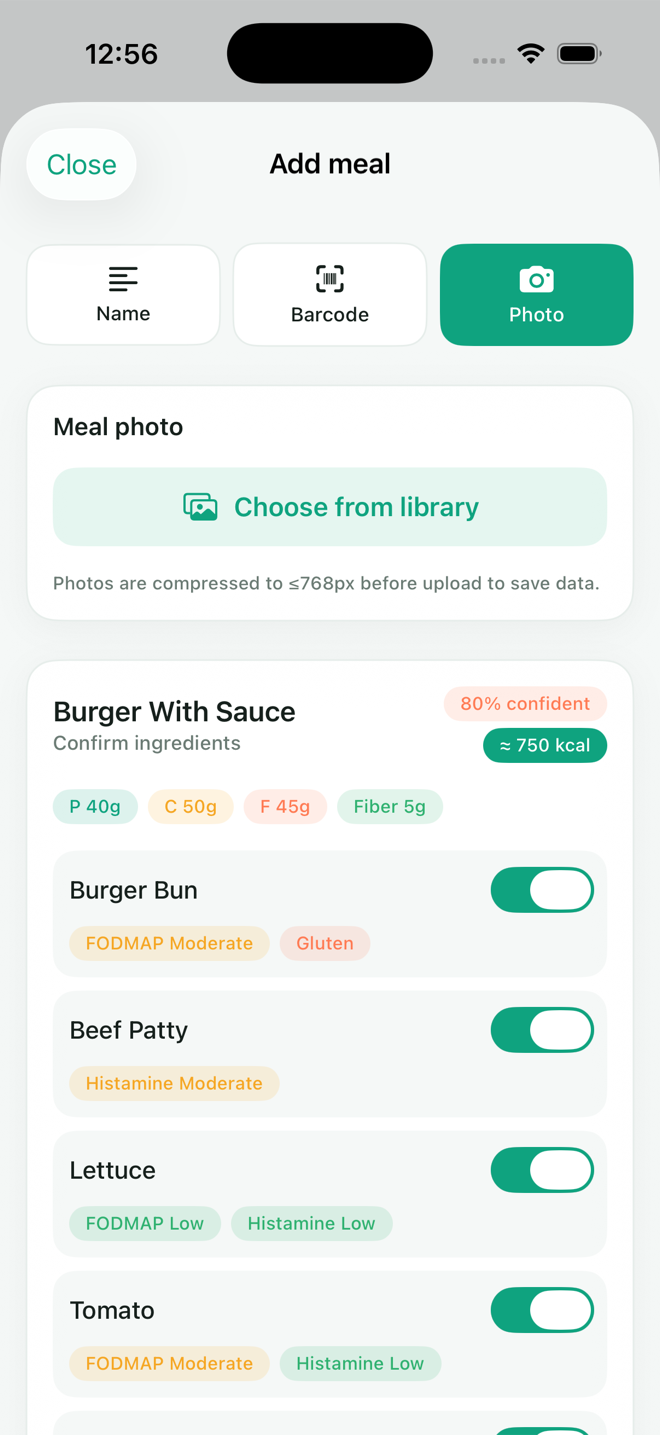
When you log a meal by photo, the image is compressed on your phone and sent to our secure backend, which uses a vision AI (Google Gemini, with OpenAI as a fallback for tricky photos) to identify the ingredients. The image is analysed and then discarded - we store only the ingredient results, not your photo.
Is Velora free? +
Yes - you get 15 AI photo scans every month for free, plus unlimited barcode and text logging, symptom tracking, and your single top suspect. Velora Premium ($7.99/month or $49.99/year) removes the scan limit and unlocks the full Top Suspects analysis, unlimited history, the PDF doctor report and smart reminders.
Does Velora diagnose food allergies or intolerances? +
No. Velora is a wellness and food-diary tool, not a medical device. It surfaces correlations in your own data - suspects to investigate - not a diagnosis. Correlation isn't causation, so confirm with an elimination trial and talk to a clinician before making big dietary changes.
How do I find out which food is causing my bloating? +
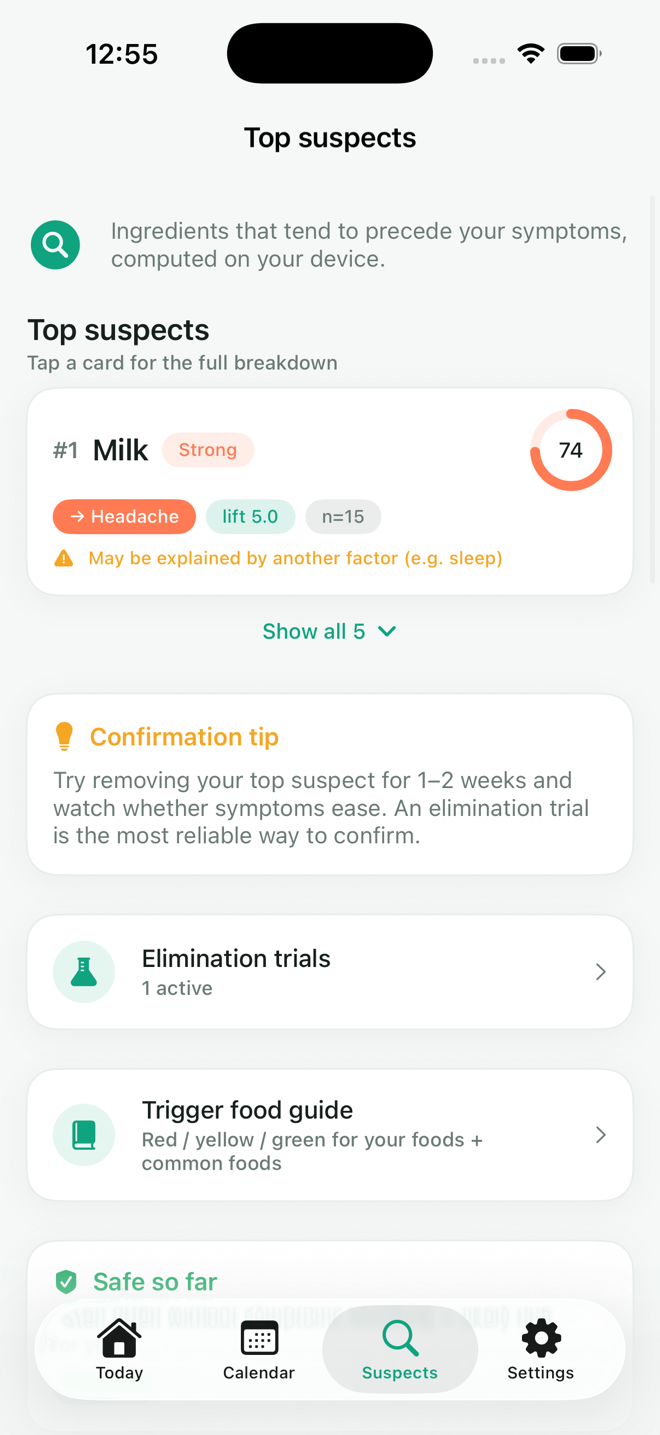
Log every meal and every episode of bloating for about two weeks without changing what you eat, then look at what the hours before your bad days had in common. Doing that by memory rarely works because symptoms lag the meal, so the pattern only appears once the meals are written down. Velora automates the comparison and ranks the ingredients that most often precede your symptoms, but the same method works on paper.
Does Velora work for FODMAPs, histamine or gluten? +
Yes. Every ingredient Velora identifies is tagged with its trigger profile, including FODMAP, histamine, gluten, dairy and caffeine, so you can see whether a whole category rather than a single food keeps appearing before your symptoms. Velora does not diagnose intolerance - it points to the categories worth testing with your clinician.
How long does it take to find a food trigger? +
Plan on about two weeks of consistent logging before the results mean anything. Correlation needs enough good days and bad days to compare, so a short burst of logging produces noise. After roughly two weeks Velora shows ranked suspects with a confidence score and the typical lag time between eating and symptoms.
Do I need an account? +
Cloud analysis and your synced history use Sign in with Apple, which can hide your real email. You can also explore in a local guest mode, but the AI suspect analysis needs an account so your data can be processed and saved securely.
What about Apple Health? +
It's optional. With your permission Velora reads sleep and cycle data (read-only) and uses them as "confounders" - so if your symptoms line up with bad sleep rather than a food, Velora tells you. This data is never sold or shared for marketing.
Can I delete my data? +
Anytime. Use "Delete account" in Settings and everything on our servers is erased. Deleting the app removes the local copy too. See our privacy policy.
Is there a free app to track food and symptoms? +
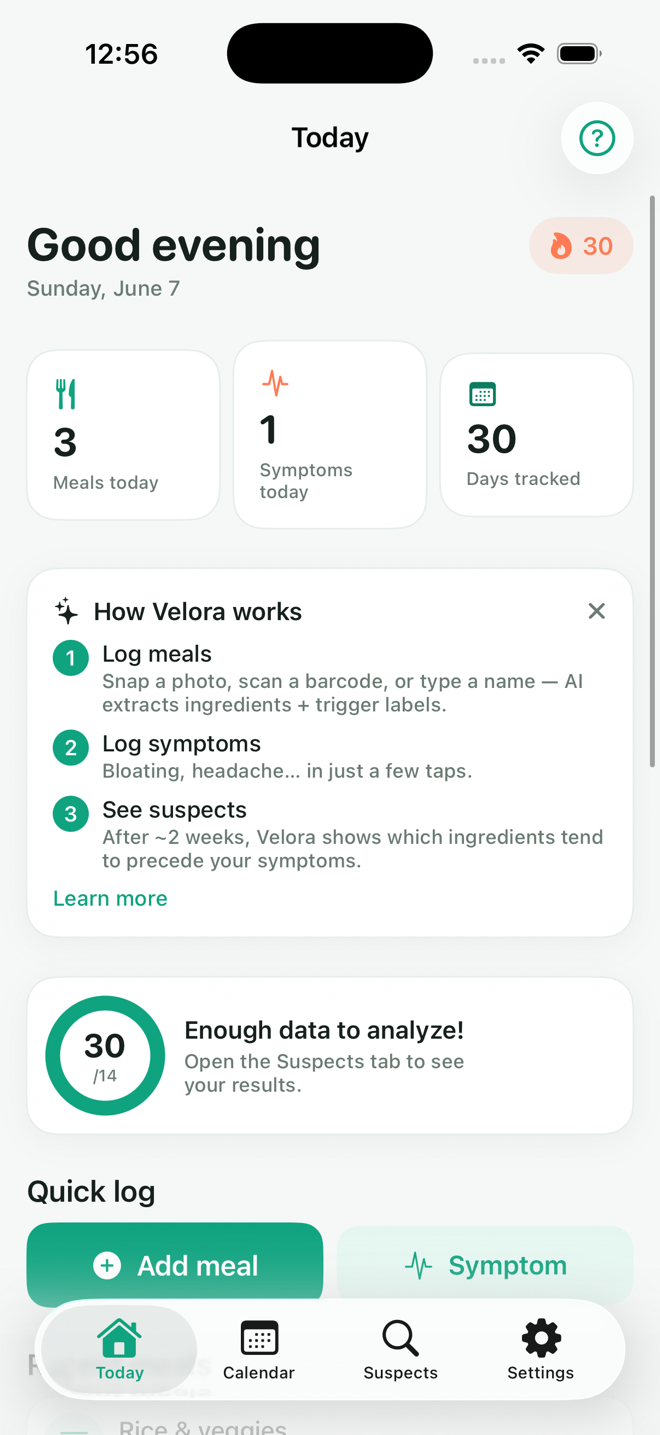
Yes. Velora's free tier includes 15 AI photo scans a month, unlimited barcode and text logging, symptom logging with severity, the calendar, and your single top suspect. Premium adds unlimited scans, the full suspect list, elimination trials and the PDF doctor report.
How do I keep a food and symptom diary? +
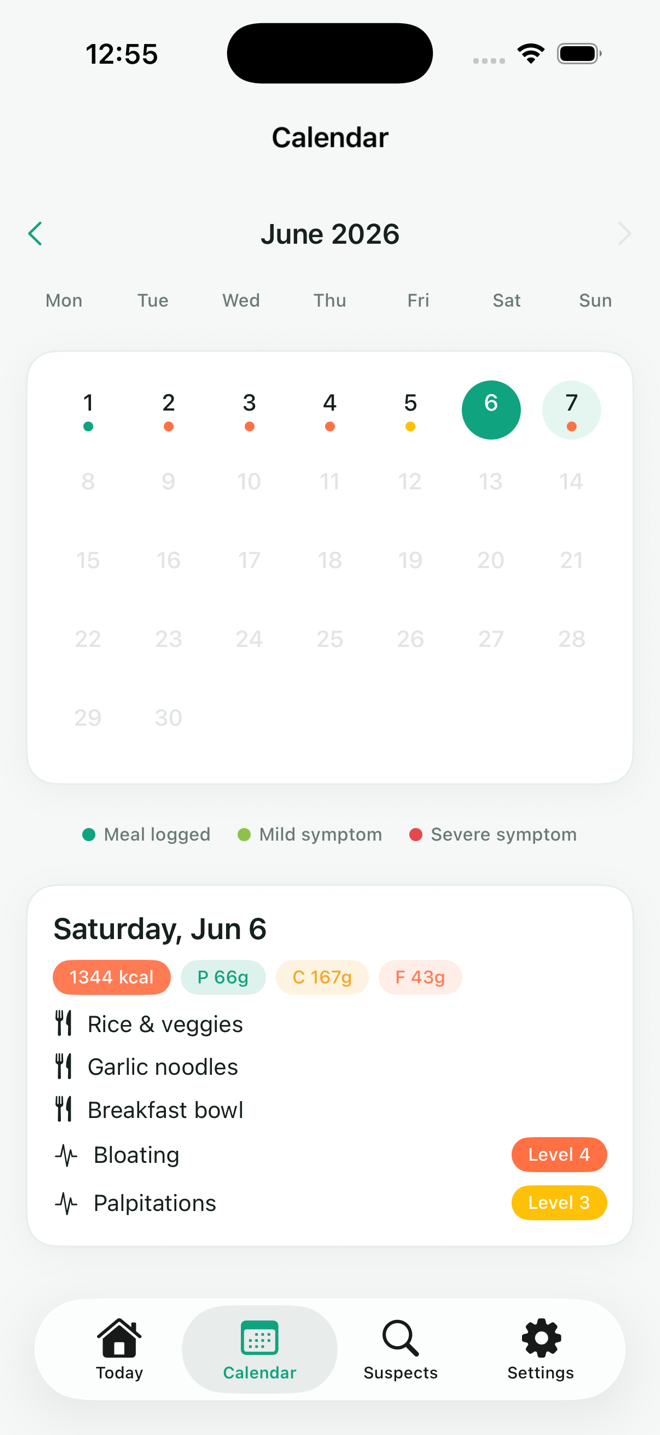
Record every meal at the time you eat it, with its ingredients rather than just the dish name, and every symptom with its time and severity. Change nothing about your diet for the first two weeks so there is a baseline, then look at what precedes bad days, including the day before. Velora does the recording by photo and the comparison automatically.
How long after eating do food intolerance symptoms appear? +
Often several hours and sometimes the next day, which is the main reason people blame the wrong meal. Allergic reactions are different and usually appear within minutes to two hours. Velora shows the typical lag between each suspect ingredient and the symptom that follows it.
Does Velora work as an IBS food diary? +
Yes. Every ingredient is tagged for FODMAP content, symptoms include bloating, cramping, wind, diarrhoea and constipation, and the Top Suspects list shows which ingredients or categories most often precede your gut symptoms. It supports a diary; it does not replace a dietitian-led low FODMAP programme.
Can I use a paper food and symptom diary instead? +
You can, and there is a free printable template on this site laid out the same way Velora records things. The limit of paper is that the pattern matching is left to you, and hidden ingredients like garlic, onion or stock in a sauce usually go unrecorded.