How long after eating food intolerance symptoms appear, and why the delay matters
The honest answer is a range, and the range is the whole problem. Allergic reactions announce themselves within minutes. Intolerance reactions arrive hours later, sometimes the next morning, by which time you have eaten twice more and the wrong meal is standing in the dock.
Food allergy: usually within minutes to two hours. Food intolerance: commonly two to twenty four hours, depending on the food and the amount. Lactose intolerance can begin within about thirty minutes to a few hours; fermentable carbohydrates often produce bloating six to twelve hours later; some skin and headache reactions lag a full day. This is why a diary has to look at the previous 24 hours, not the last meal.
Typical timings by mechanism
| Reaction | Usual onset after eating | Why |
|---|---|---|
| Allergy (IgE) | Minutes to about 2 hours | Immune response to a protein, fast and dose independent |
| Lactose intolerance | About 30 minutes to a few hours | Undigested lactose reaches the colon and ferments |
| Fermentable carbohydrates (FODMAPs) | Roughly 4 to 12 hours, sometimes longer | Fermentation and water drawn into the bowel as food transits |
| Histamine and amine sensitivity | Minutes to a few hours | Depends on the amount and on how quickly it is broken down |
| Caffeine and alcohol effects on reflux | Within an hour to several hours | Lower oesophageal sphincter relaxation and acid production |
| Skin flares, headache, fatigue | Often 12 to 24 hours or more | Slower, less well understood, and heavily confounded by sleep and stress |
These are typical ranges from the clinical literature and patient reports, not rules. Your own lag is something you find out by recording, and it tends to be fairly consistent for a given trigger once you know it.
Why the delay is the reason diaries fail
Memory attributes a symptom to the nearest plausible cause, and the nearest one is the most recent meal. If bloating arrives at 9pm, dinner gets the blame, when the fermentation that caused it began with lunch. Repeat that for two weeks and you will have accumulated a confident, wrong list of triggers, and probably removed some perfectly innocent foods. The correction is mechanical: when reviewing, look at everything eaten in the 24 hours before a symptom, not the last thing.
How to record so the lag becomes visible
- Write the time on every meal, snack and drink, and on every symptom. Without times there is no lag to measure
- Score symptoms 1 to 5 so a mild evening and a bad one are distinguishable
- Record for at least two weeks without changing anything, so there are enough symptom episodes to see the pattern repeat
- When reviewing, list the previous 24 hours for each bad episode. Most triggers will fall within it
- Note sleep and stress, since a delayed reaction and a bad night are easily confused
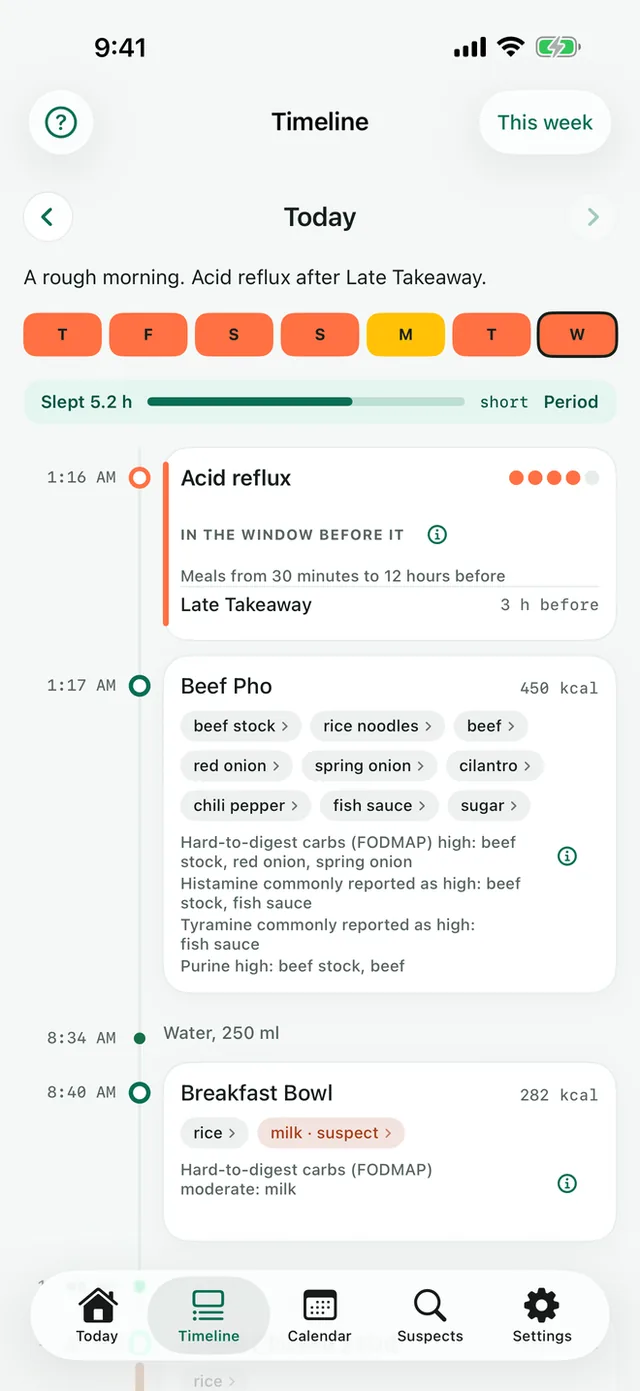
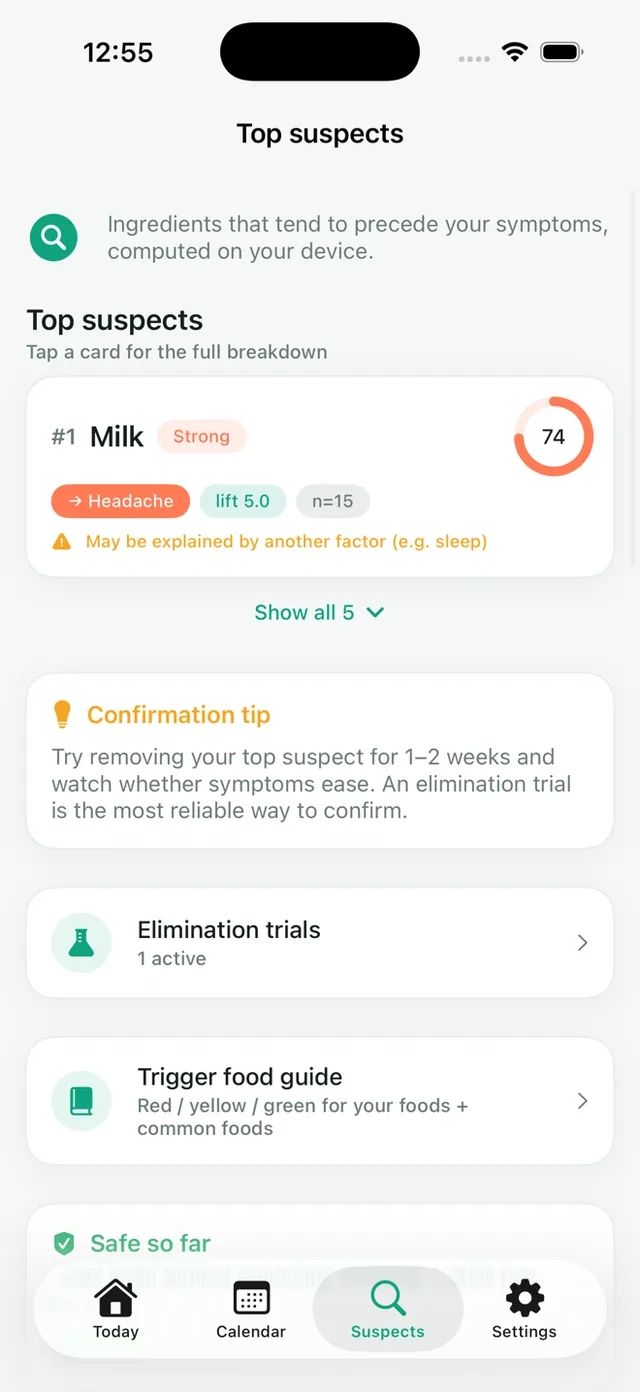
The full diary method covers what to do with the suspect list. Velora records the lag automatically: because every meal and symptom carries a timestamp, the Top Suspects list shows the typical gap between each suspect ingredient and the symptom that followed it, which is the piece of information a paper diary makes you reconstruct by hand.
When timing points away from intolerance
If a reaction reliably arrives within minutes and involves hives, swelling, wheeze, vomiting or faintness, that timing points to allergy and needs a doctor, not a diary. Symptoms that persist for many days after a single meal, or never really resolve between meals, are also unlikely to be a simple intolerance and deserve assessment. The difference between intolerance and allergy is mostly a difference in timing, and it is worth knowing which one you are dealing with before you experiment.
Frequently asked questions
How long after eating does a food intolerance reaction start? +
Commonly between two and twenty four hours, depending on the food and the amount. Lactose reactions can begin within about thirty minutes; fermentable carbohydrate bloating often takes six to twelve hours; skin and headache reactions can lag a full day.
How long does a food allergy take to show symptoms? +
Usually minutes to about two hours. Fast onset with hives, swelling, wheeze or faintness points to allergy and needs medical attention rather than a food diary.
Why do my symptoms show up the next day? +
Because fermentation and transit through the gut take hours, and some reactions, particularly skin and headache, are slower still. Next day symptoms are characteristic of intolerance and are the main reason the wrong meal gets blamed.
How do I work out which meal caused my symptoms? +
Record times on every meal and symptom for two weeks, then for each bad episode list everything eaten in the previous 24 hours. Whatever appears before most episodes and rarely before good days is the suspect.
Does the app tell me how long my lag is? +
Velora timestamps every meal and symptom, and its Top Suspects list shows the typical delay between each suspect ingredient and the symptom that followed it.
How long do intolerance symptoms last once they start? +
Usually hours to about a day, easing as the food clears. Symptoms lasting many days after one meal, or never resolving, warrant medical assessment.
This article is general wellness information from Velora Health, not medical advice, diagnosis or treatment. Always consult a qualified healthcare professional about your symptoms and before changing anything about your care.