How to do an elimination diet for food intolerance, step by step
An elimination diet is the most reliable way to find out whether a food is behind your symptoms, and also the most commonly done badly. Most people cut out several foods at once, feel a bit better, and never find out which one mattered. Done properly, it is slower at the start and much faster to a real answer.
First record your meals and symptoms for about two weeks without changing anything. Then remove one suspect food completely for two to four weeks and watch what happens. Finally, reintroduce it deliberately in a normal portion and watch for two to three days. If your symptoms return, that food is a likely trigger. Test one food at a time. Never reintroduce a food at home if you have had an allergic reaction to it.
Before you start: pick your suspects properly
An elimination diet only answers the question you ask it. If you remove the wrong foods, it tells you nothing. So start with two weeks of a food and symptom diary, recording ingredients rather than dish names, with times and a severity score for each symptom. Then look at what the 24 hours before your bad days had in common. That gives you a short list of suspects instead of a guess. The method is in how to keep a food and symptom diary.
The elimination diet, step by step
- Record for two weeks without changing your diet, so you have a baseline to compare against
- Choose one suspect, or one group such as dairy, from what your diary shows
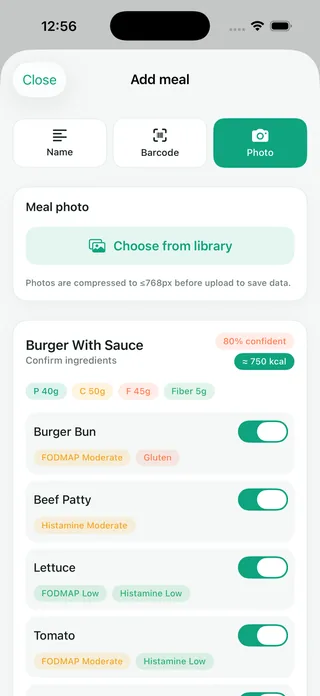
- Remove it completely for two to four weeks. Read labels, because dairy, wheat, garlic and onion hide in sauces, stock and ready meals
- Keep recording symptoms and their severity the whole time, so improvement is measured rather than felt
- Reintroduce it deliberately: a normal portion, on its own or in a meal you know is safe
- Watch for two to three days, because intolerance reactions can take hours or a day to appear
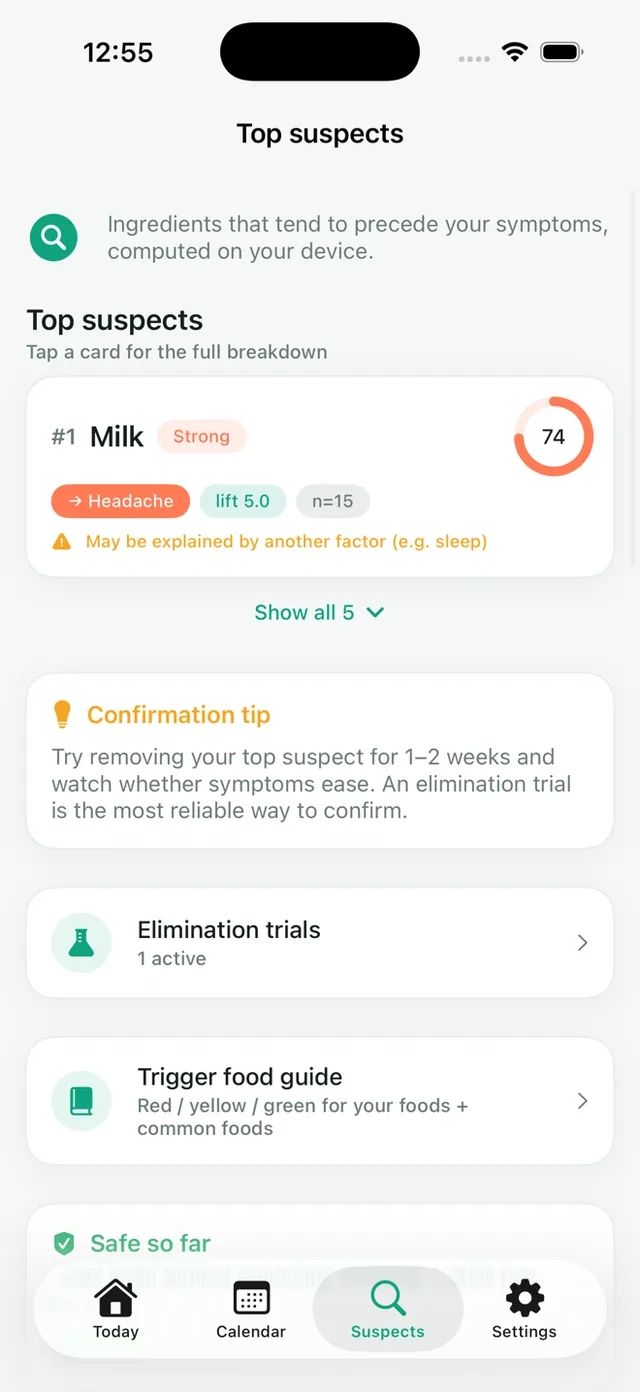
- Decide: symptoms came back means likely trigger; nothing changed means it probably is not the culprit and can go back in your diet
- Move on to the next suspect, one at a time
Why reintroduction is the step that matters
Feeling better after removing a food is not proof. Symptoms go up and down on their own, a stressful week ends, you start sleeping better, or you simply pay more attention to what you eat. The evidence comes when the food goes back in and the symptoms come back with it. Reintroduction is also what saves foods: plenty of suspects turn out to be innocent, and you get them back.
How long an elimination diet takes
Two weeks of recording, two to four weeks of elimination, then a few days for each reintroduction. For one suspect that is about four to six weeks. Testing several foods one after another takes longer, which is the reason to start with a short, well-chosen list.
Types of elimination diet
- Single-food elimination: one suspect at a time, as above. The simplest, and usually the right place to start
- Low FODMAP: removes a group of fermentable carbohydrates, then reintroduces them group by group. Usually used for IBS, ideally with a dietitian. See food diary for IBS
- Low histamine: removes foods high in histamine for a trial period. See histamine intolerance symptoms
- Few-foods diets: very restricted diets used by specialists in specific situations, not something to try alone
Who should not do this alone
Talk to a doctor or dietitian first if you have had an allergic reaction to a food (hives, swelling, breathing difficulty or faintness), because reintroducing it at home can be dangerous. Also if you are pregnant, have a history of disordered eating, are planning this for a child, or are already on a restricted diet. And if coeliac disease is possible, get tested before removing gluten, because the test is unreliable afterwards. The difference between an intolerance and an allergy is explained in food intolerance vs allergy.
Common mistakes
- Cutting out several foods at once, so you never know which one mattered
- Missing hidden sources, so the food was never really gone
- Skipping reintroduction because you feel better
- Staying on a restricted diet long term without confirming anything
- Judging by how you feel rather than by symptoms you recorded
Frequently asked questions
How do you do an elimination diet for food intolerance? +
Record meals and symptoms for about two weeks, choose one suspect food, remove it completely for two to four weeks, then reintroduce it in a normal portion and watch for two to three days. If symptoms return, it is a likely trigger. Test one food at a time.
How long should an elimination diet last? +
Usually two to four weeks of elimination for each suspect, after about two weeks of recording, plus a few days for reintroduction. One food takes around four to six weeks in total.
What is the best way to start an elimination diet? +
By keeping a food and symptom diary first. It shows which foods are worth testing, so you remove one likely suspect instead of cutting out many foods on a guess.
Can I eat eggs on an elimination diet? +
It depends on what you are testing. In a single-food elimination you only remove the suspect, so eggs are fine unless eggs are the suspect. Broader elimination diets used by specialists may remove them.
Can an elimination diet help with food sensitivity? +
Yes. It is the most reliable way to identify a food intolerance or sensitivity, as long as you reintroduce the food to confirm it. Blood tests for food sensitivity are not a reliable substitute.
Is an elimination diet safe? +
A short, single-food elimination is generally safe for most adults. Speak to a doctor first if you have had allergic reactions, are pregnant, have a history of disordered eating or are doing it for a child.
This article is general wellness information from Velora Health, not medical advice, diagnosis or treatment. Always consult a qualified healthcare professional about your symptoms and before changing anything about your care.