Keeping a food diary for IBS, and how to read it so it actually helps
A food diary is the first thing most people with IBS are told to keep and the thing most of them find useless, because IBS triggers rarely behave like a single guilty food. They behave like categories, doses and timing, plus a large share of stress and sleep. A diary built for that is a different object from a list of meals.
For IBS, record ingredients with FODMAP categories, portion size, timing, and stool form alongside bloating, pain and wind on a 1 to 5 scale, plus sleep and stress. Review by asking what the 24 hours before bad days had in common, and look for categories (fermentable carbohydrates) rather than single foods. Keep it for at least two weeks before changing anything, and take it to a dietitian before starting a low FODMAP diet, which is a short diagnostic phase, not a way of eating.
Why IBS food diaries fail more than others
Three reasons. First, the usual triggers are fermentable carbohydrates that occur across dozens of unrelated foods, so a diary looking for one food will see noise. Apples, onions, wheat, honey, milk and beans have nothing in common on a plate and everything in common in the colon. Second, dose matters: a little onion in a sauce may be fine and a whole caramelised one is not. Third, IBS responds strongly to stress and sleep, and a diary without those columns blames food for a week of poor nights.
What to record for IBS specifically
- Ingredients, tagged by category. Onion and garlic (fructans), wheat and rye, milk and soft cheese (lactose), apples, pears, honey and high fructose fruit, beans and lentils, sweeteners ending in -ol
- Portion size, even roughly. Small, normal, large. Dose is half the story
- Timing of every meal and snack. Gut symptoms often follow four to twenty four hours behind
- Symptoms with a 1 to 5 severity: bloating, pain, wind, urgency, and stool form. The Bristol scale number is the one clinicians will ask for
- Sleep hours and a stress score. These are not optional for IBS
- Caffeine, alcohol, fizzy drinks and chewing gum. Frequently omitted, frequently relevant
- Cycle day where relevant, since IBS symptoms commonly change across the cycle
How to read it: categories, not culprits
At the end of two weeks, mark every day with a symptom rated 3 or above and list what the previous 24 hours contained. Then, instead of looking for a food that appears on every bad day, look for a category that does. If the bad days are preceded by pasta, then a cheese sandwich, then a bean chilli, no single food repeats but wheat, lactose and legumes are all fermentable. That is a pattern pointing at a mechanism, and it is what a dietitian can work with.
Dose shows up as inconsistency. If onion is sometimes fine and sometimes not, check portion size before concluding it is innocent. And if the worst days cluster after bad nights or hard weeks regardless of what was eaten, that is also an answer, just not a dietary one.
The low FODMAP diet is a test, not a lifestyle
The diary will probably point at fermentable carbohydrates, and the temptation is to remove all of them indefinitely. Do not, and do not start without a dietitian. The low FODMAP protocol is a short restriction phase followed by structured reintroduction, one category at a time, to find which ones actually matter for you. Most people tolerate several. Staying on the restriction phase long term narrows the diet, affects the gut microbiome, and answers nothing. The diary is what makes the reintroduction phase readable.
Doing it on paper or in an app
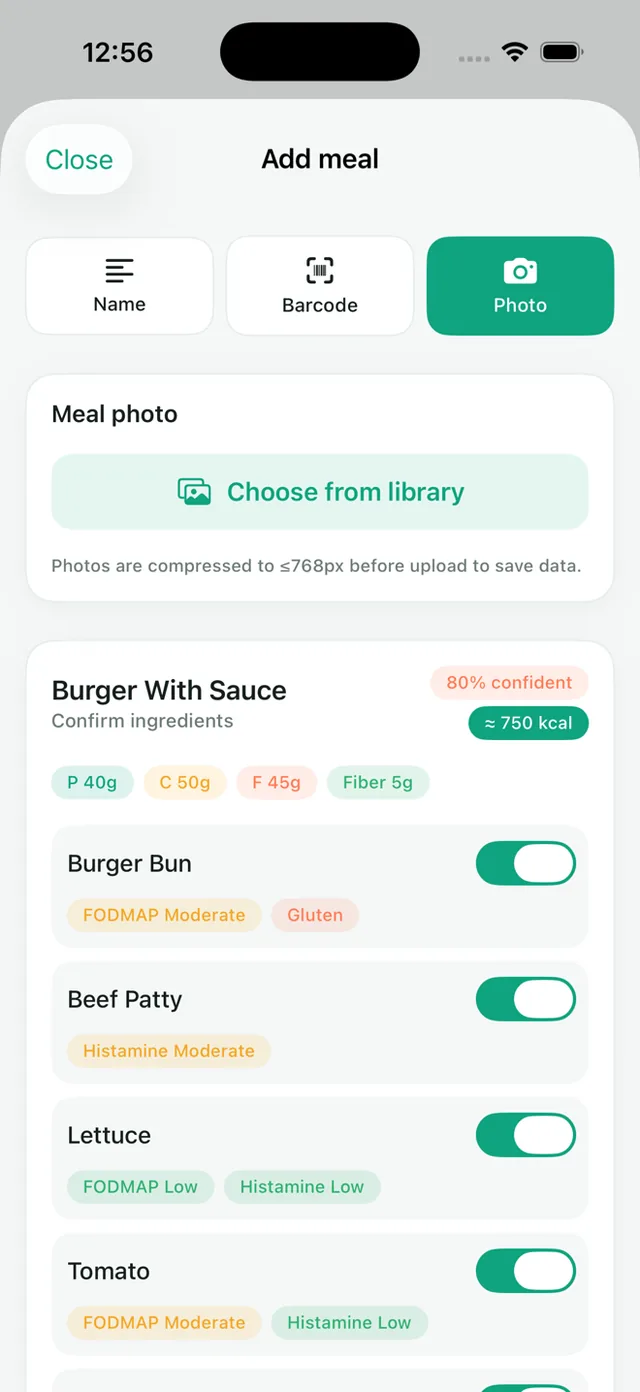
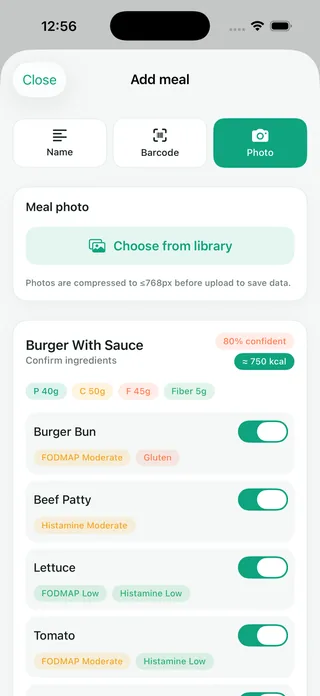
The printable template on this site has the severity and 24 hour review built in; for IBS, note the FODMAP categories in the notes column. Velora does the categorisation for you: every ingredient it identifies from a meal photo carries a FODMAP tag, symptoms include bloating, cramping, wind, diarrhoea and constipation with severity, and after about two weeks the Top Suspects list shows which ingredients or categories most often preceded your symptoms. It keeps the diary; it does not replace the dietitian who reads it.
When IBS is the wrong explanation
A food diary assumes the diagnosis is right. Blood in the stool, unintentional weight loss, symptoms that wake you at night, a new change in bowel habit over the age of about 50, anaemia, or a family history of bowel cancer, coeliac or inflammatory bowel disease all need assessment rather than another fortnight of logging. Coeliac testing in particular must happen before gluten is removed.
Frequently asked questions
What should I record in a food diary for IBS? +
Ingredients with their FODMAP category, portion size, timing, symptoms with a 1 to 5 severity including stool form, sleep hours, a stress score, caffeine and alcohol, and cycle day if relevant.
How long should I keep an IBS food diary? +
At least two weeks without changing your diet, and longer if symptoms vary across the cycle. You need good days to compare bad days against.
Why can I not find a single trigger food for my IBS? +
Because IBS triggers usually behave as categories of fermentable carbohydrate spread across unrelated foods, and because dose and stress matter as much as the food. Look for a category that precedes bad days rather than a food.
Should I start a low FODMAP diet on my own? +
No. It is a short diagnostic restriction followed by structured reintroduction and is meant to be run with a dietitian. Long term restriction without reintroduction narrows the diet and answers nothing.
Is there an IBS food diary app? +
Velora keeps a food and symptom diary by photo, tags every ingredient with its FODMAP category, records gut symptoms with severity, and ranks the ingredients or categories that most often precede your symptoms. It supports a diary rather than replacing a dietitian.
What symptoms mean it might not be IBS? +
Blood in the stool, unintentional weight loss, symptoms that wake you at night, a new bowel habit change after about 50, or anaemia. Those need assessment rather than a food diary.
This article is general wellness information from Velora Health, not medical advice, diagnosis or treatment. Always consult a qualified healthcare professional about your symptoms and before changing anything about your care.