How to keep a food and symptom diary that actually finds the trigger
Most food diaries are abandoned in a week and the ones that survive rarely find anything, because they record the wrong thing in the wrong way. The method below is what dietitians ask for, and it works on paper, in a notes app, or in Velora. The difference is only in who does the pattern matching.
Record every meal at the time you eat it, as ingredients rather than dish names, and every symptom with its time and a severity from 1 to 5. Change nothing about your diet for the first two weeks. Then look at what the 24 hours before each bad day had in common, pick one suspect, remove it for two weeks, and reintroduce it deliberately to confirm.
What to record, and what most people leave out
A diary that says chicken curry has recorded a dish. The garlic, onion, cream, ghee, stock and the sweetener in the sauce went unrecorded, and those are far more often the trigger than the chicken. The single change that makes a food diary useful is writing ingredients, including the ones you did not cook yourself. If you cannot know them, write what you can and mark the meal as a restaurant or packaged one.
- Time of every meal, snack and drink. Drinks count. Coffee, alcohol, sweeteners and carbonation are common triggers that never get written down
- Ingredients, not dishes. Sauces, oils, spices, stock, thickeners, dairy in things that do not look dairy
- Every symptom, with a time and a 1 to 5 severity. The severity is what lets you compare days; a tick box cannot
- Sleep, stress and, if relevant, cycle day. These confound everything and a bad night can look exactly like a bad meal
- Medications and supplements. Including the painkiller you took for the symptom, which can itself cause the next one
How long to keep it
Two weeks is the minimum before the entries mean anything, and three or four is better. Correlation needs both good days and bad days to compare, and a short burst of logging during a flare records only bad ones. The other reason for two weeks is that the reaction you are looking for often arrives hours to a day after the meal, so a single day's page cannot contain both cause and effect.
The hardest rule is the one about not changing anything. It feels wrong to keep eating the thing you suspect. But if you remove it on day two, you have no baseline, and any improvement could be the removal, the placebo of doing something, or the flare simply ending. Record first, then experiment.
The method, step by step
- Record for two weeks without changing your diet. Ingredients, times, symptoms with severity, sleep and stress
- Mark the bad days. Any day with a symptom rated 3 or above
- List what the 24 hours before each bad day contained. The day before, not just the last meal, because of the lag
- Find what appears before most bad days and rarely before good ones. That is your suspect list, and it is usually short
- Remove one suspect for two weeks. One. Removing five at once tells you nothing about any of them
- Reintroduce it deliberately. Symptoms returning on reintroduction is the evidence; feeling better while it was gone is not
- Repeat for the next suspect, and take the whole record to a GP or dietitian rather than concluding alone
How to read it without fooling yourself
The commonest mistake is blaming the most recent meal. Intolerance reactions frequently take four to twenty hours, which means the culprit is often two or three meals back and the meal you remember is innocent. The second commonest is confirmation: you already suspect dairy, so the dairy days feel worse. Severity scores written at the time are the defence against both, because they were recorded before you knew what you were looking for.
Look for an ingredient, not a dish and not a category, unless the category holds up across different foods. If bloating follows apples, onions, wheat and honey, the common thread is fermentable carbohydrate rather than any single food, and that is worth knowing because it changes what you test next. Keeping a food diary for IBS goes into that case.
Paper, notes app, or something that does the matching
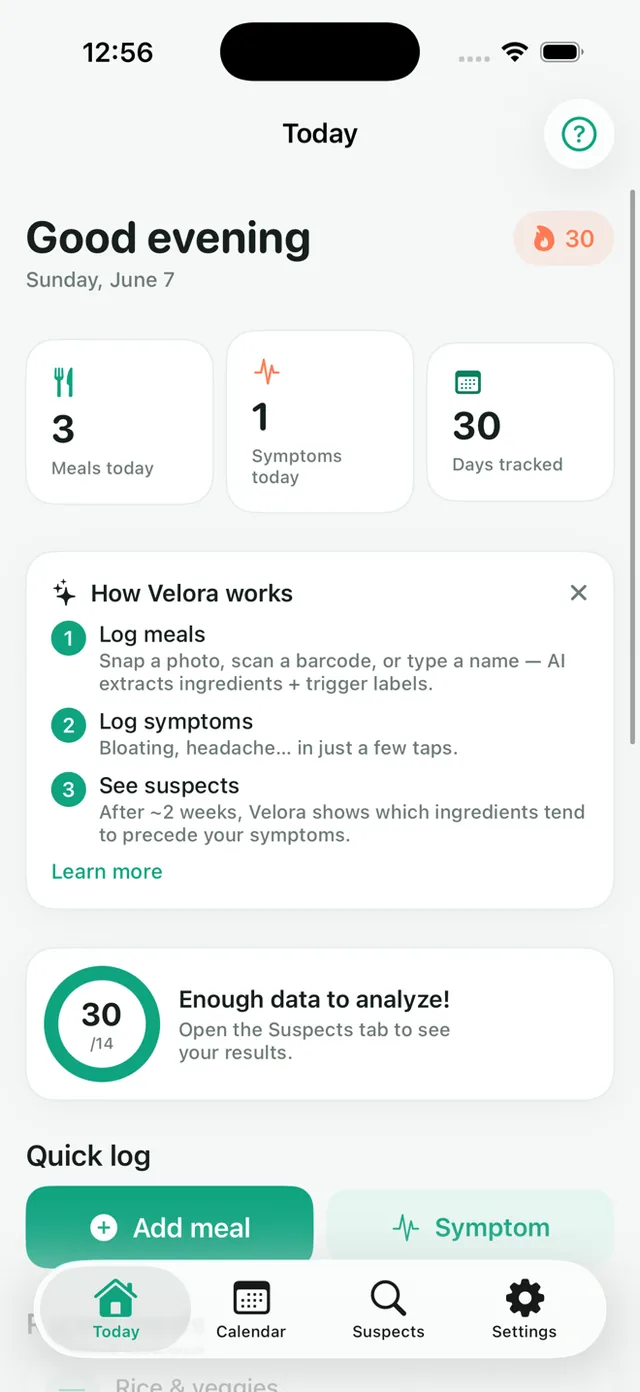
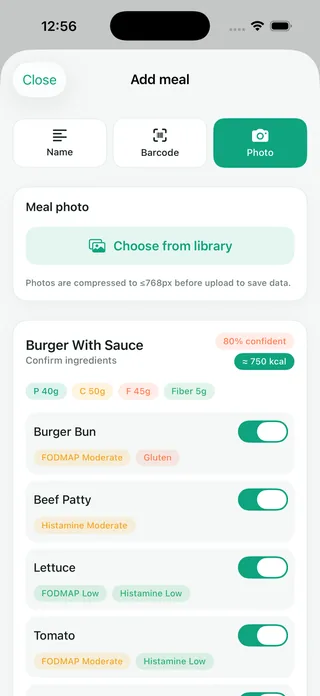
Paper works and there is a free printable template, a two page food and symptom diary PDF laid out for exactly this method. Its limit is that the pattern matching is left to you, and the ingredient problem is left to your memory of what was in the sauce. Velora photographs the meal, breaks it into ingredients including the hidden ones, and after about two weeks ranks the ingredients that most often preceded your symptoms, with the typical lag. The method is the same. The matching is done for you, and the ingredients are recorded whether or not you knew they were there.
When a diary is the wrong tool
Any reaction with difficulty breathing, swelling of the lips, tongue or throat, widespread hives or faintness is treated as an allergic emergency and belongs with a doctor, not a diary. Unintentional weight loss, blood in the stool, persistent vomiting or symptoms that began abruptly in adulthood also need assessment first. And if coeliac disease is possible, get tested before removing gluten, because the test is unreliable once gluten is gone.
Frequently asked questions
What should a food and symptom diary include? +
The time of every meal, snack and drink; the ingredients rather than the dish; every symptom with a time and a 1 to 5 severity; sleep, stress and cycle day if relevant; and any medication. Ingredients and severity are the two things most diaries leave out.
How long should I keep a food and symptom diary? +
At least two weeks without changing your diet, and three or four is better. You need both good and bad days to compare, and reactions can lag a meal by a day.
Should I cut out suspected foods while keeping the diary? +
Not in the first two weeks. Record a baseline first. Then remove one suspect at a time for two weeks and reintroduce it deliberately to confirm.
Why does my food diary not show anything? +
Usually because it records dishes rather than ingredients, blames the last meal rather than the previous 24 hours, or has no severity scores to compare days with. Fixing those three usually makes a pattern visible.
Is there an app that keeps a food and symptom diary for me? +
Yes. Velora records meals by photo, breaks them into ingredients, logs symptoms with severity, and ranks the ingredients that most often precede your symptoms after about two weeks. The free tier covers the diary and your single top suspect.
Can a food diary diagnose a food intolerance? +
No. It identifies suspects to test and to discuss with a doctor or dietitian. Confirmation comes from removal and deliberate reintroduction, and anything suggesting allergy or another condition needs medical assessment.
This article is general wellness information from Velora Health, not medical advice, diagnosis or treatment. Always consult a qualified healthcare professional about your symptoms and before changing anything about your care.