How to find the foods behind your bloating, headaches and reflux
If certain meals leave you bloated, with a headache, or with reflux hours later, the culprit can be maddeningly hard to pin down. Symptoms lag, and the real trigger is often a hidden ingredient you did not even know was there. A structured food-and-symptom diary, plus a little detective work, is the reliable way to find it.
Why food triggers are so hard to spot
Reactions to food often appear hours - sometimes a day or more - after eating, so it is rarely obvious which meal was responsible. And the trigger is frequently a hidden ingredient: garlic and onion (high in FODMAPs), histamine in aged or fermented foods, dairy, gluten, caffeine, or additives. You cannot avoid what you cannot see.
Keep a food and symptom diary
The foundation is a simple diary. For each meal, record what you ate, and separately log symptoms with a severity rating when they appear. The two streams together are what let a pattern emerge:
- Meals - including drinks and snacks
- Symptoms - bloating, headache, reflux, and a 1 to 5 severity
- Timing - so lag between food and symptom is captured
Break meals down to ingredients
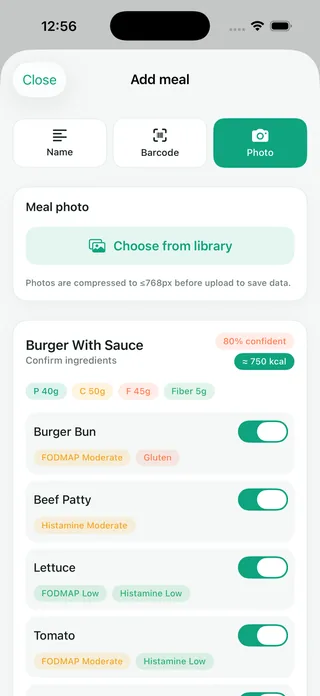
A dish is not one thing - it is many ingredients, and the trigger lives in one of them. Breaking meals into their components, and tagging each with attributes like FODMAP level or histamine, is what makes the difference between "pasta seems to bother me" and "garlic does." This is tedious by hand, which is where AI ingredient analysis helps: snap a photo and the ingredients, including hidden ones, are identified for you.
Let the correlations point to suspects
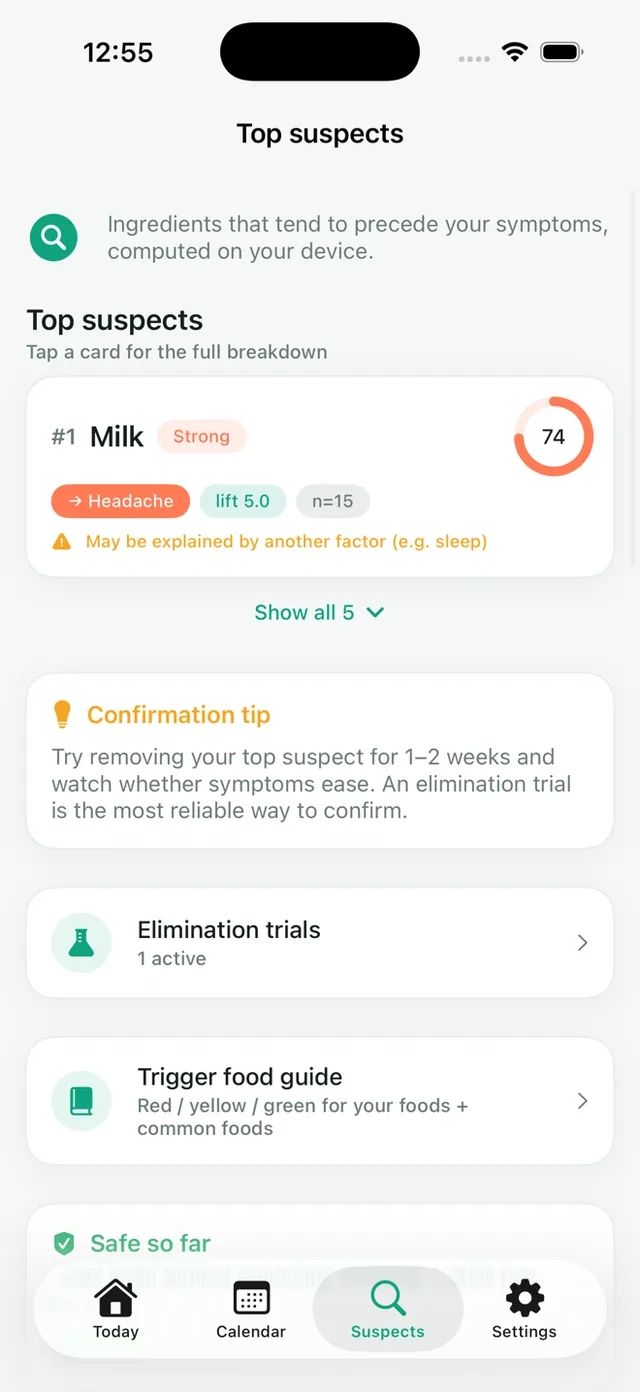
After about two weeks, compare your symptom days with the ingredients that preceded them. Good analysis accounts for the lag and flags when something else - like poor sleep - might be the real driver, so you do not chase the wrong suspect.
Confirm with a short elimination trial
Correlation is not proof. Once you have a likely suspect, remove it for a week or two and watch whether symptoms ease, then reintroduce it. This targeted test is far gentler and more conclusive than cutting out many foods at once, and it is the step that turns a hunch into a real answer. For diagnosed allergies, always work with a clinician.
Frequently asked questions
What are the most common food triggers for bloating? +
High-FODMAP foods such as garlic, onion and certain fruits are common, along with dairy for some people. Triggers are individual, so tracking your own data is key.
How long does it take to find a food trigger? +
With consistent logging, useful patterns often appear in about two weeks. Confirming a specific trigger with an elimination trial takes another week or two.
How does AI help find food triggers? +
AI can identify the ingredients in a meal from a photo, including hidden ones, and statistics can rank which ones most often precede your symptoms - work that is very hard to do by hand.
Can an app diagnose a food intolerance or allergy? +
No. Apps like Velora surface correlations to investigate, not diagnoses. Confirm with an elimination trial and consult a clinician, especially for any suspected allergy.
This article is general wellness information from Velora Health, not medical advice, diagnosis or treatment. Always consult a qualified healthcare professional about your symptoms and before changing anything about your care.