Histamine intolerance: the symptoms, the foods, and how to find out if it is you
Headaches after red wine, a flushed face after aged cheese, a blocked nose after a takeaway, and no allergy test to explain any of it. Histamine intolerance is one possible explanation. It is also a label applied far more often than it is confirmed, which makes it worth understanding properly before you cut foods out.
Histamine intolerance is thought to happen when the body cannot break down histamine from food quickly enough, often linked to lower activity of an enzyme called diamine oxidase (DAO). Common symptoms are headaches, flushing, a blocked or runny nose, itching or hives, bloating, diarrhoea and a racing heart, usually within minutes to a few hours of eating. The foods highest in histamine are aged, fermented, cured and leftover foods, plus alcohol, especially red wine. There is no reliable single test, so it is identified by a supervised trial of lower-histamine eating followed by reintroduction.
What histamine intolerance is
Histamine is a natural chemical involved in immune responses, digestion and the nervous system. Some foods contain a lot of it, and the gut normally breaks that down before it causes trouble, mainly through the enzyme DAO. The idea behind histamine intolerance is that when this breakdown cannot keep up, histamine from food builds up and causes symptoms.
It is not an allergy. An allergy is an immune reaction to a specific food protein, can be triggered by a trace amount and can be dangerous. Histamine intolerance is about the total amount of histamine, so it tends to be dose-dependent: one food may be fine, several high-histamine foods in one meal may not. The broader difference is in food intolerance vs allergy.
Symptoms of histamine intolerance
- Head: headaches or migraine
- Skin: flushing, itching, hives
- Nose: congestion, a runny nose or sneezing without a cold
- Gut: bloating, abdominal pain, diarrhoea, nausea
- Heart and circulation: palpitations, dizziness
These usually start within minutes to a few hours of eating. Because every one of them has many other possible causes, the pattern matters more than any single symptom: the same symptoms, repeatedly, after the same kinds of food.
High-histamine foods
| Group | Examples |
|---|---|
| Aged cheese | Parmesan, cheddar, blue cheese, other long-aged cheeses |
| Cured and processed meat | Salami, ham, bacon, pepperoni, other cured meats |
| Fermented foods | Sauerkraut, kimchi, soy sauce, miso, kombucha, some yoghurts |
| Alcohol | Red wine, beer, champagne; alcohol may also reduce histamine breakdown |
| Fish that is not very fresh | Smoked, tinned or older fish; histamine rises as fish is stored |
| Vinegar and pickled foods | Vinegar, pickles, many dressings and sauces |
| Some vegetables and fruit | Tomatoes, spinach, aubergine, avocado |
| Leftovers | Histamine increases as cooked food is stored, especially protein |
Some foods, such as citrus fruit, strawberries and chocolate, are sometimes described as releasing histamine in the body. The evidence for that is weaker, and many people tolerate them fine.
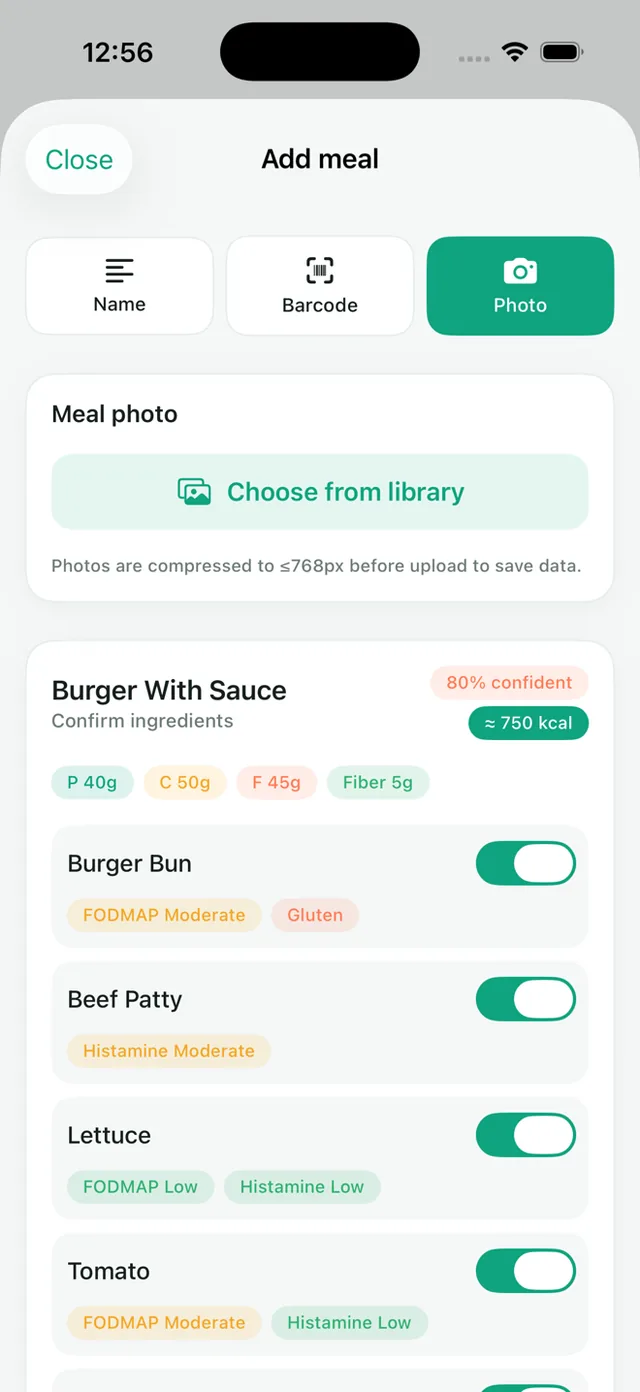
How to find out whether it is histamine
- Keep a food and symptom diary for two weeks, recording ingredients, times and symptom severity
- Look for the pattern: do your symptoms follow meals heavy in aged, fermented, cured or leftover food?
- Try a lower-histamine diet for two to four weeks, ideally with a doctor or dietitian, eating fresh food and avoiding the high-histamine groups
- Reintroduce high-histamine foods deliberately and watch whether symptoms return
The approach is the same as any elimination trial, covered in detail in how to do an elimination diet. Blood tests for DAO levels are available, but they are not reliable enough to diagnose histamine intolerance on their own.
What helps
- Eat food fresh, and freeze leftovers quickly rather than keeping them in the fridge for days
- Choose fresh meat and fish over cured, smoked or tinned
- Notice alcohol, especially red wine, as a possible trigger
- Avoid combining several high-histamine foods in one meal
- Talk to your doctor about any regular medicines, since some may affect histamine breakdown; do not stop anything on your own
DAO supplements are sold for histamine intolerance, but the evidence for them is limited. Antihistamines may help some symptoms; ask a pharmacist or doctor.
When to see a doctor
Seek urgent care for swelling of the lips, tongue or throat, difficulty breathing, widespread hives or feeling faint after eating: that is an allergic emergency, not intolerance. See a doctor if symptoms are frequent or severe, if you are losing weight, or if you are cutting out many foods. Other conditions, including allergies, mast cell disorders and gut conditions, can cause similar symptoms and are worth ruling out.
Frequently asked questions
What are the symptoms of histamine intolerance? +
Headaches, flushing, itching or hives, a blocked or runny nose, bloating, diarrhoea, abdominal pain, palpitations and dizziness, usually within minutes to a few hours of eating high-histamine foods.
What foods are high in histamine? +
Aged cheese, cured and processed meats, fermented foods such as sauerkraut and soy sauce, alcohol especially red wine and beer, smoked or tinned fish, vinegar and pickled foods, some vegetables such as tomatoes and spinach, and leftovers.
What does a histamine reaction feel like? +
Often a flushed, warm face, a headache, a stuffy or runny nose, itching and sometimes a racing heart or an upset stomach, coming on soon after eating. Swelling of the lips or throat or difficulty breathing is an emergency.
How do you fix histamine intolerance? +
There is no cure. It is managed by eating fresher food, reducing the highest-histamine foods and alcohol, and avoiding several high-histamine foods in one meal. A doctor or dietitian can guide a trial and help rule out other causes.
Is there a test for histamine intolerance? +
There is no reliable single test. Blood tests for the DAO enzyme exist but are not accurate enough on their own. It is usually identified by a supervised lower-histamine diet followed by reintroduction.
Is histamine intolerance the same as an allergy? +
No. An allergy is an immune reaction to a specific food protein and can be triggered by a trace amount. Histamine intolerance depends on the total amount of histamine eaten, so small amounts may be tolerated.
This article is general wellness information from Velora Health, not medical advice, diagnosis or treatment. Always consult a qualified healthcare professional about your symptoms and before changing anything about your care.