Why keep a food and symptom diary: what it reveals, and the conditions it helps most
Almost everyone with a recurring symptom has a theory about what causes it. Most of those theories are formed from memory, and memory is exactly the wrong tool for the job. A food and symptom diary replaces the theory with evidence: what you ate, when, and what happened afterwards, written down before you knew which part would matter.
A food and symptom diary records what you eat and drink, when, and every symptom with its time and severity. Kept for two to four weeks, it reveals patterns memory cannot: a specific ingredient, a category of food, a dose above which symptoms start, the delay between eating and symptoms, and non-food factors like sleep and stress. Research on real patients' diaries shows the triggers they reveal can predict later symptoms. It helps most with IBS and bloating, food intolerances, reflux, headaches, skin flares and gut conditions, and it gives your doctor something concrete to work with.
Why memory gets food and symptoms wrong
When a symptom arrives, the mind looks for the nearest plausible cause, and the nearest one is almost always the last meal. But many food reactions are delayed. Bloating from fermentable carbohydrates often builds over several hours, and headaches or skin flares can follow a day later. By then you have eaten twice more, and the wrong meal gets the blame.
Memory also rewrites the details. You remember the pasta, not the garlic in the sauce. You remember the bad days vividly and the ordinary days not at all, so you cannot compare them. And once you suspect a food, every bad day after eating it feels like confirmation, while the days it caused nothing are quietly forgotten. None of this is a failure of attention. It is how memory works, which is why clinicians ask patients to write things down.
What the research shows
In a 2020 study published in Neurogastroenterology & Motility, researchers analysed 209 diaries of food, gut symptoms and stress from patients in three groups, kept for a median of 17 to 38 days. They used the first part of each diary to identify that person's triggers, then tested them on the rest. The triggers predicted later symptoms, and lower exposure to them was associated with fewer symptoms. Across everyone, eating late in the evening or at night predicted more gut symptoms, especially bloating. The authors concluded that diaries can produce meaningful personalised advice for some patients. (Clevers et al., 2020)
An earlier study used two-week food and symptom diaries from 164 people with chronic headache, fatigue, congestion, abdominal pain or sinus problems. The analysis listed suspect foods for each symptom along with the delay between eating and the symptom. Used as a guide for an elimination diet, the results helped 75% of patients, and when foods were tried again, 47% of the identified suspects were confirmed. (Kueper et al., 1995)
Both studies point to the same thing: a diary does not diagnose on its own, but it turns a vague suspicion into a short list worth testing, and that list is often right.
What a food and symptom diary can reveal
- A specific ingredient. Not the dish, but the one thing inside it: onion, cream, a sweetener, a spice
- A category of food. Symptoms that follow apples, wheat, onions and honey have fermentable carbohydrates in common. Symptoms that follow aged cheese, red wine and cured meat have histamine in common
- A dose. A small amount may be fine and a large one not, which is why a food can seem to cause symptoms only some of the time
- The delay. How long after eating your symptoms usually start, which tells you which meal to look at
- Meal timing and size. Late meals, very large meals or skipped meals can matter as much as what was eaten
- Non-food factors. Poor sleep, stress, alcohol, exercise, medication and the menstrual cycle often explain bad days that food does not
- No food pattern at all. Useful too: it points your doctor elsewhere and saves you from cutting out foods for nothing
Use cases: who a food and symptom diary helps
The diary works the same way for every condition, but what you log alongside food, and the pattern you are looking for, changes. Here is what that looks like, condition by condition.
| Symptom or condition | Log alongside food | The pattern to look for | Guide |
|---|---|---|---|
| IBS and bloating | Stool form, pain, wind, stress, sleep | Categories of fermentable carbohydrate, portion size, late meals | Food diary for IBS |
| Food intolerance | Symptom times and severity | A delay of hours, and dose dependence | Symptom timing |
| Histamine intolerance | Headaches, flushing, nose, skin | Aged, fermented, cured and leftover foods, alcohol | Histamine intolerance |
| Reflux and heartburn | Time of lying down, meal size | Late or large meals, coffee, alcohol, fatty or spicy food | Velora |
| Headaches and migraine | Sleep, caffeine, skipped meals, cycle | Next-day patterns, alcohol, missed meals, caffeine changes | Velora |
| Rosacea and skin flares | Heat, sun, alcohol, skincare | Hot drinks, spicy food, alcohol, alongside weather | Why rosacea flares up |
| Gastroparesis | Nausea, fullness, blood sugar if diabetic | Meal size, fat, fibre and texture | Gastroparesis safe foods |
| Diverticulitis recovery | Pain, temperature, bowel habit | How fibre is tolerated as it returns | Fiber after diverticulitis |
| After gallbladder removal | Urgency, loose stools, timing | Fat per meal rather than per day | What to eat after removal |
| Interstitial cystitis | Bladder pain, urgency, frequency | Acidic foods, coffee, alcohol, delays of hours | IC diet, three tiers |
| PCOS | Energy, cravings, cycle, skin | Meal composition and timing across the cycle | PCOS food triggers |
IBS and bloating
IBS triggers rarely behave like a single guilty food. They behave like categories, doses and timing, with a large share of stress and sleep mixed in. The pattern a diary usually shows is not one food on every bad day, but a group of foods that share fermentable carbohydrates, often worse in larger portions or late in the day. That is exactly the kind of pattern a dietitian can work with, and the reason a diary is commonly the first step before a structured low FODMAP trial. More in keeping a food diary for IBS.
Food intolerances
Intolerances such as lactose intolerance are dose dependent and delayed. A diary reveals both: the amount above which symptoms appear, and the typical gap of hours between eating and feeling it. Without that record, people tend to cut out a whole food group when a smaller amount would have been fine. The difference from an allergy, and why timing is the clearest clue, is in food intolerance vs allergy.
Histamine intolerance
Headaches, flushing, a blocked nose and gut upset after very different meals are confusing until the diary shows what they share: aged cheese, cured meat, fermented food, leftovers, red wine. Because the effect depends on the total amount of histamine, the pattern is often clearest on days when several of those foods were eaten together. See histamine intolerance symptoms.
Reflux and heartburn
For reflux, the food is only half the record. The other half is timing: how soon you lay down after eating, how large the evening meal was, and whether coffee or alcohol came with it. A diary often shows that the same food is fine at lunch and a problem at 10pm, which is a much more useful thing to know than a list of foods to avoid forever.
Headaches and migraine
Food-related headaches are often delayed and mixed up with other triggers, which is why they are so hard to pin down. A diary that also records sleep, caffeine, skipped meals and, where relevant, the menstrual cycle can separate them. Common patterns include headaches the day after alcohol, after a missed meal, or on days when caffeine is lower than usual.
Rosacea and skin flares
Skin reactions frequently lag behind the trigger, and food is only one of many: heat, sun, exercise, stress and skincare matter too. Recording hot drinks, spicy food and alcohol alongside the weather is what separates a food trigger from a hot day. The common rosacea triggers are covered in why rosacea flares up.
Gut conditions: gastroparesis, diverticulitis, gallbladder, bladder
In several conditions the question is less which food and more how much, in what form, and when. In gastroparesis, meal size, fat, fibre and texture decide how a meal sits (finding gastroparesis safe foods). In recovery from diverticulitis, the diary tracks how fibre is tolerated as it comes back (fiber after diverticulitis). After gallbladder removal, the useful number is fat per meal, not per day (what to eat after gallbladder removal). And with interstitial cystitis, the diary sorts foods into those that reliably bother your bladder and those that only might (the IC diet in three tiers).
PCOS
With PCOS the diary is less about a single trigger and more about how meal composition, timing and the cycle relate to energy, cravings and skin. Logging across a full cycle or two is what makes those relationships visible. More in finding PCOS food triggers.
Why most food diaries fail, and what fixes it
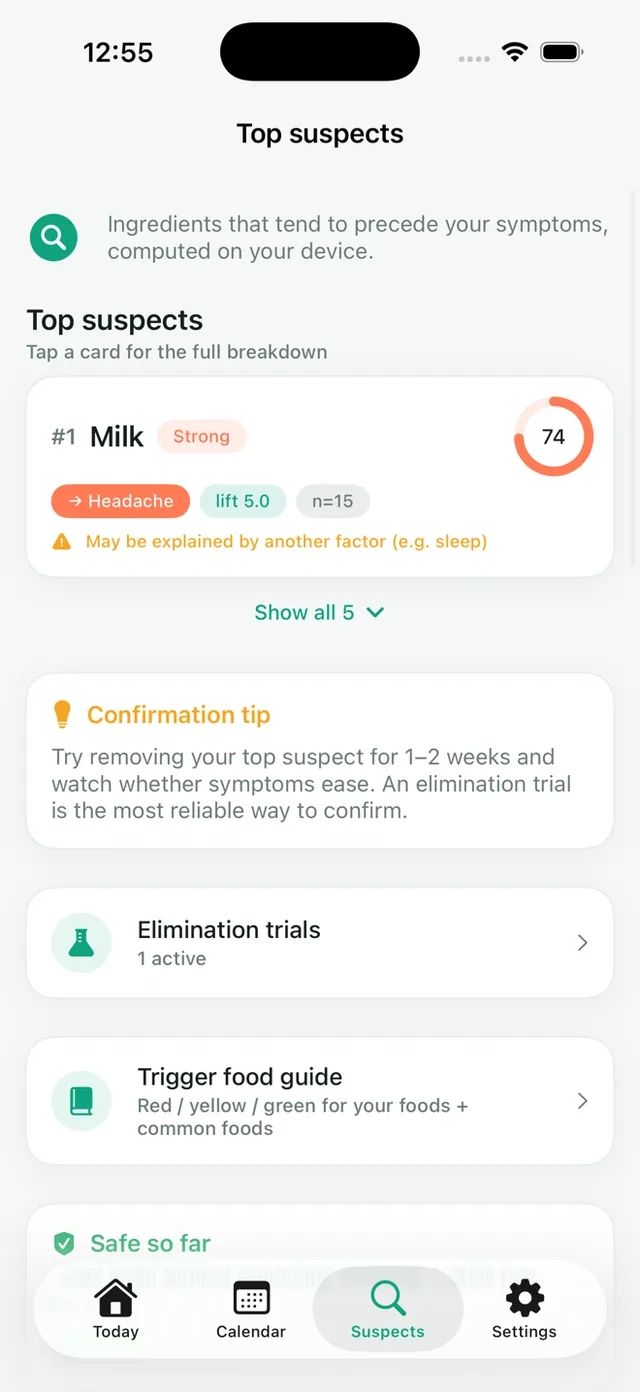
The idea is simple and the practice is hard. Most diaries fail for three reasons: they record dishes instead of ingredients, so the actual trigger is never written down; they are filled in from memory at the end of the day; and they are abandoned within a week because writing out every ingredient takes too long.
That last reason is the one people mention most. As one Velora user put it in an App Store review:
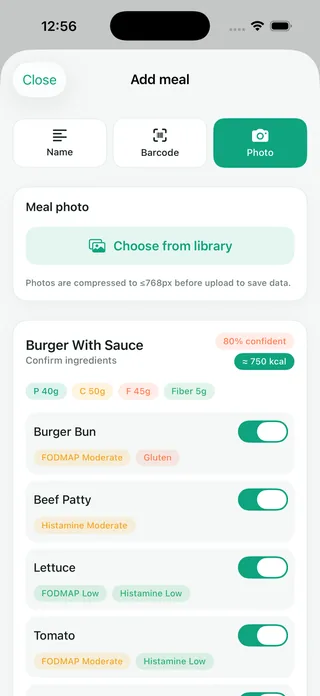
"Taking a photo of a meal or ingredient list and having the AI automatically identify the individual ingredients works incredibly well. [...] I've been looking for something like this for a long time, because entering every single ingredient manually is extremely time-consuming."
Sash Mart, App Store review, 5 stars, August 2026
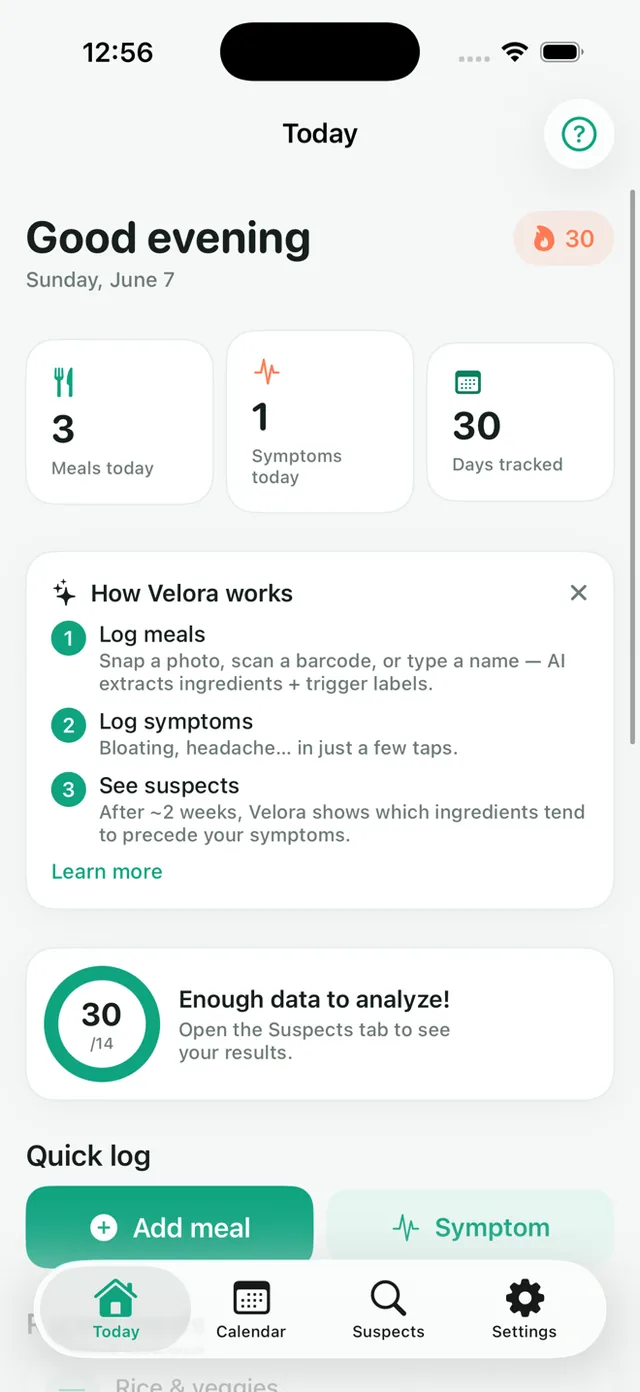
Photographing a meal and having it broken into ingredients solves the first and third problems at once, and logging at the table solves the second. The method itself, what to record and how to read it, is in how to keep a food and symptom diary, and there is a free printable template if you would rather start on paper.
How long before a diary becomes useful
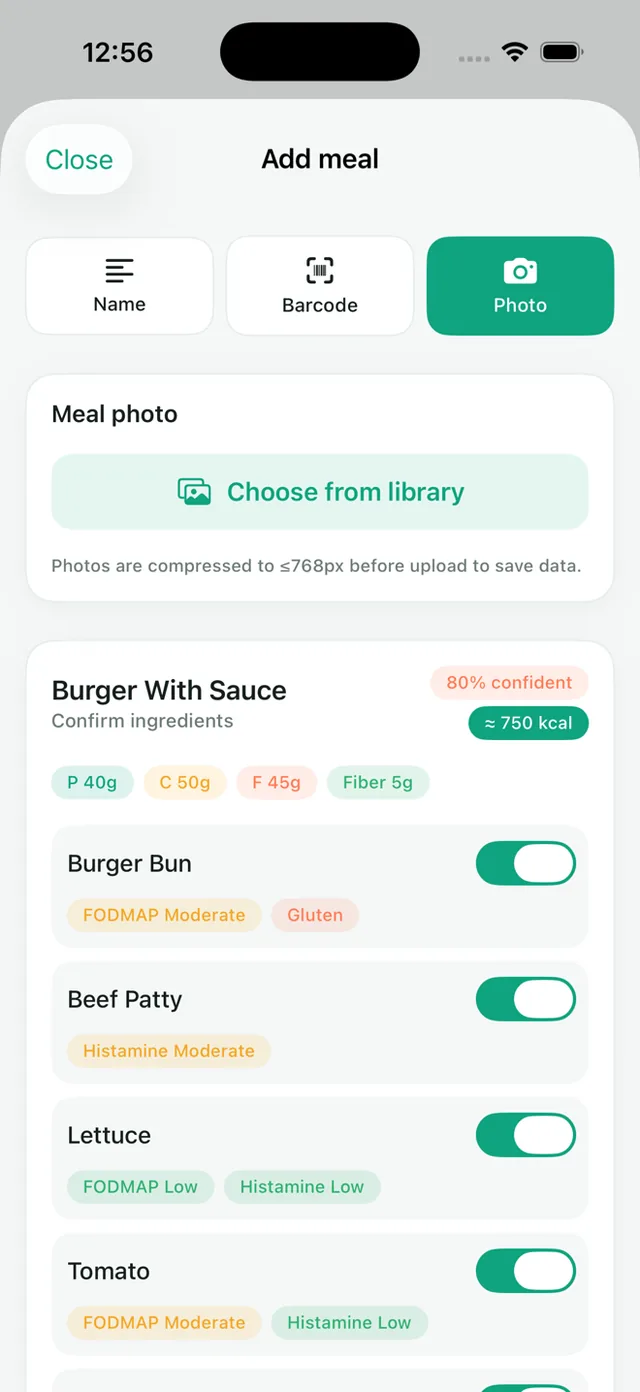
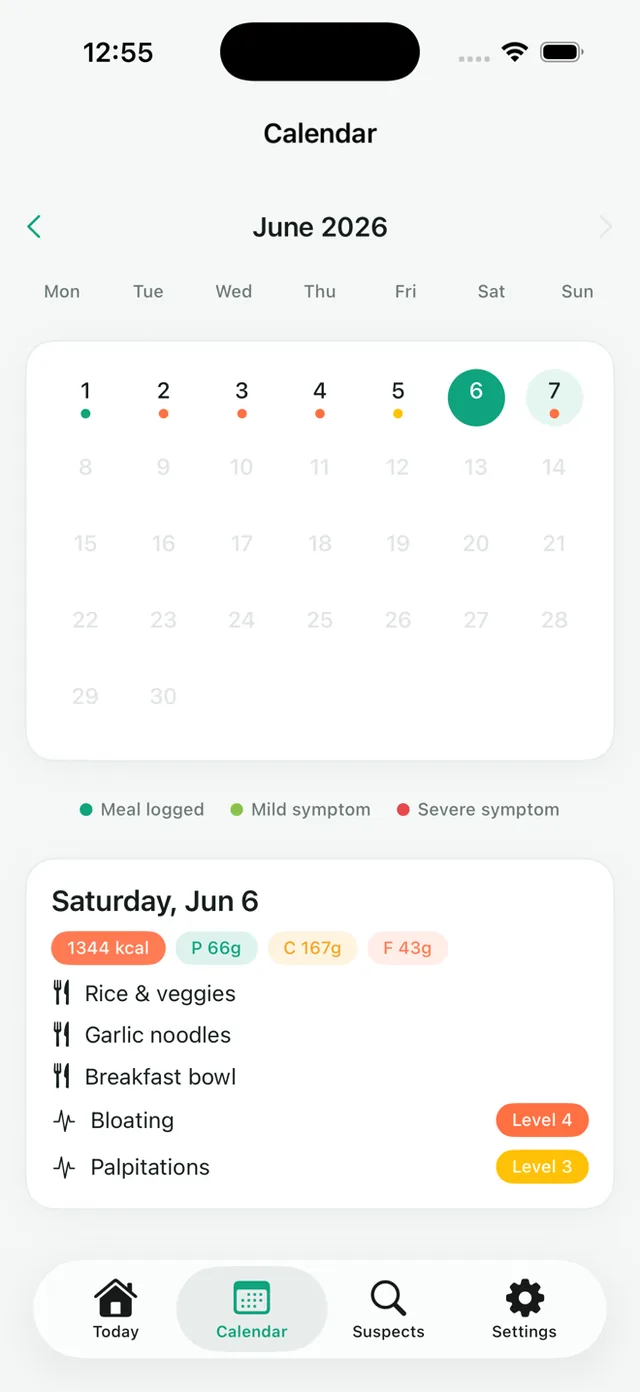
Plan on at least two weeks, and three or four if your symptoms are infrequent or linked to your cycle. The patterns only appear when there are enough good days and bad days to compare, and delayed reactions need several repeats before they stand out. In the 2020 study above, diaries ran for a median of 17 to 38 days. After that, the diary shifts from finding suspects to confirming them: removing one at a time and reintroducing it deliberately, as described in how to do an elimination diet.
What a diary is not for
A food and symptom diary finds patterns and suspects; it does not diagnose. Any reaction involving swelling of the lips or throat, difficulty breathing, widespread hives or faintness is an allergic emergency, not something to log. Blood in the stool, unintentional weight loss, persistent vomiting or symptoms that wake you at night need a doctor first. And if coeliac disease is possible, get tested before removing gluten. For everything else, the diary is what makes the appointment productive: weeks of evidence instead of a description from memory.
Frequently asked questions
Why is it important to keep a food and symptom diary? +
Because memory is unreliable for food and symptoms. Reactions are often delayed, hidden ingredients go unnoticed, and bad days are remembered while ordinary days are forgotten. A diary written at the time reveals patterns that memory misses and gives your doctor or dietitian real evidence.
What are the benefits of keeping a food diary for symptoms? +
It can reveal specific trigger ingredients, food categories, the dose above which symptoms start, the delay between eating and symptoms, and non-food factors such as sleep and stress. It also narrows an elimination diet to a short list of real suspects.
What does a food log help patients identify? +
Foods and ingredients that tend to come before symptoms, how long after eating those symptoms appear, whether portion size or meal timing matters, and factors other than food that affect symptoms. Clinicians use it to guide testing and elimination diets.
Does keeping a food diary actually help? +
Research suggests it can. In one study of 209 patient diaries, triggers found in the first part of a diary predicted later symptoms. In another, diary results helped 75% of patients as a guide for an elimination diet.
How long should I keep a food and symptom diary? +
At least two weeks, and three or four if symptoms are infrequent or linked to your cycle. You need enough good and bad days to compare, and delayed reactions need several repeats to stand out.
What should a food and symptom diary include? +
Every meal, snack and drink with the time and its ingredients, every symptom with its time and a severity score, plus sleep, stress, medication and, where relevant, the menstrual cycle.
Can a food diary diagnose a food intolerance or allergy? +
No. It identifies suspects to test and to discuss with a doctor. Confirmation comes from removing a food and reintroducing it deliberately. Suspected allergies need medical assessment and should never be tested at home.
Is an app better than a paper food diary? +
The method is the same. An app helps with the two things that make paper diaries fail: recording every ingredient, including hidden ones, and doing the pattern matching across weeks of entries.
This article is general wellness information from Velora Health, not medical advice, diagnosis or treatment. Always consult a qualified healthcare professional about your symptoms and before changing anything about your care.