Food intolerance or food allergy, and how to tell which one you have
The two get used interchangeably and they are not the same thing at all. One is an immune reaction that can be dangerous in tiny amounts. The other is a digestive or metabolic problem that is miserable but not life-threatening, and depends on how much you ate. Telling them apart starts with the clock.
A food allergy is an immune reaction, usually appearing within minutes to two hours, triggered by even a trace amount, and potentially life-threatening. A food intolerance is not an immune reaction, usually appears hours later, is dose dependent so a small amount may be fine, and is unpleasant rather than dangerous. Timing and dose are the two most useful clues. Anything involving breathing difficulty, swelling or faintness is treated as an allergic emergency regardless.
The differences that matter
| Food allergy | Food intolerance | |
|---|---|---|
| Mechanism | Immune system reaction | Digestive or metabolic, often an enzyme or fermentation problem |
| Timing | Minutes to about two hours | Often several hours, sometimes the next day |
| Dose | A trace can trigger it | Usually dose dependent |
| Typical symptoms | Hives, swelling, wheeze, vomiting, faintness | Bloating, wind, cramping, diarrhoea, headache, fatigue |
| Danger | Can be life-threatening | Not life-threatening, but can be seriously disruptive |
| Testing | Established tests exist, interpreted by a specialist | No reliable blood test; identified by elimination and reintroduction |
Why timing is the clue people can actually use
If something reliably happens within an hour, that pattern points toward allergy and belongs with a doctor rather than a food diary. If symptoms turn up four, six or twenty hours later, that delay is characteristic of intolerance and is also the reason self-diagnosis fails so often: by the time you feel it, you have eaten two more meals, and the blame lands on the most recent one.
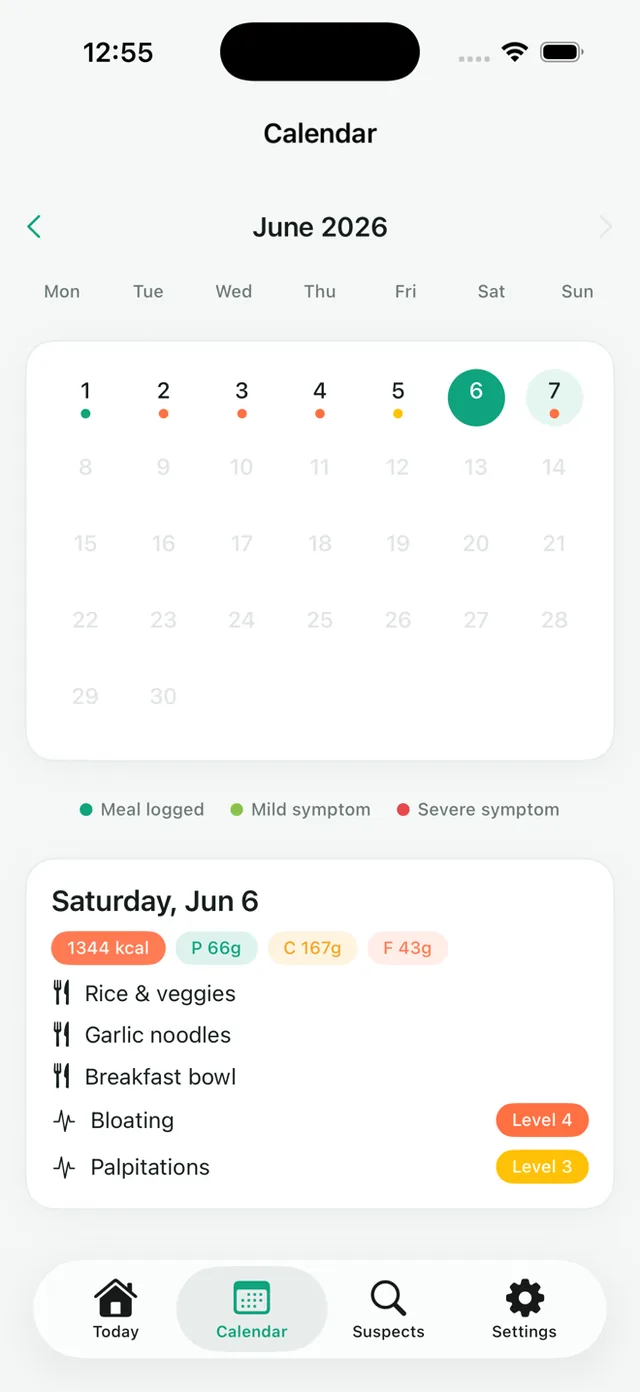
That lag is the single strongest argument for writing food down at the time rather than reconstructing it afterwards. Not because writing is virtuous, but because the correct answer is usually several meals back and nobody remembers that accurately.
How long intolerance symptoms last
It varies with the substance and the amount, but symptoms commonly begin within a few hours and settle within a day or so. Lactose intolerance, the most studied example, typically produces symptoms roughly thirty minutes to a few hours after eating, easing as the food clears. Reactions that persist for many days, or that never really resolve, are worth a doctor's assessment rather than another elimination round, since something else may be going on.
Why IgG food sensitivity tests are not the shortcut
These are marketed heavily, often direct to consumers, and they typically return a long list of foods you are told to avoid. Major allergy organisations do not recommend them for diagnosing food intolerance or allergy, because IgG antibodies to a food generally indicate exposure rather than intolerance. In other words, they can flag the foods you eat most.
The practical harm is not just the money. It is that people remove ten or fifteen foods on the strength of a printout, feel better for reasons that may be unrelated, and end up on a needlessly narrow diet without ever identifying the actual trigger. The unglamorous method remains the reliable one.
The method that does work
- Record first, change nothing. Two to three weeks of meals and symptoms with times, so there is a baseline
- Look at what precedes bad days, including the day before, not just the same day
- Remove one suspect at a time for two weeks and watch
- Reintroduce it deliberately, because improvement alone is not proof; the return of symptoms on reintroduction is
- Repeat before concluding, since one reaction can have another cause
Reintroduction is the step almost everyone skips, and it is the one that turns a suspicion into an answer. It is also the step that saves foods, because plenty of suspects turn out to be innocent.
Where the hidden ingredients problem comes in
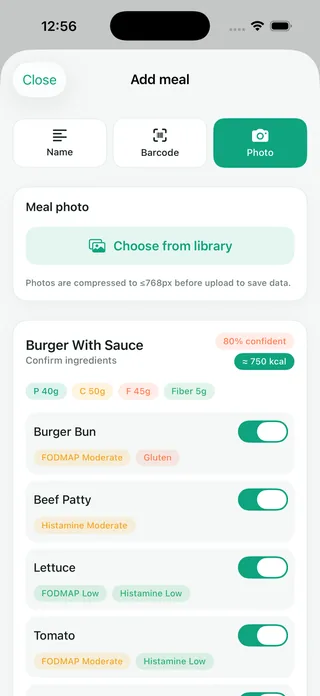
Most food diaries fail on accuracy rather than discipline. You write chicken and rice; the marinade, stock cube, thickener and onion in the sauce go unrecorded, and those are frequently the actual culprits. Photographing a meal and having the ingredients broken out is the difference between a diary that finds something and one that confirms whatever you already suspected. That is what Velora is built to do, and the correlation method behind it is in how to find food triggers.
When to stop experimenting and see a doctor
Urgently for any reaction involving difficulty breathing, swelling of the lips, tongue or throat, widespread hives or faintness, which are treated as allergic emergencies. Otherwise book an appointment for unintentional weight loss, blood in the stool, persistent vomiting, symptoms that began suddenly in adulthood, or a family history of coeliac disease, since coeliac testing needs to happen before you remove gluten, not after.
Frequently asked questions
What is the difference between a food intolerance and a food allergy? +
An allergy is an immune reaction that usually appears within minutes to two hours, can be triggered by a trace amount and can be life-threatening. An intolerance is not immune driven, usually appears hours later, is dose dependent and is unpleasant rather than dangerous.
How do I know if I have a food intolerance? +
By recording meals and symptoms with times for two to three weeks, identifying suspects from what precedes bad days, then removing one at a time and deliberately reintroducing it. The reintroduction step is what converts a suspicion into an answer.
How long do food intolerance symptoms last? +
Commonly they begin within a few hours and settle within about a day, varying with the food and the amount. Lactose intolerance symptoms typically start roughly thirty minutes to a few hours after eating. Symptoms lasting many days warrant medical assessment.
Are food sensitivity blood tests accurate? +
IgG food sensitivity panels are not recommended by major allergy organisations for diagnosing intolerance or allergy, because IgG antibodies generally reflect exposure to a food rather than a reaction to it. They often lead to unnecessarily restricted diets.
Why do my symptoms appear hours after eating? +
Delayed onset is characteristic of intolerance rather than allergy, and it is why identifying triggers from memory fails: by the time symptoms appear you have eaten again, and the wrong meal gets blamed.
Should I cut out gluten to see if it helps? +
Not before speaking to a doctor if coeliac disease is a possibility, because coeliac testing is unreliable once gluten has been removed from the diet. Get tested first, then experiment.
This article is general wellness information from Velora Health, not medical advice, diagnosis or treatment. Always consult a qualified healthcare professional about your symptoms and before changing anything about your care.