How to find your PCOS food triggers, without an extreme diet
With PCOS, it can feel like your body reacts to everything and nothing. One week sugar seems to set things off, the next it is stress or sleep. The way out is not a punishing elimination diet - it is a few weeks of light, consistent tracking that lets the pattern surface on its own.
Why PCOS symptoms feel so random
PCOS affects hormones, insulin sensitivity, skin and cycle, so the same trigger can show up in different ways and often with a delay. A meal today might show up as pain or a breakout two days later. That lag is exactly why memory fails and tracking wins.
Track a small, consistent set of data
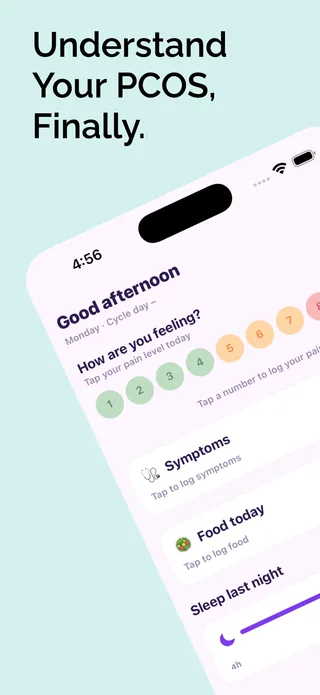
You do not need to log everything. Each day, capture:
- A simple symptom and pain rating (0 to 10)
- What you ate - especially sugar, dairy and refined carbs
- Sleep hours and rough quality
- Cycle day and mood
Thirty seconds a day is enough. Consistency matters far more than detail.
Look for lagged correlations, not single days
After a couple of weeks, compare your higher-symptom days with what came before them. The useful question is not "what did I eat today" but "what did the two days before a bad day have in common." Common PCOS culprits include high-sugar meals and short sleep, but yours may differ - which is the whole point.
Confirm a suspect before you cut it
When something looks like a trigger, test it deliberately: reduce it for a week or two and watch whether symptoms ease, then reintroduce and watch again. This is gentler and more conclusive than cutting out many foods at once, and it avoids the stress (which is itself a trigger) of an extreme diet.
Bring the pattern to your doctor
A clear summary of your top triggers and symptom trend gives your gynecologist or GP something concrete to work with, whether the conversation is about diet, insulin or other management. Walking in with data beats trying to recall three months in the waiting room.
Frequently asked questions
What foods commonly trigger PCOS symptoms? +
Refined sugar and refined carbohydrates are frequent culprits because of their effect on insulin, and some people react to dairy. But triggers are individual, which is why tracking your own data matters more than any generic list.
How long until I see a pattern? +
Most people surface their top few triggers after about 30 days of consistent logging. More data makes the pattern clearer and more confident.
Do I have to follow a strict diet? +
No. The aim is to identify your specific triggers so you can make a few targeted changes, rather than restrict everything at once.
Can a tracking app cure PCOS? +
No. Apps like Luna help you find patterns and have better conversations with your doctor. PCOS management is medical and individual.
This article is general wellness information from Velora Health, not medical advice, diagnosis or treatment. Always consult a qualified healthcare professional about your symptoms and before changing anything about your care.