Fiber after diverticulitis: how to add it back without a setback
During a flare you eat as little fiber as possible. Once it has settled, the advice flips: fiber is one of the best-supported ways to lower the risk of another flare. The hard part is the switch between the two, which is where most people either stall on bland food for months or go too fast and feel awful.
Once your doctor says the flare has settled and you are eating normally, add fiber back gradually over several weeks, a few grams every few days, with plenty of water. Start with gentle, soluble fiber such as oats, bananas and peeled cooked vegetables, then move to whole grains, beans and raw fruit and vegetables. Many adults are advised to aim for around 25 to 35 grams a day, depending on guidance where you live. Some extra gas and bloating early on is normal and usually settles.
Why fiber matters after a flare
In large long-term studies, people who eat more fiber have a lower risk of diverticulitis, and fiber is part of most guidance for preventing another flare. It keeps stools soft and bulky, which lowers pressure inside the colon, and it feeds the gut bacteria that help keep the bowel lining healthy.
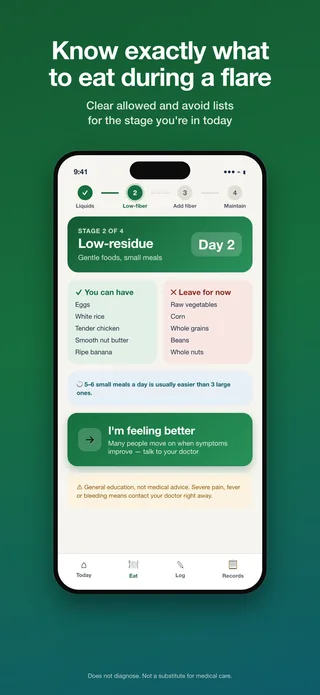
That is the opposite of the advice during a flare, when a low-fiber, low-residue diet rests the bowel. The switch is not a contradiction: one is about getting through inflammation, the other is about the years after it. The flare stages themselves are in what to eat during a diverticulitis flare.
When to start
Start when the flare has clearly settled: pain has gone rather than dulled, you have no fever, and you are back to eating ordinary low-fiber food without trouble. For many people that is somewhere around one to two weeks after the flare began, but follow the timing your doctor gave you. If you are unsure whether you are still in a flare, how long a diverticulitis flare lasts covers the usual shape of recovery.
How to reintroduce fiber, step by step
- Start with soluble fiber. Oats, bananas, peeled and cooked vegetables such as carrots and squash, white rice with a little added fiber
- Add a few grams every few days, not all at once. A sudden jump is what causes cramping and bloating
- Drink more water as you go. Fiber needs water to work, and too little can leave you more constipated than before
- Move on to whole grains: wholemeal bread, brown rice, whole-wheat pasta
- Then beans, lentils, raw fruit with skins and raw vegetables, in small portions at first
- Keep going until you reach your target, usually over four to six weeks, and keep it there
How much fiber to aim for
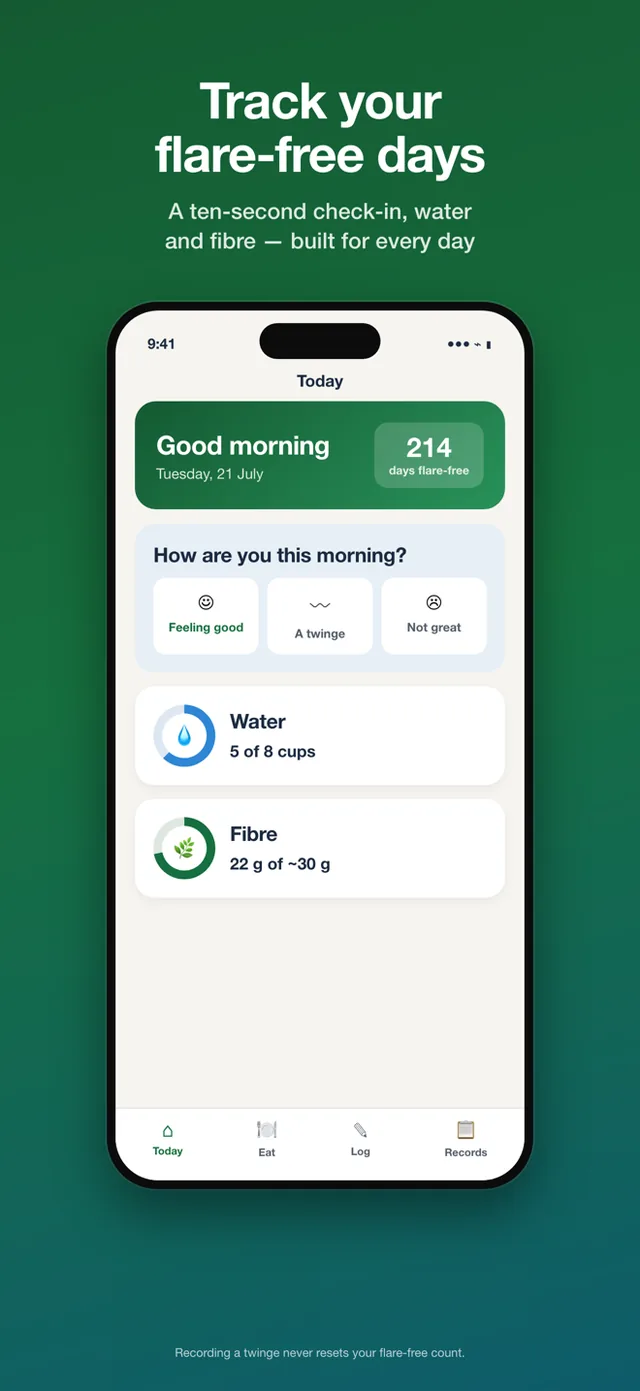
Recommendations vary by country, age and sex, but many adults are advised to eat around 25 to 35 grams of fiber a day, and most people eat considerably less. Your doctor or dietitian can give you a target that suits you. What matters more than hitting a precise number is getting there slowly and staying there.
High-fiber foods to build towards
| Food | Portion | Fiber, approximately |
|---|---|---|
| Lentils, cooked | Half a cup | About 8 g |
| Raspberries | One cup | About 8 g |
| Pear, with skin | One medium | About 5 to 6 g |
| Broccoli, cooked | One cup | About 5 g |
| Oats | Half a cup, dry | About 4 g |
| Chia seeds | One tablespoon | About 4 g |
| Almonds | A small handful | About 3 to 4 g |
| Wholemeal bread | One slice | About 2 to 3 g |
Nuts and seeds are fine once you have recovered. The old advice to avoid them is not supported by research. If your diet alone does not get you close to your target, a fiber supplement such as psyllium can help; ask your doctor or pharmacist first.
What is normal on the way back
More wind and some bloating in the first weeks of adding fiber are common and usually ease as your gut adjusts. Slowing down for a few days usually helps. Mild changes in bowel habit are also normal. What is not normal: fever, severe or worsening pain, pain that is getting more localised, or bleeding. Those are reasons to contact your doctor rather than to keep going.
Keeping it going
The benefit of fiber comes from years of eating it, not weeks. The people who keep it up tend to be the ones who build it into meals they already eat, rather than adding supplements and special foods. Other things that lower the risk of another flare, such as activity and not smoking, are covered in what causes diverticulitis flare-ups.
Frequently asked questions
How do I reintroduce fiber after diverticulitis? +
Once your doctor says the flare has settled, add fiber gradually over several weeks, a few grams every few days, starting with soluble fiber such as oats and cooked vegetables, then whole grains, beans and raw fruit and vegetables. Drink more water as you increase it.
Should you eat high fiber if you have diverticulitis? +
Not during a flare, when a low-fiber diet is usually advised. Once it has settled, yes: a high-fiber diet is part of most guidance for lowering the risk of another flare.
How much fiber should I eat after diverticulitis? +
Many adults are advised to aim for around 25 to 35 grams a day, depending on guidance where you live. Build up to it over four to six weeks, and ask your doctor or dietitian for a target that suits you.
How long after diverticulitis can I eat fiber? +
When the flare has clearly settled and you are eating ordinary food without trouble, often around one to two weeks after it began. Follow the timing your doctor gives you.
Is bloating normal when adding fiber after diverticulitis? +
Some extra gas and bloating is common in the first weeks and usually settles as your gut adjusts. Slow down if it bothers you. Fever, severe pain or bleeding are not normal and need a doctor.
Can I take a fiber supplement after diverticulitis? +
A supplement such as psyllium can help if food alone does not get you to your target. Ask your doctor or pharmacist first, and increase it gradually with plenty of water.
This article is general information from Velora Health, not medical advice. It cannot tell you whether you are having a flare and it does not replace medical care. If you have severe or worsening pain, a fever, rectal bleeding, persistent vomiting, or you cannot keep liquids down, contact your doctor or your local emergency number now.