Finding your gastroparesis safe foods, without the guesswork
With gastroparesis, generic diet sheets only get you so far - a food that sits fine with one person can mean hours of nausea for another. Your real safe foods list is personal, and the only way to build it is to track what you eat, how it was prepared, and how your stomach answered.
Why texture matters more than ingredients
Gastroparesis means delayed stomach emptying, so how quickly a food can leave the stomach drives how well you tolerate it. That is why the same chicken can be fine blended into soup and miserable as a grilled breast. Standard advice organises eating by texture - liquids empty easiest, then soft and pureed foods, then solids - with fat and insoluble fiber slowing everything down. Logging meals by texture, not just by ingredient, is what makes your data interpretable.
Track symptoms with the GCSI
The Gastroparesis Cardinal Symptom Index is the validated scale GI specialists use: it covers nausea, early satiety, bloating and fullness. Rating these consistently after meals and across the day gives you a number that can be trended - and a shared language with your gastroenterologist. "My GCSI averaged 2.1 this month, down from 2.8" is a very different conversation from "I think it has been a bit better."
Build your three lists: safe, caution, trigger
After a few weeks of logging meals and symptoms, foods start sorting themselves:
- Safe - consistently low symptoms, your reliable base
- Caution - fine in small portions or certain preparations
- Trigger - repeatedly followed by nausea, pain or fullness
The caution list is where preparation notes earn their keep: many foods move from trigger to safe simply by being cooked softer, blended, or eaten in half portions. Portion size is often as important as the food itself.
Do not let hydration slip
Nausea and early fullness make it easy to under-drink, and dehydration then worsens the whole picture. Tracking fluids alongside meals - and favouring small, frequent sips - keeps this quiet risk visible. Flag persistent low intake to your care team.
Small, frequent, low-fat: the pattern that helps most people
Most gastroparesis guidance converges on smaller meals eaten more often, lower in fat and insoluble fiber, with more nutrition in liquid form on bad days. Your tracking shows how well that pattern works for you, and which specific foods within it are your winners.
Bring a tolerance report to your GI specialist
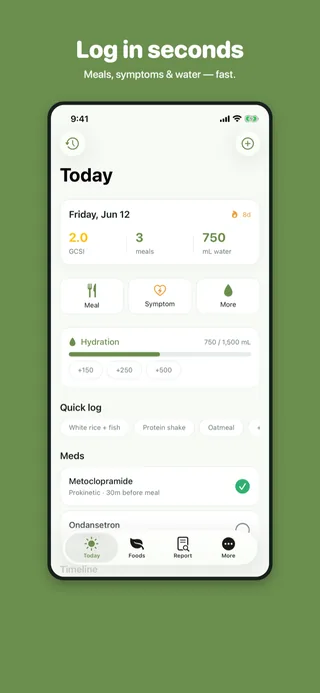
When a flare is actually running, the eating steps are in what to eat during a gastroparesis flare, and what is known about how long one lasts is in how long a gastroparesis flare lasts. A monthly summary - GCSI trend, safe and trigger lists, hydration, weight direction and any red flags - turns a 15-minute appointment into a productive one. Mello builds exactly this Tolerance Report from your daily logs.
Frequently asked questions
What foods are usually safe with gastroparesis? +
Low-fat, low-fiber foods in soft or liquid form are the usual starting point: soups, smoothies, white rice, eggs, well-cooked vegetables. But tolerance is individual, so treat generic lists as a starting hypothesis to test with your own tracking.
What is the GCSI? +
The Gastroparesis Cardinal Symptom Index is a validated symptom scale covering nausea, early satiety, bloating and fullness. Tracking it over time gives your gastroenterologist a trend they can act on.
Why do I tolerate a food sometimes and not other times? +
Preparation, portion size, fat content, time of day and what else you ate all matter with delayed emptying. Logging these details is how the pattern becomes visible.
Can Mello treat gastroparesis? +
No. Mello is a tracking tool that helps you find your tolerated foods and prepare for your GI specialist. Treatment decisions are medical.
This article is general wellness information from Velora Health, not medical advice, diagnosis or treatment. Always consult a qualified healthcare professional about your symptoms and before changing anything about your care.