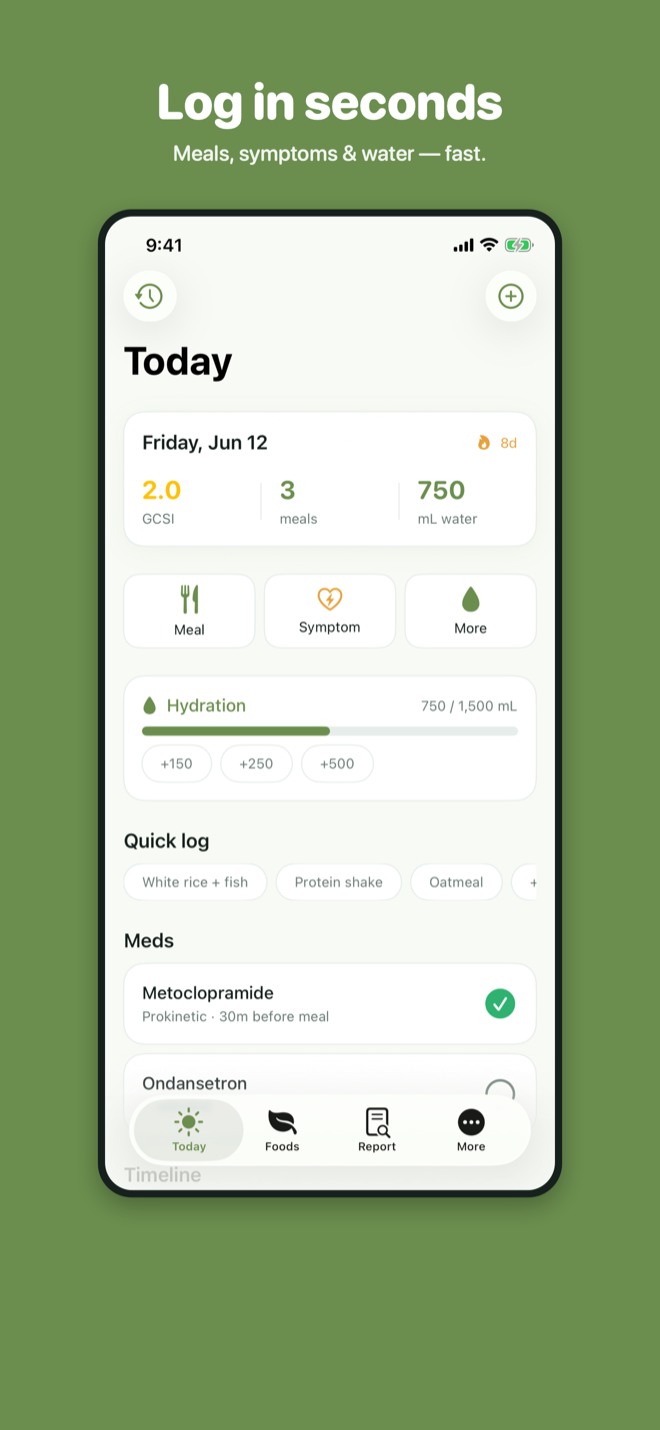
Log meals by texture, symptoms and water in seconds, learn which foods your stomach actually tolerates, and bring a clear monthly report to your GI specialist.
With delayed gastric emptying, the same food can be fine one day and miserable the next. Texture and timing matter more than ingredients - so that is what Mello tracks.
Calorie counters and FODMAP apps are built for other conditions. Gastroparesis needs texture tiers, small-meal patterns and symptom timing - not macros.
"Some days are bad" is hard to act on. A month of meals, tolerance and GCSI trend gives your specialist something real to work with.
Log each meal with its texture tier and how it sat. Track GCSI symptoms, hydration against your daily goal, and meds with mealtime-aware reminders.

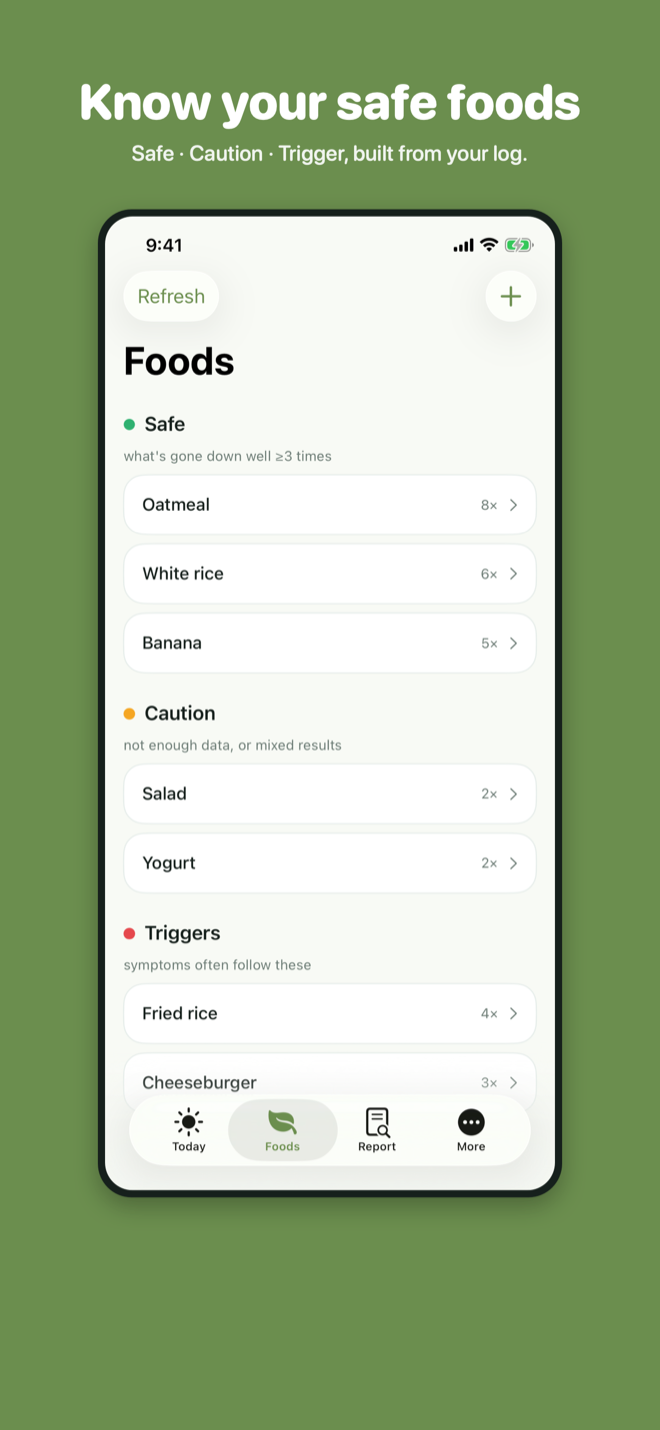
Mello builds a personal Safe / Caution / Trigger list from your own log - foods that went well three or more times become your safe list, and repeat offenders get flagged.

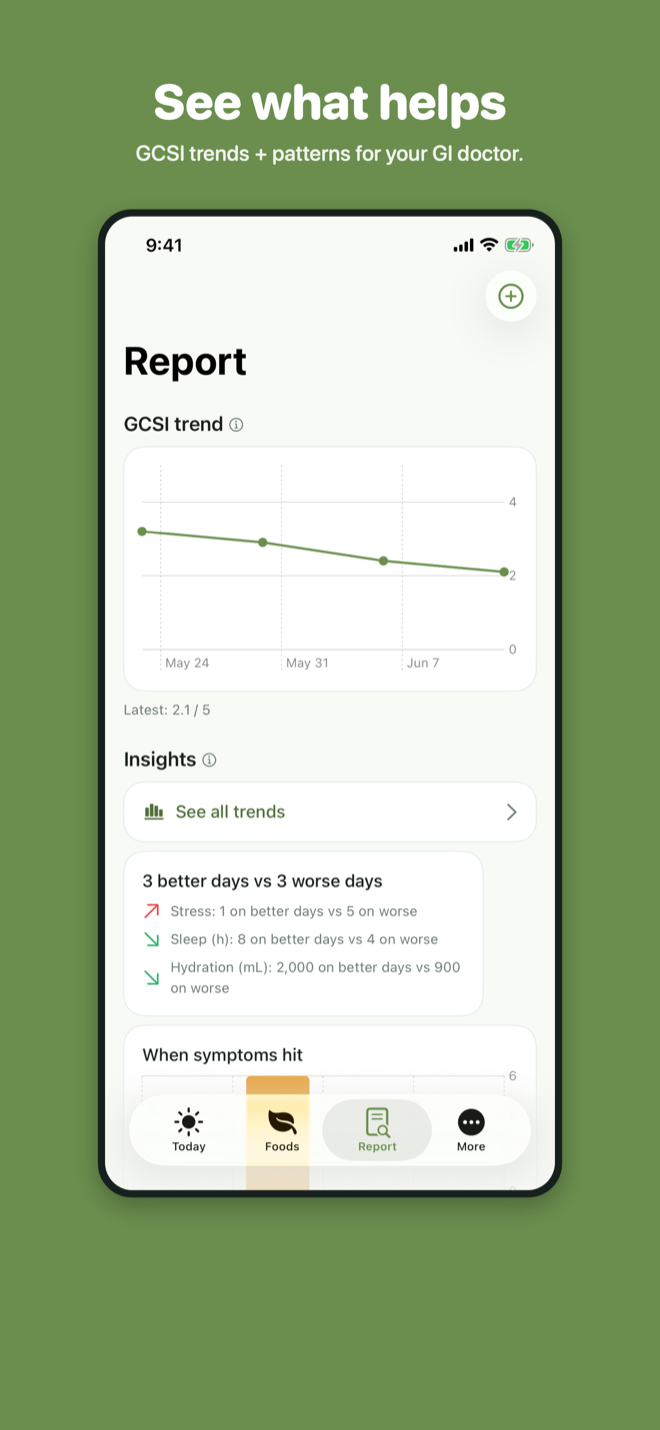
Watch your GCSI trend bend down, see what your better days have in common, and generate a monthly AI Tolerance Report to bring to your GI appointment.

Mello has no account and no data server. Your logs live on your device and sync through your own private iCloud. The one exception: when you generate a Tolerance Report, a summary of your logs is sent to our AI service to write it, then discarded.
Sync happens in your Apple account, not ours.
Report data is processed to write it, never stored.
No ads, no analytics, no data brokers.
No. Mello does not prescribe diets or count calories. It records what you ate, its texture, and how you tolerated it - so you and your GI specialist can see your own patterns.
The Gastroparesis Cardinal Symptom Index, a validated symptom score used in gastroparesis care. Mello tracks it over time so your specialist can see your trend.
On your device and your own private iCloud (CloudKit). We run no server that stores your logs. See our privacy policy.
Mello is available now on the App Store - just tap "Download on the App Store" above.
Commonly reported triggers are large meal volume, high fat or high fibre food, high blood sugar in people with diabetes, certain medications including opioids and GLP-1 agonists, and periods of stress or illness. Which apply varies between people.
Symptoms genuinely fluctuate for many people, with better and worse stretches that do not always have an obvious cause. That variability is a feature of the condition rather than a sign you are managing it badly.
Results vary between studies in the same person depending on the meal, blood sugar and medications on the day, and there is recognised overlap with functional dyspepsia. Persistent symptoms with a normal study are worth pursuing rather than dismissing.
Be first to know when Mello lands on the App Store.
Related reading: Gastroparesis Safe Foods: How to Find What Your Stomach Tolerates