What to eat during a gastroparesis flare, step by step
In a flare the question is not what is healthy. It is what will leave your stomach. That is a different question with a different answer, and most of the food advice people meet is written for the first one.
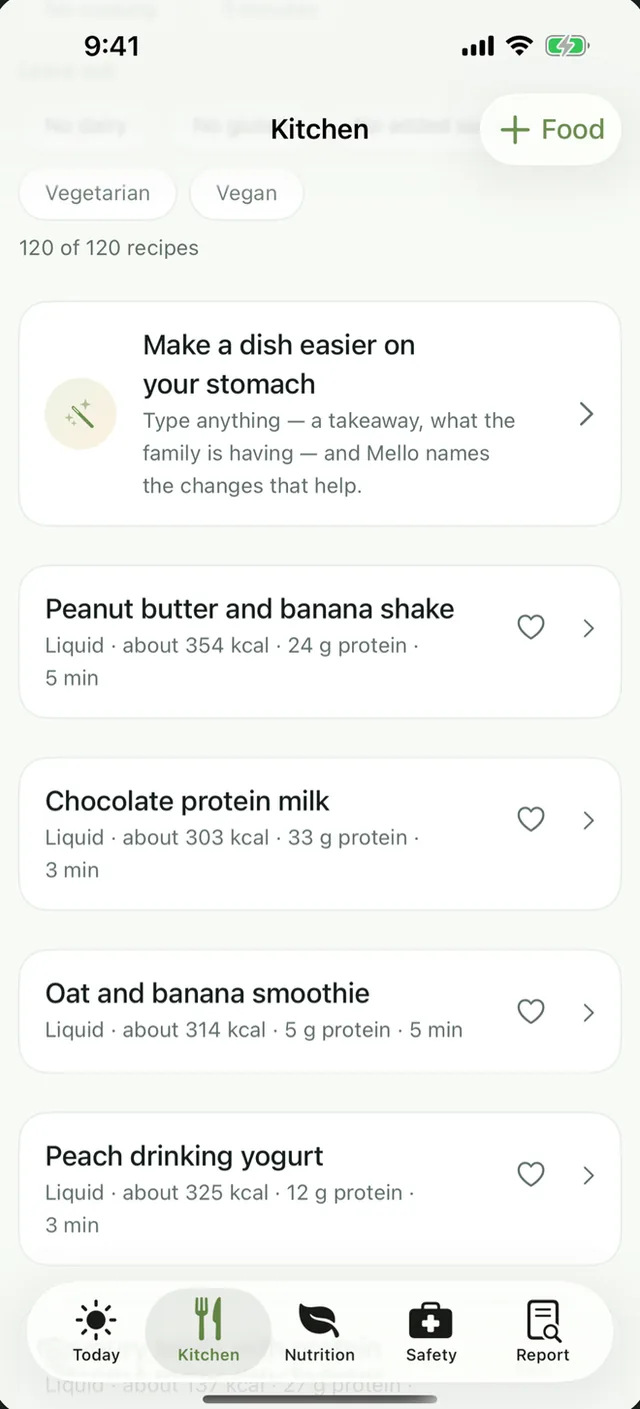
During a flare most people do better on liquids that carry calories, then thin purees, then soft low fat and low fibre solids, in small amounts eaten often rather than three meals. Texture usually matters more than which food it is. Not being able to keep fluids down for a day, vomiting that will not stop, or signs of dehydration are reasons to seek medical care now, not to adjust the menu.
Why texture is the lever, not the ingredient list
A stomach that empties slowly handles small particles better than large ones, which is why the same ingredient can be fine blended and awful whole. This is one of the few parts of gastroparesis eating with a controlled trial behind it. In a randomised study of 56 people with insulin-treated diabetes and gastroparesis, a diet built around small particle size was compared with the standard recommended diabetes diet over twenty weeks. Nausea and vomiting, fullness after eating, bloating, and regurgitation all improved significantly more on the small particle diet. Abdominal pain did not.
That is a narrow population and one trial, so treat it as a strong hint rather than a law. The practical reading is that changing the form of food is worth trying before cutting whole categories out, and that pain may not follow the other symptoms.
The steps, and how long people usually stay in them
| Step | What it usually looks like | Moving on |
|---|---|---|
| 1. Liquids that carry calories | Broth, oral rehydration drinks, diluted juice, and nutrition drinks if they go down. Sipped through the day rather than taken in glasses | When nausea settles and fluid is staying down, often a day or two |
| 2. Thin purees and smooth food | Smooth soup, yogurt, applesauce, blended potato, anything that pours or falls off a spoon rather than holding its shape | When purees are tolerated for about a day without fullness building |
| 3. Soft, low fat, low fibre solids | White rice, white bread, pasta, eggs, tinned or cooked soft fruit without skin, well-cooked vegetables without skin or seeds, tender lean protein in small pieces | When small solid meals go down without symptoms returning |
| 4. Back to your own baseline | Whatever your normal tolerated diet is, which for most people stays smaller and more frequent than other people eat | This is the destination, not a cure |
Nobody moves through this on a schedule. People who have had gastroparesis for years usually know their own pace, and the steps are a direction of travel rather than days on a calendar. A plan from your own dietitian or gastroenterologist replaces every line of this.
What is usually worth leaving out while the flare is active
- Fat in large amounts, particularly fried food, because fat slows emptying further. Fat in liquid form is often tolerated when the same fat in solid form is not
- High fibre food: raw salad, skins, pips, nuts, wholegrain bread, legumes. Fibre is healthy and is still the wrong texture today
- Large portions, which is the most common single mistake. Volume matters as much as content
- Fizzy drinks, which add gas to a stomach that is already distended
- Alcohol, which slows emptying and irritates on the way through
Hydration is the part that puts people in hospital
Vomiting and poor intake together dehydrate a person faster than either alone, and dehydration makes nausea worse, which closes a loop that is hard to break at home. Sipping small amounts continuously works better than drinking a glass, and oral rehydration solution does more than water when little is staying down. Passing much less urine than usual, dark urine, dizziness on standing or a dry mouth that will not settle are the signs to act on rather than to monitor.
Meal size and timing do as much work as the menu
- Four to six small meals rather than three, so the stomach is never asked to clear a large volume
- Stay upright for a couple of hours after eating. Lying down removes the help gravity gives
- A gentle walk after a meal is better tolerated than it sounds and is often suggested
- Keep the largest intake for the part of the day your stomach behaves best, which for many people is the morning
When this is not a flare to manage at home
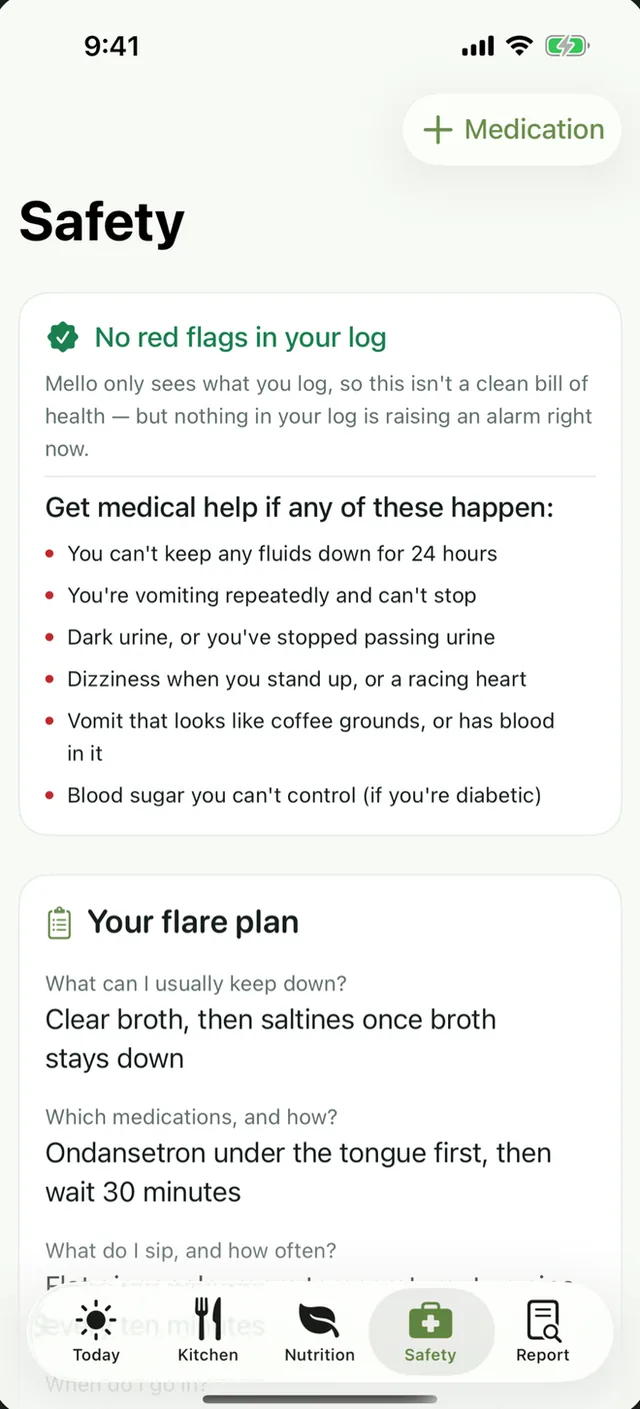
Seek medical care now if you cannot keep fluids down for a day, if vomiting will not stop, if there is blood in what you bring up, if abdominal pain is severe, or if you have diabetes and your blood sugar is swinging out of its usual range. Weight you did not mean to lose, and symptoms that do not settle at all after a week of careful eating, are reasons to be reviewed rather than to keep waiting. The ACG clinical guideline, 2022 sets out how the condition is assessed and treated, and that assessment belongs to a clinician.
Why your own tolerance list beats any food list
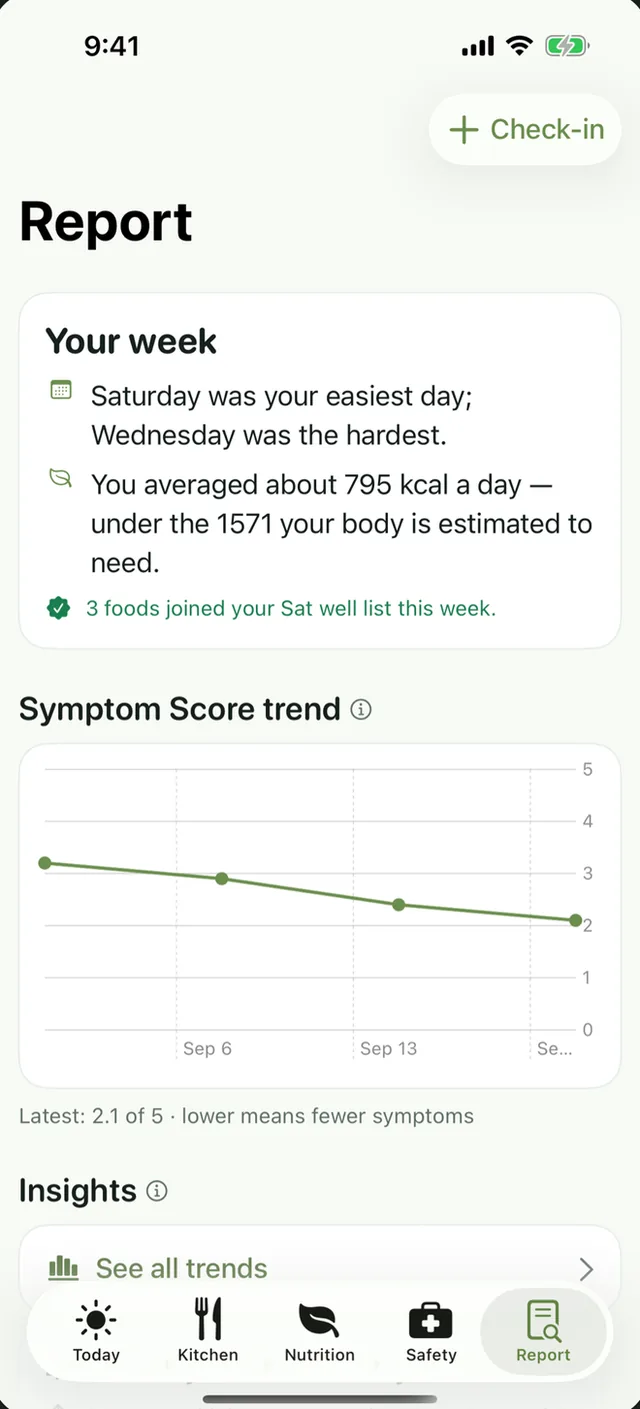
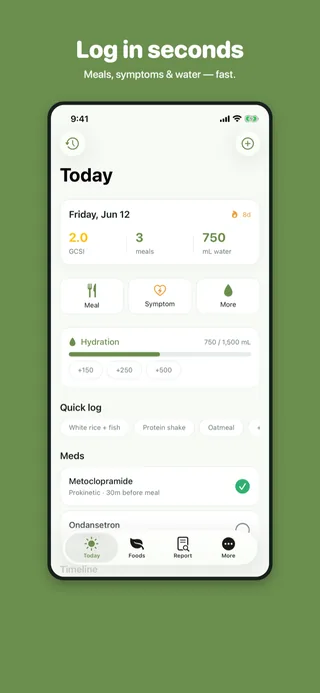
Every gastroparesis food list, including the one above, is a starting guess. The lists people actually eat from are personal: white rice and banana for one person, neither for another, and the same food tolerated one month and not the next. The useful thing a flare produces, if anything is recorded while it happens, is a shorter list of what went down and what did not, in your own stomach, at the texture you actually ate it. There is a free printable gastroparesis diary laid out for exactly that, if you would rather do it on paper. The method is the same one in how to find your gastroparesis safe foods, and what sets flares off in the first place is in why gastroparesis flares up.
Frequently asked questions
What can I eat during a gastroparesis flare? +
Most people start with liquids that carry calories, such as broth, oral rehydration drinks and nutrition drinks, then move to thin purees, then to soft low fat and low fibre solids such as white rice, eggs and well-cooked vegetables without skin. Small amounts eaten often are tolerated better than three meals.
Why does fat make gastroparesis worse? +
Fat slows gastric emptying, so a high fat meal sits in a stomach that is already slow. The same amount of fat is often better tolerated in liquid form, which is why nutrition drinks can work when fried food does not.
Is fibre bad for gastroparesis? +
Fibre is not bad, it is the wrong texture during a flare. High fibre food stays in the stomach longer and can be hard to clear, so raw salad, skins, pips, nuts and wholegrain bread are usually left until symptoms settle rather than removed for good.
How small should meals be during a flare? +
Small enough that you are not uncomfortable afterwards, which usually means four to six small meals rather than three. Volume is as important as content: the same food in a large portion can bring symptoms back on its own.
Can I drink normally during a gastroparesis flare? +
Liquids generally empty better than solids, so drinking is often how calories and fluid get in. Sip continuously in small amounts rather than drinking a glass at once, use oral rehydration solution when little is staying down, and leave fizzy drinks and alcohol out while the flare is active.
When should I go to hospital with a gastroparesis flare? +
If you cannot keep fluids down for about a day, if vomiting will not stop, if there is blood in what you bring up, if pain is severe, or if you have diabetes and your blood sugars are out of their usual range. Dark urine, passing much less than usual and dizziness on standing point to dehydration and need care rather than another diet change.
Does a blended diet really help gastroparesis? +
In a randomised trial of 56 people with diabetic gastroparesis, a diet built around small particle size improved nausea and vomiting, fullness, bloating and regurgitation significantly more than the standard diabetes diet over twenty weeks, though not abdominal pain. It is one trial in a specific group, so it is a reason to try changing texture, not a guarantee.
This article is general wellness information about gastroparesis, not medical advice. It does not diagnose gastroparesis and it does not replace the dietitian or gastroenterologist guiding your care. Vomiting you cannot stop, being unable to keep fluids down, signs of dehydration or severe abdominal pain need medical attention now, not a diary entry.