A printable gastroparesis diary, free, no sign-up
Most printable food diaries ask what you ate. With gastroparesis that is the wrong question: the same food is fine blended and impossible whole, fine in a small portion and impossible in a normal one. This sheet asks for texture, portion and fat instead, which is what actually predicts how a meal goes.
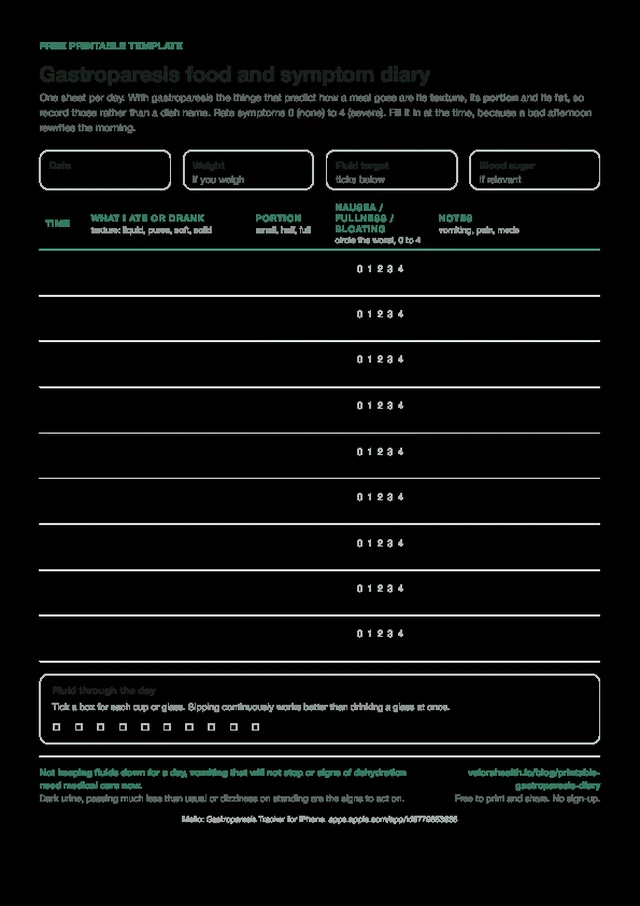
Two pages, A4 and US Letter friendly. Page one is a daily sheet with texture, portion and symptom ratings. Page two builds your safe, caution and trigger lists. 92 KB, no sign-up and no email.
Download the gastroparesis diary PDFPaper is a fine place to start. When you want the lists built for you instead of by hand, Mello keeps the same diary on an iPhone.
What is on the two pages
Page one: the daily sheet
- Date, weight, fluid target and blood sugar at the top, because weight direction is the number a clinician reacts to and dehydration is what turns a bad week into an admission
- Time for every entry, since how long after a meal the symptoms arrived is the detail memory destroys
- What I ate or drank, with its texture: liquid, puree, soft or solid. This is the column that does the work
- Portion, because volume triggers symptoms on its own and the same food can pass or fail on size
- Nausea, fullness and bloating rated 0 to 4, so days can be compared rather than remembered as bad
- Ten fluid ticks along the bottom, one per cup, since sipping continuously is the thing people forget on the worst days
Page two: the weekly review
This is where the sheet earns its place. For each day you note the worst symptom, then what went down easily and what did not, at the texture and portion you actually ate. At the bottom are three boxes: safe so far, caution, and triggers. The instruction printed next to them matters as much as the boxes: a food that failed in a large portion is worth retrying small before it is written off, and tolerance changes between flares, so the lists get reviewed rather than carved.
How to use it
- Print one daily sheet per day. Two weeks is the minimum before any pattern is worth believing
- Fill it in at the time. A difficult afternoon rewrites the memory of the morning
- Record texture and portion even when you are confident you will remember. That is the pair that predicts, and the pair that fades
- At the end of each week, complete the review page from the daily sheets
- Take the sheets to your appointment. Four weeks of records with weight and fluid is worth more to a gastroenterologist or dietitian than any description from memory
When paper is enough
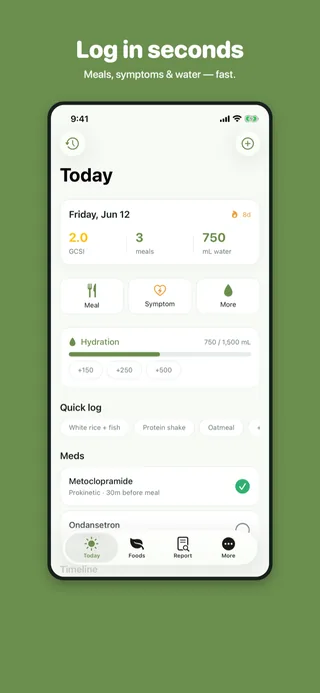
More often than app makers admit. For a two week stretch before an appointment, or if you would rather not have a phone out at the table, print the sheets and ignore the rest of this page. The method is what does the work, not the medium. What the sheet cannot do is the comparison: after a month you are left reading twenty pages looking for what the bad days had in common, and that is the part a flare makes hardest, because a flare is exactly when nobody has the energy to cross-reference anything. Mello keeps the same fields on an iPhone and sorts foods by how they have actually gone down for you, from the entries themselves.
The wider method is in how to find your gastroparesis safe foods, and what sets flares off is in why gastroparesis flares up.
Frequently asked questions
Is the gastroparesis diary template really free? +
Yes. It is a PDF you download directly from this page, with no email address and no sign-up. Print as many daily sheets as you need and share them.
What size paper is it for? +
It is laid out for A4 and prints correctly on US Letter with the default fit-to-page setting.
Why does the sheet ask for texture and portion? +
Because in gastroparesis those predict how a meal goes better than the ingredient does. The same food is often tolerated blended and not whole, or small and not full size, so a diary that records only the dish name cannot show you the pattern.
How many days should I fill in? +
At least fourteen, and ideally through a flare and a better stretch, because tolerance changes between the two. Four weeks before an appointment gives a clinician something solid.
Can I use it if I do not have diabetes? +
Yes. The blood sugar box is there because high glucose slows emptying further for people who do have diabetes. Leave it blank if it does not apply.
This article is general wellness information about gastroparesis, not medical advice. It does not diagnose gastroparesis and it does not replace the dietitian or gastroenterologist guiding your care. Vomiting you cannot stop, being unable to keep fluids down, signs of dehydration or severe abdominal pain need medical attention now, not a diary entry.