Why gastroparesis flares up, and how to find your own triggers
One week you manage most things. The next, half a cup of soup sits like a stone for six hours. Gastroparesis fluctuating is not you imagining it or failing at the diet, and the things that drive it are specific enough to be worth learning individually.
Gastroparesis means the stomach empties more slowly than it should without any blockage. Flares are commonly set off by meal size, fat and fibre content, blood sugar in people with diabetes, some medications, and periods of stress or illness. Symptoms genuinely come and go, so a bad fortnight is not evidence that you did something wrong. What you can change is which of those factors applies to you, and that takes a record rather than a guess.
Meal size is usually the first lever
A stomach that empties slowly is easier to overwhelm by volume than by anything else. This is why the standard advice is small and frequent rather than three meals, and why the same food can be fine in a small portion and impossible in a normal one. If you change one thing, portion size is usually the one with the fastest feedback.
Fat and fibre slow emptying further
Fat slows gastric emptying in everyone, so it lands harder on a stomach that is already slow. Fibre adds bulk that has to be processed, and in gastroparesis high fibre food is also associated with bezoar formation, which is why it is often restricted specifically rather than as general caution. Liquids usually leave the stomach more easily than solids, which is the reasoning behind liquid or blended meals in worse periods.
The practical version is not a permanent ban on either. It is knowing which of them, and at what quantity, actually triggers your symptoms, which is a per-person question. The method for working that out is in finding your gastroparesis safe foods.
Blood sugar, if you have diabetes
Diabetes is one of the most common identified causes of gastroparesis, and the relationship runs both ways: high blood glucose can itself slow gastric emptying, while unpredictable emptying makes glucose harder to control because food arrives in the bloodstream on an unpredictable schedule. If you have diabetes and a bad stretch of gastroparesis, glucose patterns belong in the same record as symptoms, because your team will want to look at them together.
Medication is an underrated trigger
Several common medication classes slow gastric emptying, including opioid painkillers, some anticholinergics, and the GLP-1 receptor agonists now widely used for diabetes and weight. If a flare started within weeks of a new prescription, that timing is worth raising. Do not stop a prescribed medicine on your own: the point of noticing is to give your doctor something to weigh, since the alternative may be worse.
Stress and illness
Gut motility is closely tied to the autonomic nervous system, so periods of high stress, poor sleep or an intercurrent infection commonly coincide with worse symptoms. This is not the same as the condition being caused by stress, and the distinction matters because people with gastroparesis are told the latter far too often.
What a flare actually is, given the stomach is always slow
This confuses people reasonably: if gastroparesis is permanent, what is flaring? The condition is a baseline, and a flare is a stretch where emptying slows further or the stomach becomes more sensitive to what is in it, usually both. Nothing about the diagnosis changes during one, which is why repeating a gastric emptying study mid-flare rarely tells anyone anything new. What changes is how much the stomach will accept before symptoms start, and that threshold moves week to week.
It also explains a frustration people describe: the portion that was fine last month is now too much, without any mistake having been made. The threshold moved. Finding the new one is the work of the next few days, not evidence that the diet failed.
Flare, or the condition getting worse
A flare settles back toward your own baseline. A deterioration does not, and the difference is only visible against a record of what your baseline was. Several flares close together, each one harder to climb out of, or a baseline that is quietly lower than it was six months ago, are worth raising specifically, because the response is different: a flare is managed, a change in trajectory is investigated. Weight that is drifting down is the clearest objective signal most people have at home.
The first day of a flare
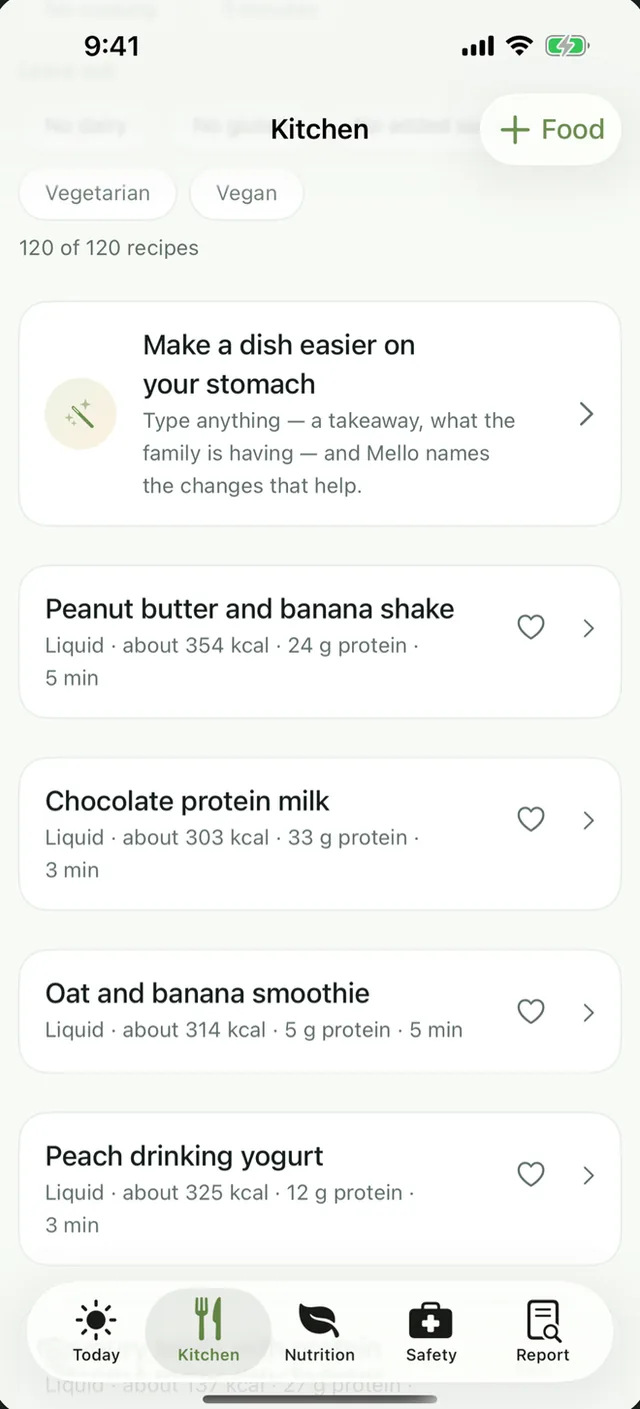
- Drop the texture, not the calories. Move to liquids that carry something rather than to clear fluids alone, so the next few days do not start from an energy deficit
- Make portions smaller and more frequent before changing what the food is. Volume is the fastest lever
- Protect fluid intake deliberately, in small continuous sips, because dehydration worsens nausea and closes a loop
- Check the obvious triggers: a new medication, a stretch of high blood sugar, an infection starting, a fattier meal than usual
- Write down the start date. It is the detail memory loses first and the one that matters most if flares are becoming more frequent
Why the tests can look normal
A gastric emptying study is the usual way delayed emptying is measured, and results can vary between studies in the same person depending on what was eaten, blood sugar on the day and medications taken beforehand. Some people have persistent symptoms with a normal study, and there is recognised overlap with functional dyspepsia. A normal result does not mean the symptoms are not real; it means the picture needs more than one measurement to interpret, which is again a reason to arrive with a record rather than an impression.
What to record so an appointment is worth having
- Meals by texture: liquid, soft, solid, since that is closer to what your stomach experiences than a food name
- Portion size, roughly, because volume is often the actual variable
- Symptoms with timing: how long after eating fullness, nausea or pain started
- Weight, weekly rather than daily
- Medication changes and, if relevant, glucose, on the same timeline
When it is more than a flare
Seek medical care for persistent vomiting where you cannot keep fluids down, signs of dehydration, severe abdominal pain, vomiting blood or material that looks like coffee grounds, or rapid unintentional weight loss. Those are not diet adjustments, and dehydration in particular can escalate quickly when nothing is staying down.
Turning months into one page
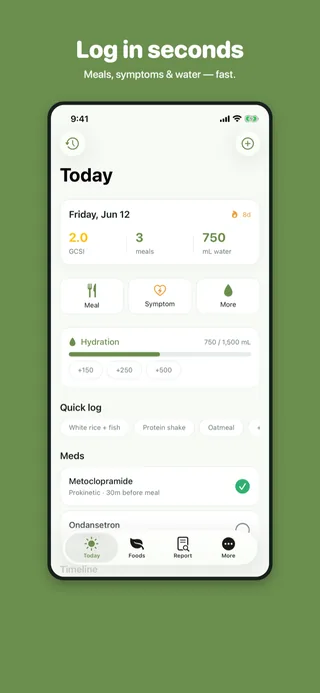
The eating steps for getting through one are in what to eat during a gastroparesis flare, and what is known about how long they run is in how long a gastroparesis flare lasts. The reason flares feel random is that the delay between eating and symptoms is long enough to defeat memory. Mello logs meals by texture, tracks GCSI symptoms, and turns the month into a Tolerance Report for your GI appointment.
Frequently asked questions
What is the difference between a gastroparesis flare and the condition getting worse? +
A flare settles back toward your own baseline; a deterioration does not. Telling them apart needs a record of what your baseline was, which is why several flares close together, a slower recovery each time, or weight drifting down are worth raising specifically rather than treated as a bad patch.
What should I do on the first day of a gastroparesis flare? +
Drop to liquids that still carry calories rather than clear fluids alone, make portions smaller and more frequent, protect fluid intake in small continuous sips, and look for an obvious trigger such as a new medication, a stretch of high blood sugar or an infection. Write down the date it started.
Why can I eat something one month and not the next? +
Because a flare lowers the volume and texture your stomach will accept before symptoms start, and that threshold moves. The food did not change and neither did your diagnosis. Finding the current threshold again is the work of the next few days.
Why does gastroparesis flare up? +
Common triggers are large meal volume, high fat or high fibre food, high blood sugar in people with diabetes, certain medications including opioids and GLP-1 agonists, and periods of stress or illness. Which of these applies varies between people, so a personal record is more useful than a general list.
Does gastroparesis come and go? +
Symptoms genuinely fluctuate for many people, with better and worse stretches that do not always have an obvious cause. That variability is a feature of the condition rather than a sign you are managing it badly.
Can gastroparesis be cured? +
There is generally no cure, though it depends on the cause: gastroparesis that follows an infection sometimes improves over time, and where a medication is the driver, changing it may help. Most management aims to control symptoms and maintain nutrition.
Can you have gastroparesis with a normal gastric emptying study? +
Results vary between studies in the same person depending on the meal, blood sugar and medications on the day, and there is recognised overlap with functional dyspepsia. Persistent symptoms with a normal study are worth pursuing rather than dismissing.
Why does gastroparesis cause so much pain? +
Pain is commonly reported alongside nausea and early fullness, and can relate to distension of a stomach that is not emptying. Severe or sudden abdominal pain is a reason to seek care rather than to adjust your diet.
Do GLP-1 medications cause gastroparesis? +
GLP-1 receptor agonists slow gastric emptying as part of how they work, and delayed emptying and related symptoms have been reported with them. If a flare followed a new prescription, raise the timing with your doctor rather than stopping the medicine yourself.
This article is general wellness information about gastroparesis, not medical advice. It does not diagnose gastroparesis and it does not replace the dietitian or gastroenterologist guiding your care. Vomiting you cannot stop, being unable to keep fluids down, signs of dehydration or severe abdominal pain need medical attention now, not a diary entry.