How long does a gastroparesis flare last, and what shortens one
Searching this question returns confident numbers from pages that do not say where the numbers came from. The honest position is more useful: gastroparesis has no agreed definition of a flare, so nobody has measured how long one lasts, and what you can act on is the shape rather than the duration.
There is no established figure, because a gastroparesis flare has no formal definition to measure. What people describe is a worsening that settles over days to a couple of weeks once eating drops back to liquids and purees, with a tail of smaller appetite afterwards. A flare that is not improving at all after about a week, or that stops you keeping fluids down at any point, is a reason to be seen rather than to keep waiting it out.
Why there is no number
Diverticulitis flares can be counted because each one is usually confirmed and treated. Gastroparesis is different: the diagnosis is made once, usually with a gastric emptying study, and after that the illness is continuous with better and worse stretches. A flare is what the person living with it calls a bad stretch, not an event anyone registers. Studies measure symptom scores over months, not the length of individual flares, so the numbers on most pages are somebody's impression written as fact.
The shape people describe
- A day or two of rapid worsening, often after a trigger that is obvious in hindsight: a larger or fattier meal, an infection, a medication change, a bad stretch of blood sugar
- Several days of the worst of it, where fullness, nausea and early satiety make eating anything solid unrealistic
- A week or two of climbing back through purees and soft food, often two steps forward and one back
- A longer tail of eating less than usual, tiring easily and being wary of food, which is not the flare continuing but is not baseline either
What stretches a flare out
- Going back to normal food too early, which is the most common reason a flare restarts on day five
- Dehydration, because it worsens nausea, which worsens intake, which worsens dehydration
- Blood sugar out of range in diabetes, since high glucose slows emptying further
- A new medication that slows the gut, including opioids and some diabetes drugs
- An infection sitting underneath the flare, which will not resolve on diet changes
When a long flare is not a flare
Symptoms that persist for weeks without any improvement deserve a different question: is this still gastroparesis behaving badly, or is something else happening. A clinician will usually think about dehydration or malnutrition that now needs treating, a medication that is driving it, whether blood sugar is in range, and whether another condition explains the picture better. Telling the difference needs assessment, which is why a flare measured in weeks is a reason to be reviewed rather than to be patient.
What is worth writing down while it happens
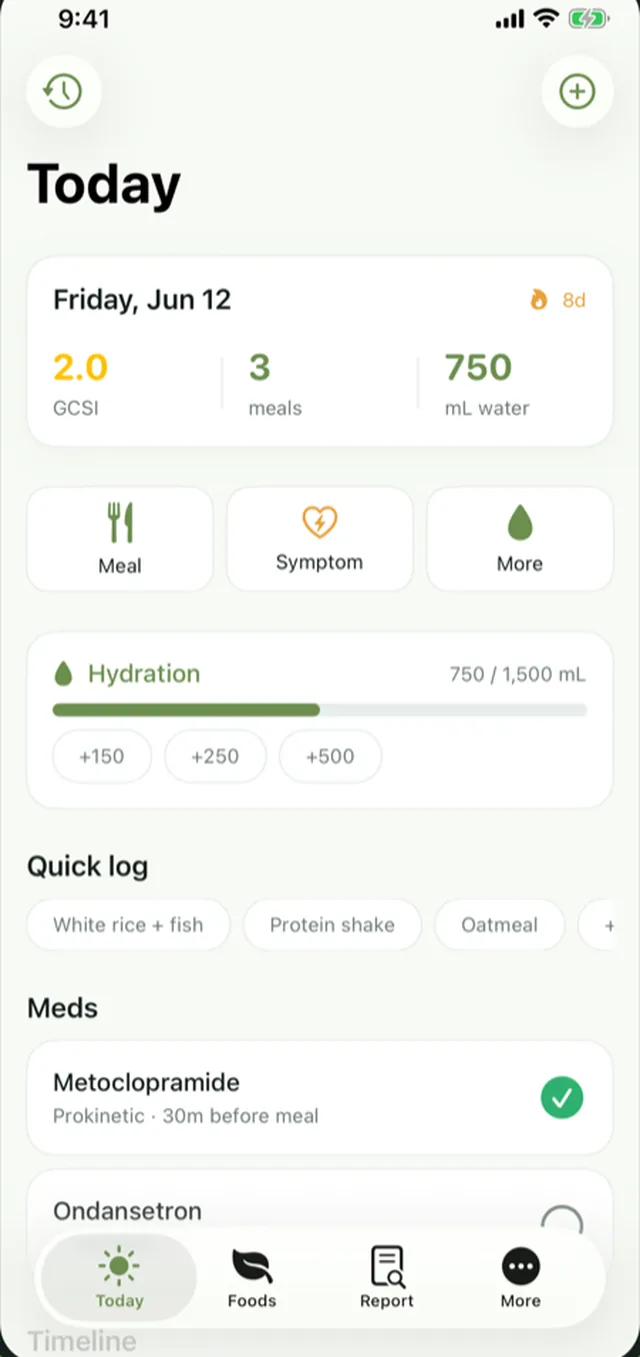
Three things carry weight at a follow-up and are the ones memory loses: when it started, what you could actually keep down on each day, and how much fluid went in. The free printable gastroparesis diary has a column for each. Add weight if you have scales, because unintentional weight loss changes what a clinician does next. A description of a flare built from dates beats a description built from impressions, and the pattern across several flares is what shows whether they are becoming more frequent.
What tends to set them off is covered in why gastroparesis flares up, and the eating steps for getting through one are in what to eat during a gastroparesis flare.
Frequently asked questions
How long does a gastroparesis flare last? +
There is no established figure, because a flare has no formal definition to measure and studies track symptom scores over months rather than individual flares. What people describe is worsening over a day or two, several difficult days, then a week or two climbing back through liquids and purees, with a tail of reduced appetite afterwards.
Why is my gastroparesis flare lasting weeks? +
Common reasons are returning to normal food too early, dehydration feeding the nausea, blood sugar out of range in diabetes, a new medication that slows the gut, or an infection underneath. Weeks without improvement is a reason to be reassessed rather than to keep waiting, partly because dehydration and weight loss need treating in their own right.
Can a gastroparesis flare go away in a day? +
A mild one can settle quickly, particularly where the trigger was a single large or fatty meal and eating drops straight back to liquids. Most people describe something longer, and a flare that clears in hours was probably a different kind of bad day.
Does gastroparesis get worse over time? +
Not necessarily. Many people stay at a similar baseline for years with better and worse stretches, which is why flares becoming more frequent or harder to recover from is worth raising specifically rather than treating as inevitable.
How do I know the flare is over? +
When soft solid food goes down without symptoms returning, fluids are no longer an effort, and appetite starts to come back. Eating less than usual for a while afterwards is common and is not by itself a sign the flare is continuing.
When should I call a doctor about a gastroparesis flare? +
If you cannot keep fluids down for about a day, vomiting will not stop, there is blood in it, pain is severe, you are losing weight without meaning to, or there is no improvement at all after about a week of careful eating.
This article is general wellness information about gastroparesis, not medical advice. It does not diagnose gastroparesis and it does not replace the dietitian or gastroenterologist guiding your care. Vomiting you cannot stop, being unable to keep fluids down, signs of dehydration or severe abdominal pain need medical attention now, not a diary entry.