Can you live a normal life with gastroparesis?
A gastroparesis diagnosis often comes after months of feeling unwell, and the first question after the relief of a name is usually what this means for the rest of your life. The honest answer is that it varies a lot, but most people find a version of normal that works, built around a few changes that become habit.
For many people, yes, with adjustments. People with gastroparesis work, travel, raise families and eat out. Most build their day around smaller, more frequent meals, softer textures, less fat and fiber at once, and a plan for flare days. How much it affects life depends on the cause, the severity and how well symptoms respond to treatment. Weight loss, dehydration or being unable to keep fluids down are signs it is not under control and need medical help.
Why the answer varies so much
Gastroparesis is a label for a stomach that empties too slowly without a blockage, and it covers a wide range of people. Someone with mild idiopathic gastroparesis whose nausea responds to small meals has a very different life from someone with severe diabetic gastroparesis and frequent vomiting. Symptoms also do not track neatly with emptying test results, which is why two people with the same test can feel completely different.
Studies consistently find that quality of life is lower on average than in the general population, and that anxiety and low mood are common. They also find that people who adapt their routines, have a clear plan for bad days and get support with eating cope noticeably better. Much of what follows is about that adaptation.
What usually changes at meals
- Smaller, more frequent meals. Five or six small meals usually sit better than three large ones
- Texture matters. Liquids and soft, well-cooked or blended food leave the stomach faster than solids. Many people move between textures depending on the day
- Fat and fiber in smaller amounts. Both slow emptying. Fat in liquid form, such as in a smoothie, is often better tolerated than in solid food
- Earlier is easier. Emptying tends to be better earlier in the day, so the main meal often moves to breakfast or lunch
- Stay upright after eating and take a gentle walk if you can
Finding which foods work for you takes some trial and error. Gastroparesis safe foods covers how to build that list without guessing.
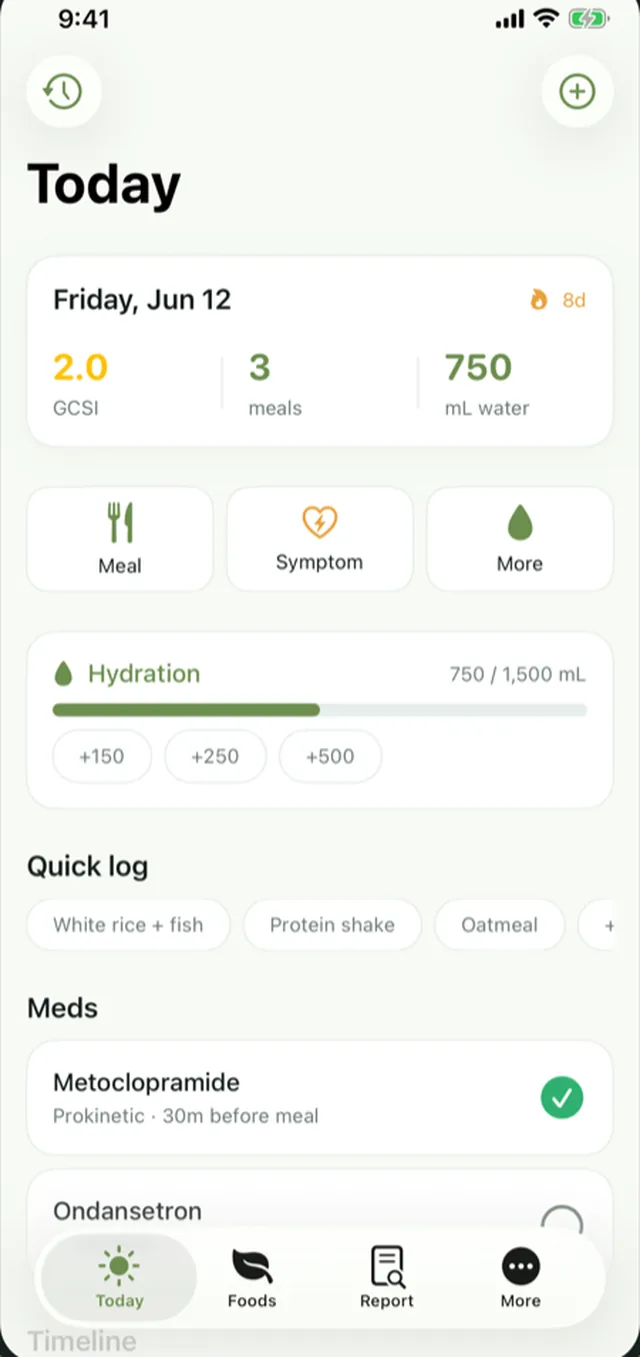
Work, eating out and travel
Work
Most people with gastroparesis keep working. Things that help: small snacks at your desk, a fridge for liquid meals, flexibility on bad mornings, and a quiet word with a manager about what a flare looks like. In many countries gastroparesis can qualify for workplace adjustments, and a doctor's letter makes that conversation simpler.
Eating out and social meals
Loss of social eating is one of the hardest parts for many people. Ordering a starter or soup as a main, asking for sauces on the side, eating a small meal before going out so you are not relying on the menu, and telling close friends what helps all make it easier to keep showing up.
Travel
Pack food that you know works, keep a liquid meal or two in your bag, carry your medications in hand luggage with a list, and know where you would go for help if a flare hits away from home.
Have a plan for flare days
Flares are easier to manage when the decisions are made in advance. Write down, on a good day, what you drink and eat when things are bad, which medications you take and when, the point at which you call your care team, and who you call. What to eat during a gastroparesis flare has a stage-by-stage approach, and why gastroparesis flares up covers the common triggers.
Signs it is not under control
Contact your care team promptly if you notice any of these:
- Losing weight without trying, or clothes getting looser over a few weeks
- Not keeping fluids down for a day, or signs of dehydration such as dark urine, dizziness or very little urine
- Vomiting that is frequent or contains blood, or looks like coffee grounds
- Severe abdominal pain or a swollen, hard abdomen
- In diabetes, blood sugars that have become hard to predict
Undernutrition is the way gastroparesis does the most harm, and it can creep up quietly. A dietitian who knows gastroparesis is one of the most useful people to have on your side.
Frequently asked questions
Can you live a normal life with gastroparesis? +
Many people can, with adjustments. People with gastroparesis work, travel and eat out, usually by eating smaller and more frequent meals, adjusting texture, fat and fiber, and having a plan for flare days. How much it affects life depends on the cause, severity and response to treatment.
Can you work with gastroparesis? +
Most people keep working. Small snacks during the day, access to a fridge, flexibility on bad mornings and, where available, formal workplace adjustments all help.
Does gastroparesis get better? +
It depends on the cause. Gastroparesis after a viral illness can improve over months, and symptoms often improve with diet changes, better blood sugar control in diabetes, and medication. For others it is long term, with good and bad periods.
Is gastroparesis life threatening? +
It is usually not life threatening when managed, but severe cases can lead to dehydration, undernutrition and weight loss that need medical treatment. Not keeping fluids down or losing weight are reasons to contact your care team.
How do you eat out with gastroparesis? +
Order smaller dishes such as soups or starters, ask for sauces on the side, choose softer and lower fat options, and consider eating a small safe meal beforehand so you are not relying on the menu.
This article is general information from Velora Health, not medical advice. It does not replace an assessment by a clinician who knows your history. If you cannot keep fluids down, are vomiting blood, have severe abdominal pain or signs of dehydration, contact your doctor or your local emergency number now.