Managing seborrheic dermatitis means juggling three or four shampoos, timing how long each one stays on, and checking every new product for hidden triggers. SebDerm keeps track of all of it, and shows you what your own skin does in response.

Seborrheic dermatitis affects roughly one in twenty people clinically, and far more in its milder dandruff form, yet as of 2026 there was no dedicated iPhone app for it. People were tracking a rotation of medicated shampoos on paper, in notes apps, or not at all, and guessing whether a new moisturiser would set them off.
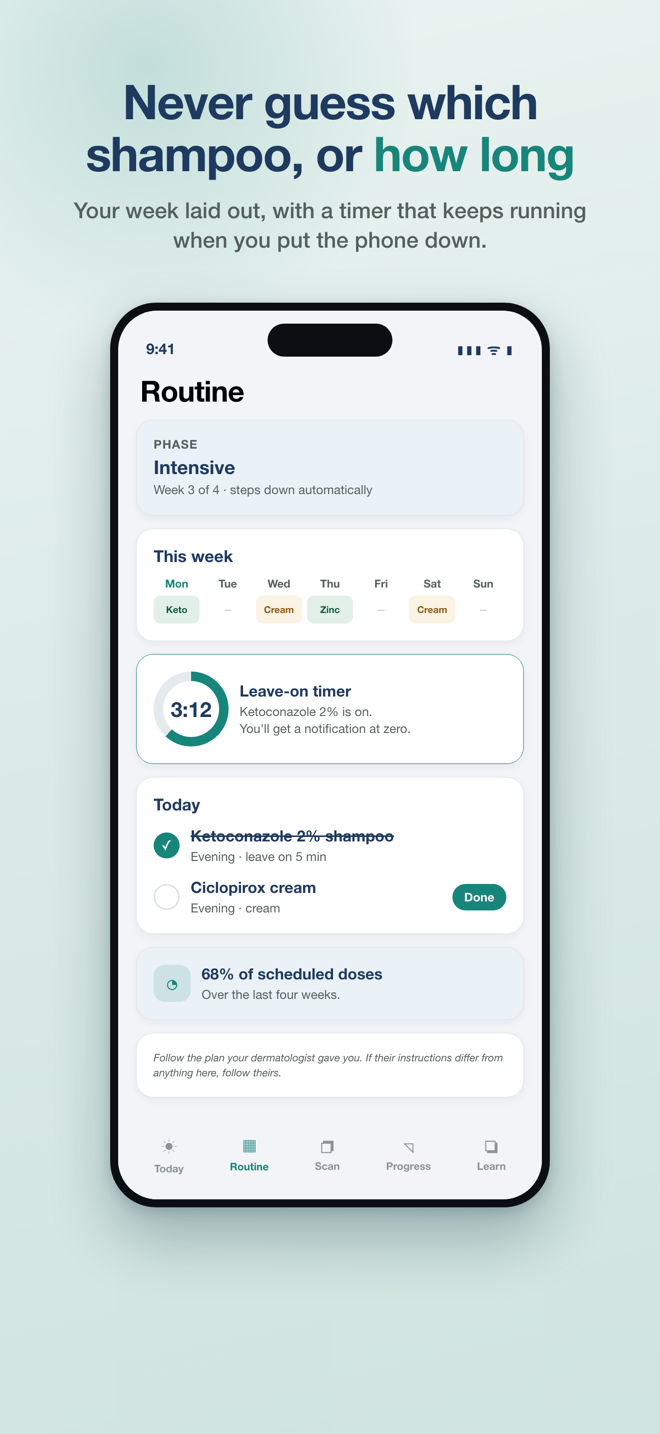
Ketoconazole twice a week, a cream on other days, zinc in between. Each with a different leave-on time. It is a lot to hold in your head every morning.
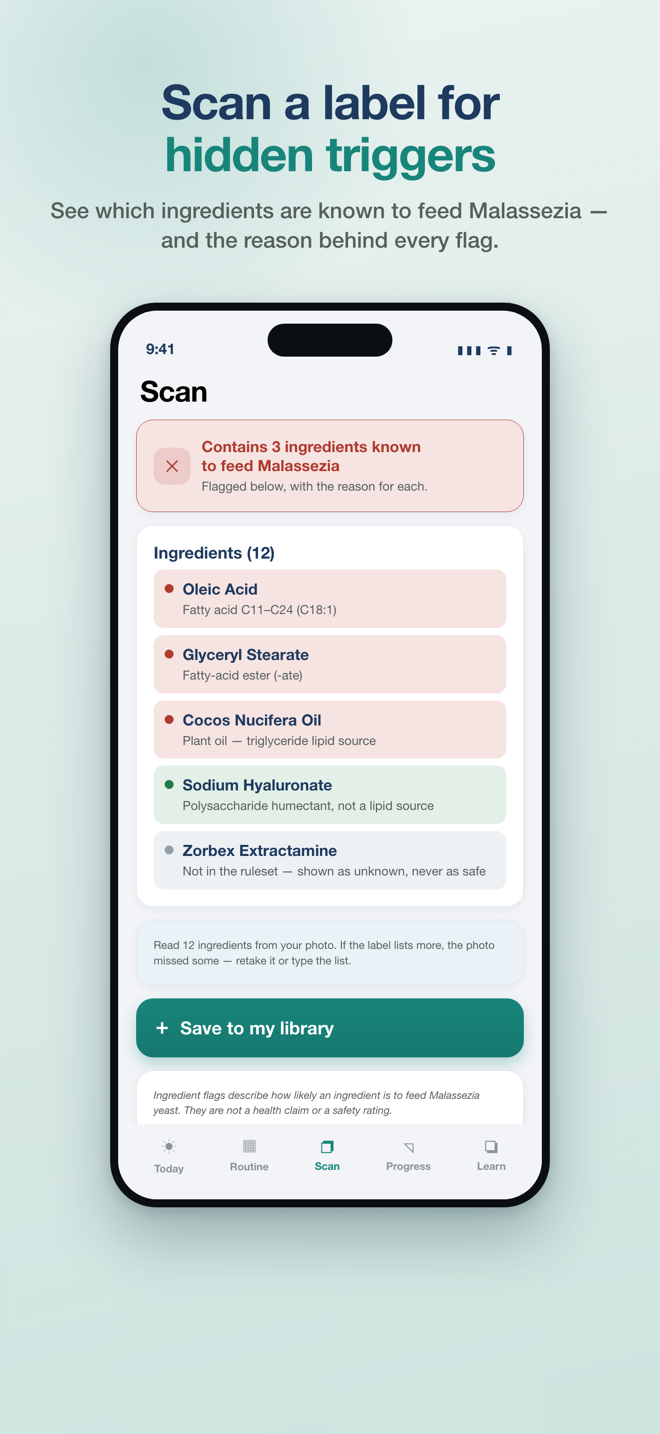
Many oils, fatty acid esters and fermented ingredients feed Malassezia. They are in products marketed as gentle, and the label never says so.
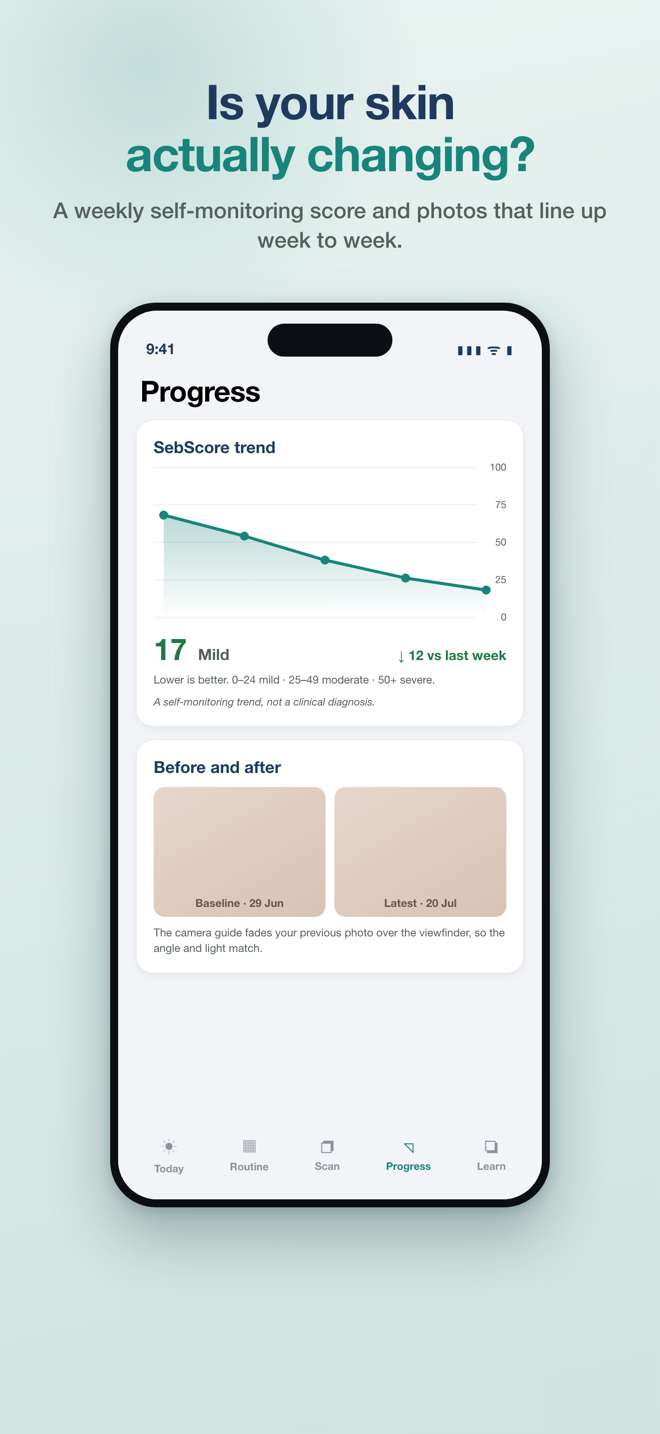
Skin changes slowly and memory is generous. Without a score and aligned photos, six weeks of effort feels like guesswork.
See which product is scheduled today and exactly how long to leave it on. The countdown keeps going when you put the phone down, and notifies you at zero, because five minutes in the shower is longer than it sounds.
Your wash frequency follows your hair type. When the intensive phase ends, the app prompts you to step down to maintenance rather than leaving you on a strong routine indefinitely.

Point the camera at an ingredient list and SebDerm flags the ingredients known to feed Malassezia: fatty acids and their esters, plant oils, polysorbates, fermented ingredients. Tap any flag to read the mechanism behind it.
Ingredients the ruleset does not recognise are shown as unknown, never as safe. A scanner that pretends to certainty it does not have is worse than no scanner.

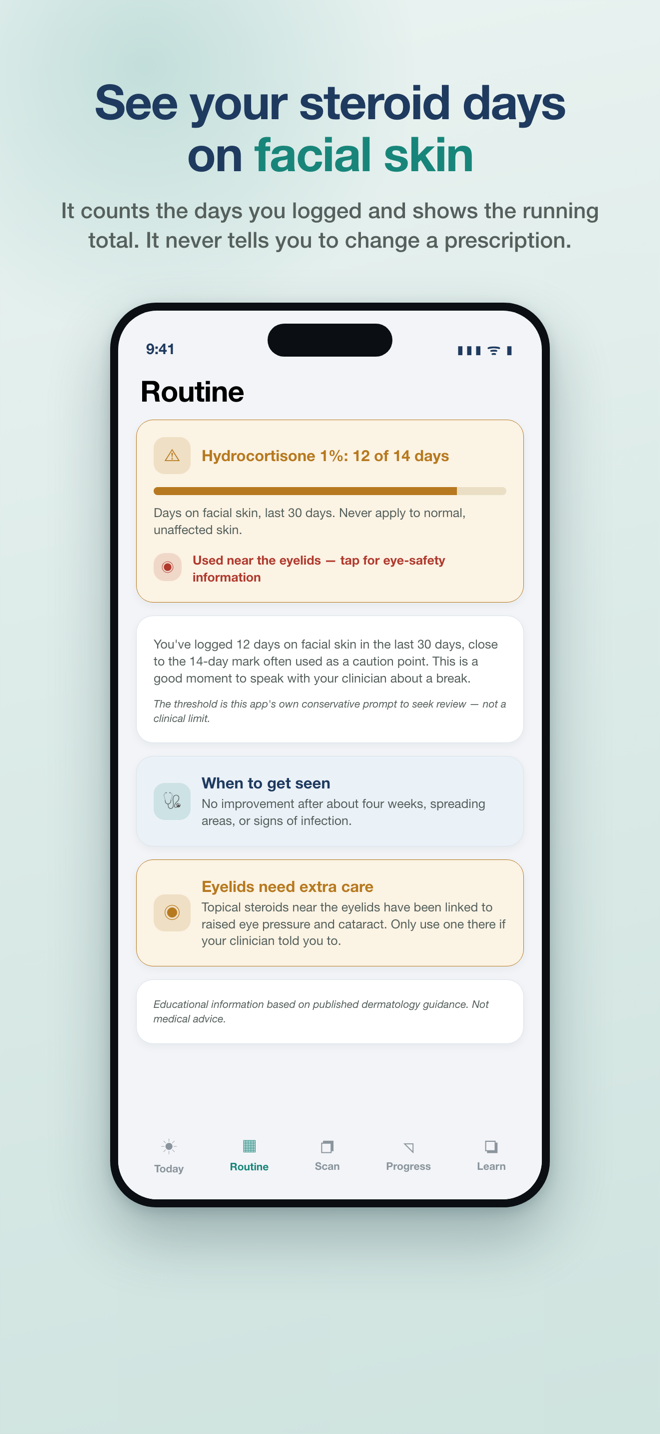
Topical steroids on the face are meant to be short courses, but courses blur together across months. If you log one on facial skin, SebDerm counts the distinct days and shows the running total against a conservative caution point.
It never tells you to change a prescription. It gives you a number to raise at your next appointment, which is the part that usually goes unsaid.

A weekly self-monitoring score from 0 to 100, with every component shown, so you can see why the number moved rather than trusting it. Insights are plain counts from your own log that you could re-derive by hand.
Photos use a camera guide that fades your previous shot over the viewfinder, so this week's picture actually lines up with last month's.

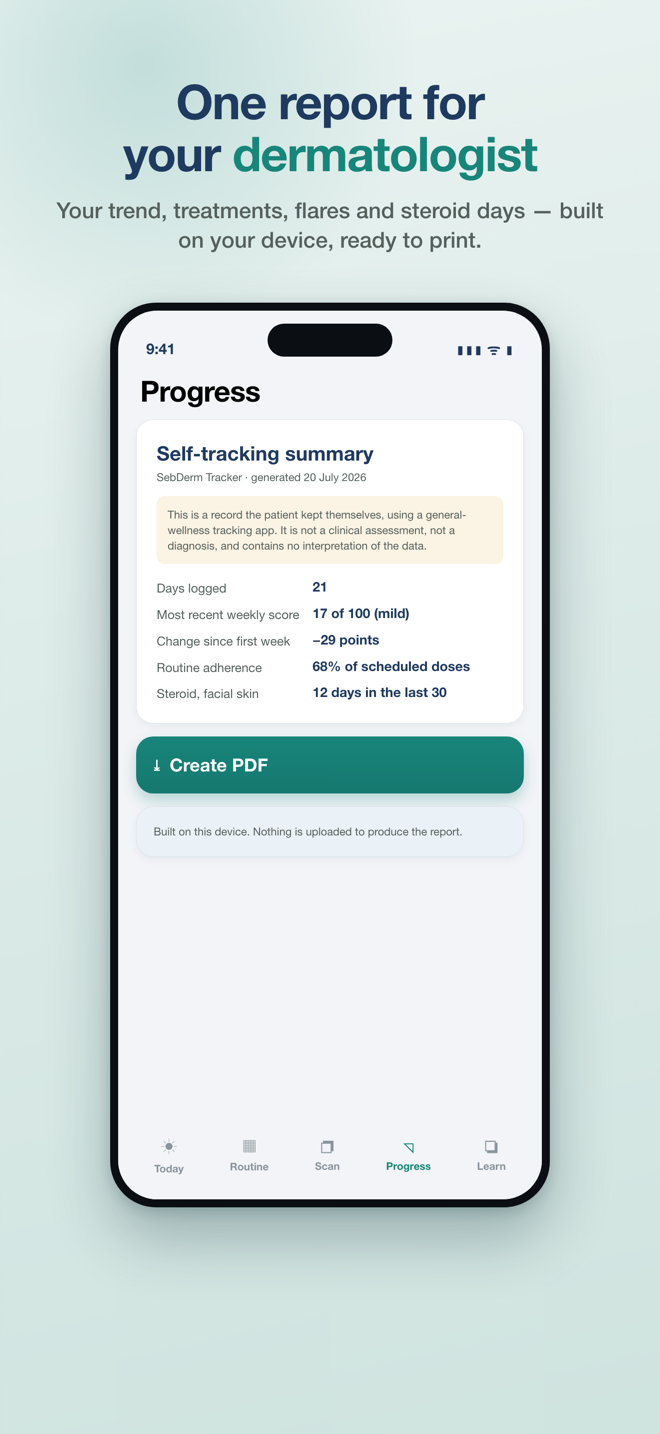
Export a PDF with your score trend, treatments used, flare history and steroid days. It is built on your device and ready to print, so a seven-minute appointment can start from evidence instead of recollection.

This is not a privacy policy written after the fact. The app has no networking code in it, so there is no path by which your logs or photos could leave the phone even accidentally. The App Store label reads Data Not Collected.
A common, long-term skin condition causing flaking, redness and itching in oily areas such as the scalp, face, ears and chest. It is linked to Malassezia, a yeast that lives on everyone's skin, and it tends to come and go for years. SebDerm helps you track and organise your care. It does not diagnose anything, and a dermatologist should confirm what you have.
Photograph a product's ingredient list and the app flags ingredients known to feed Malassezia, with the mechanism behind each flag. Ingredients the ruleset does not recognise are shown as unknown rather than safe, so you are never given false reassurance.
No. You enter the routine your clinician gave you, and the app schedules and times it. If their instructions differ from anything in the app, follow theirs. The app is a scheduler and a record, not a prescriber.
Topical steroids on facial skin are usually intended for short courses, but separate courses are easy to lose track of across months. The counter simply totals the days you logged so you have a concrete number to raise with your doctor. It never suggests changing a prescription.
No. There is no account, no server, and no networking code in the app at all. Photos and logs stay in this device's storage, iCloud sync is switched off, and the App Store privacy label reads Data Not Collected.
The rotation schedule, leave-on timer, daily logging, flare tracking, steroid day counter and all safety prompts are free permanently. Premium is $4.99 per month or $29.99 per year, with 7 days free on the annual plan, and adds unlimited scans, full trend history, unlimited photos and the PDF export.
SebDerm is coming soon to the App Store. Leave your email and we'll tell you the day it's live.
Get notified at launchSebDerm helps you track and organise your care. It does not diagnose, treat, cure or prevent any condition, and it is not a substitute for a dermatologist. Follow the plan your clinician gave you. See a doctor if symptoms worsen, spread, or show signs of infection such as oozing, pus, pain or fever. Read our Privacy Policy and Terms of Service.
Related reading: Building a Seborrheic Dermatitis Shampoo Routine That You Can Actually Keep