Why is my cat breathing fast? Normal rate, warning signs and how to count
You looked over at your cat and something about the breathing seemed too quick, and now you cannot unsee it. That worry is worth taking seriously, because cats hide illness well and breathing is one of the few things they cannot fully mask. Here is how to tell a normal fast from a dangerous one, and what a resting breathing rate can tell you.
A resting or sleeping cat normally breathes under 30 breaths per minute, most often in the low-to-mid twenties. Count one rise and fall of the chest as a single breath, over 30 seconds doubled, while your cat is calm and not purring. A resting rate that stays above 30 needs a vet call. Open-mouth breathing or panting in a cat is an emergency, whatever the number.
If you are worried right now, start here
Open-mouth breathing or panting in a cat is an emergency. Unlike dogs, healthy cats do not pant, so a cat breathing with its mouth open, breathing with the belly heaving, sitting hunched with the neck stretched out and elbows away from the body, or with blue, grey or pale gums, needs a vet or emergency clinic now. Do not wait to see if it passes, and keep the cat as calm and quiet as possible on the way, because stress makes it worse. This article is for understanding fast breathing, not for deciding whether an emergency can wait. It cannot.
How many breaths per minute is normal for a cat?
A healthy cat at rest or asleep breathes comfortably at well under 30 breaths per minute, often in the low-to-mid twenties. One breath is a single rise and fall of the chest. Count for 30 seconds while your cat is calm and double it. The table below is the scale most vets use for a cat that is resting, not one that has just been playing.
| Breaths per minute at rest | What it usually means |
|---|---|
| Under 20 | Comfortably normal for most cats. |
| 20 to 29 | Still normal. Learn your own cat's usual number inside this band. |
| 30 to 39 | Above the threshold vets use. Call your vet, especially if it stays there over two or three days. |
| 40 or more | Clearly abnormal at rest. Contact your vet the same day, and treat any effort or open-mouth breathing as an emergency. |
The key word is resting. A cat who just sprinted around the house, is frightened, overheated or at the vet will breathe faster for normal reasons. What matters is the rate when your cat is relaxed at home, ideally asleep, away from any obvious cause.
What does it mean when a cat is breathing fast?
On its own it means the body is asking for more oxygen, or working harder to move air. That can be entirely innocent, as after play or on a hot day, and it can be the first outward sign of a serious problem in the heart or the lungs. The breathing rate alone cannot tell you which, and neither can watching. What separates the two is context: how fast, for how long, and whether your cat was actually at rest when you counted.
Fast breathing that settles within a few minutes of your cat calming down is almost always the innocent kind. Fast breathing that is still there when your cat is asleep, or that you can measure creeping up across days, is the kind that needs a vet.
Cat breathing fast while lying down or asleep
This is the version worth taking most seriously, because every innocent explanation has been removed. A cat lying still is not exerting itself, so a rate above 30 in that state points at the breathing or the circulation rather than at activity. It is also the exact measurement veterinary cardiologists ask owners to take at home, precisely because it strips out everything else.
Two practical notes. A dreaming cat, with twitching paws or flicking whiskers, will breathe irregularly and should not be counted. And a purring cat cannot be counted at all, because purring changes the pattern completely. Wait for quiet, still sleep.
Cat breathing fast but otherwise acting normal
This is the most common version of the question, and the most misleading one. A cat that is eating, grooming and coming for attention does not look ill, so it is natural to assume the breathing is nothing. But acting normal is exactly what cats do while something advances quietly, which is why behaviour is the weakest evidence you have and a resting count is the strongest.
So measure rather than judge. If the rate settles comfortably under 30 once your cat is asleep, and stays there on the next couple of nights, the fast breathing you noticed was very likely situational. If it is still 30 or more in quiet sleep, your cat acting normal does not cancel that out. Book a vet appointment and bring the numbers.
Fast, shallow breathing, and breathing with the belly
Rate is one thing to watch; effort is the other, and effort is often the more urgent of the two. Normal breathing in a resting cat is small and quiet, with the chest moving gently. Signs that breathing has become work include a belly that visibly pushes with each breath, short shallow breaths that look like panting with the mouth closed, flared nostrils, and a crouched posture with the elbows held out and the neck extended.
Fast and shallow breathing with visible belly effort, even with the mouth closed, is a same-day vet call and becomes an emergency if the gums look pale, grey or blue or your cat will not settle. Many causes of fluid in or around the chest produce exactly this pattern.
Why cats hide breathing trouble until late
Cats are built to conceal weakness, and they are good at it. A cat with early heart or lung disease will often act normal, eat, and move around while the problem advances quietly. By the time a cat looks obviously unwell, the situation is frequently already serious. This is exactly why an objective number, measured at rest, is more trustworthy than how your cat seems, and why vets increasingly ask owners of at-risk cats to track it.
Common reasons a cat breathes fast
- Heart disease. Cats are prone to hidden heart conditions that can lead to fluid around or in the lungs, and a raised resting breathing rate is often the first measurable sign.
- Feline asthma or bronchitis. Often with coughing that can look like hairball retching, and sometimes wheezing.
- Fluid or infection in the chest. Pleural effusion or pneumonia crowd the lungs and push the rate up.
- Pain, fever, anemia or stress. All can raise the breathing rate, which is why the cause needs a vet, not a guess.
- Recent exertion, heat or fear. Normal, temporary, and settles quickly once the cat is calm and cool.
You cannot tell these apart by watching, and several of them are serious. The value of noticing fast breathing is that it sends you to the vet with a specific, measurable concern rather than a vague worry.
Kittens, senior cats, and cats after a procedure
Kittens breathe faster than adult cats, and published figures for what is normal at each age vary, so the adult threshold of 30 is a less reliable guide for a young kitten. What does not change with age are the danger signs: open-mouth breathing, visible effort, pale or blue gums, or a kitten that is weak or not feeding. For an otherwise well kitten, ask your vet at the next visit what resting number to expect, and count it while asleep so you have a baseline.
Older cats are where hidden causes become more likely. Heart disease, an overactive thyroid, anaemia, chronic pain and tumours in the chest all become more common with age and can raise the resting rate before anything else changes. A senior cat whose sleeping rate has crept up is worth a check even if nothing else seems different.
After surgery, a vaccine or a new medication, some faster breathing from pain, stress or the drug itself can happen, but your vet is the right person to tell you what to expect and for how long. Call the clinic that treated your cat rather than waiting, especially if breathing is laboured or does not settle once your cat is home and resting.
Breathing fast in hot weather or after play
Heat and exertion are the two innocent explanations people reach for first, and they are real. A cat that has just been racing around, or is lying in a warm room, will breathe faster for a while. The test is how quickly it settles: once your cat is cool, calm and resting, the rate should come back down within minutes, not hours.
Heat has a limit, though. Cats cope with heat poorly and do not cool by panting the way dogs do, so a cat panting or breathing hard in hot weather may be overheating. Move your cat somewhere cool, offer water, and call a vet if the breathing does not settle quickly or your cat seems weak, wobbly or distressed. Heatstroke is an emergency.
How to measure a resting breathing rate at home
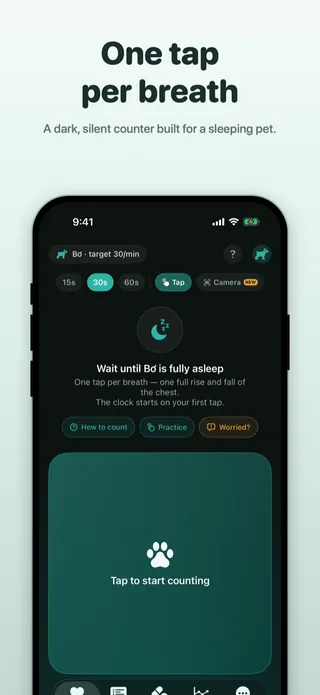
Wait until your cat is calm or asleep, not purring, since purring disrupts the count. Watch the chest or the flank rise and fall: one rise plus one fall is one breath. Count for 30 seconds and double it, or a full minute. Note the number with the date. Doing this at about the same time each day builds a trend, and the trend is what reveals a slow rise you would never catch by eye. Our full guide to counting a sleeping breathing rate walks through the technique.
When a single high reading matters, and when it does not
One high count right after your cat chased a toy is meaningless. A resting rate that sits above 30 across several calm readings, or that climbs steadily from your cat's own baseline over days, is meaningful and worth a prompt vet call. If your vet has given your cat a heart or asthma diagnosis, they will usually tell you the specific number that should prompt contact, and a home log is how you catch it.
Making it a two-minute habit, not a worry
If your cat has a diagnosed condition, or simply sits in a higher-risk group, a known resting breathing rate is one of the most useful things you can keep. It replaces the anxious question of whether the breathing looks off with an actual number you can trend and share. PawBeat makes it a silent, one-handed count you can take while your cat sleeps, with an alert at your vet's threshold and a clean chart for the appointment.
Frequently asked questions
What is a normal breathing rate for a cat? +
A healthy cat at rest or asleep breathes comfortably at well under 30 breaths per minute, often in the low-to-mid twenties. Count a single rise and fall of the chest as one breath, over 30 seconds doubled, while your cat is calm and not purring.
How many breaths per minute is too many for a cat? +
At rest, 30 or more is above the threshold vets use and is worth a call, and 40 or more is clearly abnormal and worth contacting your vet the same day. Those numbers only apply to a cat that is genuinely resting; a cat that has just been playing or is frightened will read higher for ordinary reasons.
Why is my cat breathing fast while lying down? +
Because lying still removes every innocent explanation. Exertion, heat and excitement are gone, so a rate above 30 in that state points at the heart or the lungs rather than at activity. It is also the measurement vets ask owners to take at home for exactly that reason. Do not count a dreaming cat, and do not count a purring one.
Is it an emergency if my cat is breathing fast? +
It is an emergency if the fast breathing comes with open-mouth breathing or panting, a heaving belly, a hunched posture with the neck extended, or blue, grey or pale gums, or if your cat seems distressed. Cats do not pant like dogs, so open-mouth breathing always means see a vet immediately. Calm, resting fast breathing that you have measured is a reason to call your vet promptly.
Why is my cat breathing fast while resting or sleeping? +
A raised breathing rate at rest, when there is no exertion, heat or fear to explain it, can point to heart disease, feline asthma, or fluid or infection in the chest, among other causes. Because cats hide illness so well, a resting rate consistently above 30 is worth a vet visit even if your cat otherwise seems fine.
Can fast breathing in cats just be stress? +
Fear, a car ride, heat or recent play can raise a cat's breathing temporarily, and it settles once the cat is calm and cool. What should not be dismissed as stress is fast breathing that persists at rest, or that you can measure climbing over days. When in doubt, measure at rest and call your vet.
Does PawBeat diagnose why my cat is breathing fast? +
No. PawBeat makes it easy to measure and track your cat's resting breathing rate and share the trend, but it does not diagnose. Any cause of fast breathing needs a veterinarian.
Why is my cat breathing fast but acting normal? +
Because cats hide illness well, acting normal is not reliable reassurance. The useful test is a resting count: if your cat breathes under 30 breaths a minute in quiet sleep on a couple of nights, the fast breathing you saw was probably situational. If it is 30 or more at rest, see a vet even though your cat seems fine.
Why is my cat breathing fast and shallow with its mouth closed? +
Fast, shallow breathing with visible belly effort means breathing has become work, even without an open mouth. It can reflect fluid in or around the chest, asthma, pain or other problems, and it is a same-day vet call. Treat it as an emergency if the gums are pale, grey or blue or your cat cannot settle.
Is it normal for a kitten to breathe fast? +
Kittens do breathe faster than adult cats, and normal figures vary with age, so the adult threshold of 30 is less reliable. Open-mouth breathing, visible effort, pale or blue gums, weakness or not feeding are warning signs at any age. Ask your vet what resting rate to expect for your kitten.
Can a cat breathe fast because of the heat? +
Yes, briefly, but it should settle within minutes once your cat is cool and resting. Cats do not cool well by panting, so a cat panting or breathing hard in hot weather may be overheating. Move it somewhere cool and call a vet if breathing does not settle or your cat seems weak.
Do cats breathe fast when they are in pain? +
Pain can raise the breathing rate, often alongside hiding, a hunched posture, reluctance to move or a change in appetite. Because fast breathing has several serious causes, pain included, it is worth a vet visit rather than guessing which one it is.
This article is general information from Velora Health, not veterinary advice, diagnosis or treatment. Always consult your veterinarian about your pet's symptoms and before changing anything about their care.