Why is my dog breathing fast? Panting, fast breathing at rest, and when to worry
Dogs breathe fast all the time for perfectly good reasons, which is exactly what makes the worrying kind easy to miss. The difference is rarely how fast the breathing looks. It is when it happens, whether it settles, and whether it looks like work. Here is how to tell them apart.
A resting or sleeping dog normally breathes under 30 breaths a minute. Panting after exercise, in heat or with excitement is normal and settles within minutes. Fast breathing while resting or asleep, without panting, or a rate that climbs over several days, needs a vet call. Go now if breathing looks laboured, the gums are pale, grey or blue, your dog cannot settle, stands with the neck stretched out, or collapses.
If you are worried right now, start here
See a vet or emergency clinic immediately if your dog is struggling to breathe, has pale, grey or blue gums or tongue, stands or sits with the neck extended and elbows held out, has a belly that heaves with each breath, is restless and cannot lie down, or collapses. Keep your dog calm and cool on the way and do not wait to see whether it passes.
Panting or fast breathing: they are not the same thing
Panting is open-mouthed, often with the tongue out, and it is how dogs cool down. After a walk, on a warm day, in the car or when excited, it is expected and it stops once the cause does. Fast breathing is different: a quicker rhythm of breaths that may happen with the mouth closed, and that matters most when nothing obvious explains it.
That distinction is why the question most people actually type is about a dog breathing fast but not panting. It is the version that has lost its innocent explanation.
Dog breathing fast but not panting
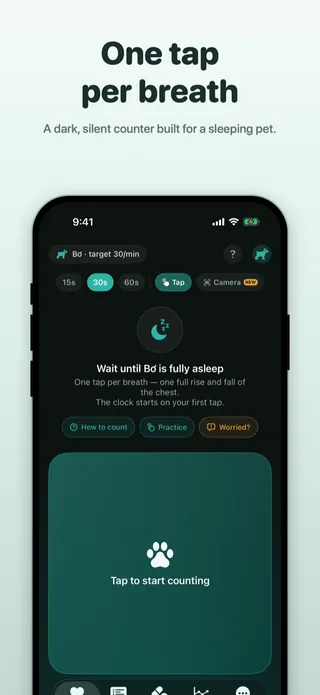
A dog lying calmly with its mouth closed, taking quick breaths, is not cooling down and is not excited. If the room is not hot and your dog has not just exercised, a resting rate that is clearly fast is worth measuring properly. Count while your dog is asleep or fully relaxed: one rise and fall of the chest is one breath, over 30 seconds, doubled.
If the count is under 30 and settles, it was likely situational. If it is 30 or more at rest, check again later the same day, and if it is still raised, call your vet. If it looks laboured, treat it as urgent.
Breathing fast while resting, sleeping or at night
This is the pattern vets take most seriously, because rest removes the ordinary reasons. It is also the measurement veterinary cardiologists ask owners of dogs with heart disease to take at home, since a rising sleeping rate can be one of the earliest signs that fluid is building in or around the lungs, often before a cough or obvious tiredness.
Two things produce false alarms. Dream sleep, with twitching legs and irregular bursts of breathing, is normal and should not be counted. And a warm room will raise the rate of a sleeping dog, so count somewhere comfortable. The full method is in how to count a dog's sleeping breathing rate.
Breathing fast but acting normal
A dog that is eating, playing and greeting you normally is reassuring, but it does not rule everything out. Early heart disease in particular often shows first as faster breathing at rest while the dog still seems itself during the day. Let the resting count decide rather than behaviour: a sleeping rate that stays raised deserves a vet visit even in a dog that seems fine.
Fast and shallow breathing, or breathing from the stomach
Effort matters as much as rate. Short shallow breaths, a belly that visibly pushes with each breath, flared nostrils, or a dog that seems unable to get comfortable all suggest breathing has become work. That is a same-day vet visit at minimum and an emergency if the gums change colour or your dog is distressed.
Common reasons a dog breathes fast
- Heat and exercise. Normal, and should settle within minutes once your dog is cool and resting. Heatstroke is an emergency, so a dog that stays hot, weak or wobbly needs a vet.
- Stress, fear and excitement. Fireworks, thunderstorms, the car or the vet all raise breathing, which settles when the trigger passes.
- Pain. Often alongside restlessness, trembling, hiding or reluctance to move.
- Heart disease. A raised resting or sleeping rate can be an early sign of congestive heart failure. See the signs of congestive heart failure in dogs.
- Lung and airway problems. Pneumonia, fluid in the chest, airway disease and, in flat-faced breeds, the shape of the airway itself.
- Medication and hormonal conditions. Steroids commonly increase panting, and Cushing's disease is associated with heavy panting.
- Anaemia, fever or poisoning. Less common, and usually with other signs of illness.
You cannot tell these apart by watching, and several are serious. What you can do is arrive at the vet with a clear description and a resting number.
Older dogs breathing heavily
Heavy or fast breathing is common in senior dogs and is too often put down to age. Heart valve disease, laryngeal paralysis, lung changes, pain from arthritis, and hormonal conditions all become more likely as dogs get older, and several are very manageable once diagnosed. An older dog whose breathing at rest has changed is worth a check.
What to bring to the vet
- Your dog's sleeping breathing rate on two or three nights, with dates
- When the fast breathing happens: at rest, at night, after walks, or all the time
- Whether there is a cough, and whether lying down sets it off
- Any change in energy, appetite or walks
- A short video of the breathing while your dog is resting
That list turns a worry into something a vet can act on quickly. A cough that comes with it is covered in why a dog coughs at night.
Frequently asked questions
How fast should a dog breathe at rest? +
A resting or sleeping dog normally breathes under 30 breaths a minute, and many healthy dogs sleep in the teens. Count one rise and fall of the chest as a breath, over 30 seconds, doubled, while your dog is asleep and not dreaming.
Why is my dog breathing fast but not panting? +
Fast breathing with the mouth closed while resting has lost the usual explanations of heat, exercise and excitement. Count the sleeping rate: under 30 that settles is likely situational, while 30 or more at rest is worth a vet call, and laboured breathing is urgent.
Why is my dog breathing fast while sleeping? +
Dream sleep causes normal irregular fast breathing, so wait for quiet sleep. A fast rate in quiet, calm sleep in a comfortable room can be an early sign of heart or lung disease and should be discussed with a vet.
When is fast breathing in a dog an emergency? +
When breathing looks laboured, the gums or tongue are pale, grey or blue, your dog stands with the neck stretched out, cannot settle, has a heaving belly, or collapses. Go to a vet or emergency clinic immediately.
Can a dog breathe fast because of pain or anxiety? +
Yes. Pain and fear both raise breathing, usually with other signs such as trembling, restlessness or hiding, and it settles when the cause passes. Fast breathing that persists at rest should still be checked.
Why is my old dog breathing heavily? +
Heavy breathing in senior dogs has several treatable causes, including heart valve disease, laryngeal paralysis, lung changes and arthritis pain. It should not be assumed to be age alone.
Does PawBeat diagnose why my dog is breathing fast? +
No. PawBeat makes it easy to count and track your dog's resting breathing rate and share the trend with your vet, but only a vet can find the cause.
This article is general information from Velora Health, not veterinary advice, diagnosis or treatment. Always consult your veterinarian about your pet's symptoms and before changing anything about their care.