What triggers cat asthma, and how to find your cat's own triggers
Feline asthma is an inflammatory airway condition, which means the trigger question is really two questions: what keeps the airways inflamed generally, and what sets off a particular attack. Most owners can do something meaningful about the first, and the second is what you learn from a record.
Common household triggers include dust (including dusty cat litter), cigarette smoke, aerosols and scented products, pollen and mould, and fireplace or candle smoke. Triggers are individual and often seasonal. Asthma in cats is managed, not cured, usually with inhaled or oral medication prescribed by your vet. Open-mouth breathing, or a cat breathing with visible effort, is an emergency, not something to track.
The airborne triggers people can actually change
- Litter dust. The most commonly overlooked one, because the cat has their face in it several times a day. Low dust or dust free litters are an easy single-variable test
- Cigarette and vape smoke. Among the strongest and most avoidable
- Aerosol sprays, air fresheners, scented candles and strong cleaning products
- Dust from cleaning, renovation or a dusty home generally
- Pollen and outdoor allergens entering through open windows
- Mould, particularly in damp homes
- Perfume and dry shampoo, which people rarely connect to the cat
Why it often looks seasonal
Plenty of owners notice worse periods at particular times of year. Pollen is the obvious explanation, but heating season matters too: closed windows, more dust circulating, drier air and in some homes a wood fire. If your cat is worse every autumn, that is information worth having in writing before the next autumn.
What age cats get it, and whether it goes away
Feline asthma is most often diagnosed in young to middle-aged cats, though it can be recognised at any age. It is a chronic inflammatory condition: with treatment many cats do very well for years, but it is generally controlled rather than cured, and stopping treatment because the cat seems fine is a common route back to an attack. Whether treatment can be reduced is a decision for your vet based on how your cat is doing.
Testing one variable at a time
This is where most trigger hunting fails. People change the litter, buy an air purifier, stop using the diffuser and switch food in the same week, then cannot say what helped. The method that works is slower and much more informative:
- Establish a baseline first: two weeks of resting breathing rates and any coughing episodes, changing nothing
- Change one thing, and keep it changed for at least two to three weeks
- Keep counting through the change, at the same time of day
- Compare the two periods before deciding anything
- Then change the next thing
The counting matters because the resting breathing rate is a more objective measure than an impression of how the cat seems, and because it moves before the obvious symptoms do.
Cough or hairball, and why it gets missed
Asthmatic coughing in cats is frequently mistaken for trying to bring up a hairball: the cat crouches low, extends the neck and makes a repeated hacking effort. The distinguishing detail is usually that nothing comes up. If your cat regularly does this and nothing is ever produced, it is worth a video and a vet appointment rather than another tube of hairball paste.
The emergency signs
Get to a vet immediately for open-mouth breathing, breathing with visible abdominal effort, blue or grey gums or tongue, or a cat sitting hunched with the neck extended and elbows held away from the body. Cats hide respiratory difficulty until they cannot, so by the time it is obvious it is urgent. A rapid resting breathing rate that keeps climbing over a day or two is also a call, not a wait.
What to record between appointments
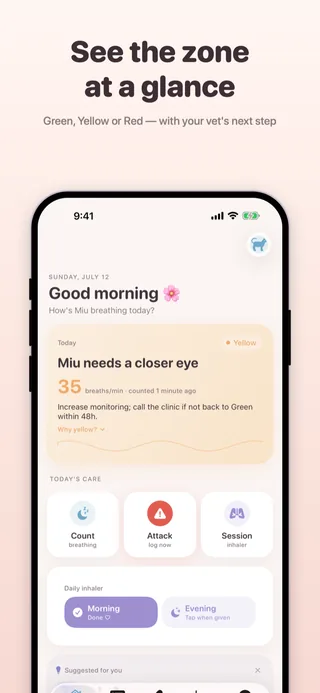
A vet seeing your cat for ten minutes in a stressful room cannot see the pattern at home. Resting breathing rates, coughing episodes with dates, inhaler or medication doses given, and what changed in the house are what make the next appointment specific. PawBreeze does exactly that: a breathing zone at a glance, inhaler logging, and a report for your vet.
Frequently asked questions
What triggers cat asthma? +
Common household triggers include dusty cat litter, cigarette and vape smoke, aerosols and scented products, dust, pollen, mould, and smoke from fires or candles. Triggers are individual, so identifying your own cat's requires changing one variable at a time and watching the response.
What causes asthma in cats? +
It is an inflammatory airway condition, generally understood as an allergic type response in the lower airways causing inflammation, narrowing and mucus. What sets off the underlying inflammation is not always identifiable in an individual cat, which is why management focuses on treatment plus reducing known triggers.
Can feline asthma be seasonal? +
Yes, many owners notice worse periods at particular times of year. Pollen is one explanation, but heating season also brings closed windows, more circulating dust and drier air. A record across a full year is what makes a seasonal pattern visible.
Can feline asthma go away? +
It is generally a chronic condition that is controlled rather than cured. Many cats do very well long term with treatment and trigger reduction. Whether medication can be reduced is a decision for your vet, not something to try independently.
What age do cats get asthma? +
It is most often diagnosed in young to middle-aged cats, though it can be recognised at any age. Any cat with a persistent cough or rapid breathing should be assessed regardless of age.
How do I know if my cat is having an asthma attack? +
Open-mouth breathing, visible abdominal effort with each breath, blue or grey gums, or sitting hunched with the neck extended are emergency signs requiring immediate veterinary care. Cats conceal breathing difficulty, so obvious distress means it is already urgent.
This article is general wellness information from Velora Health, not medical advice, diagnosis or treatment. Always consult a qualified healthcare professional about your symptoms and before changing anything about your care.