What does diverticulitis pain feel like, and where does it hurt
People describe it in very different ways, which is part of why it is so often mistaken for something else, and something else so often mistaken for it. There are features that are typical, though, and knowing them helps you describe what is happening clearly when you speak to a doctor.
Diverticulitis pain is usually constant rather than coming and going, tender to the touch, and most often in the lower left abdomen. It commonly comes with fever, nausea and a change in bowel habit. It can be on the right side, which is more common in people of Asian descent, and it can spread to the back. Many conditions cause similar pain, so it needs assessing rather than self-diagnosing. Seek urgent care for severe or worsening pain, fever with shivering, vomiting, a rigid abdomen or bleeding.
What the pain usually feels like
The most characteristic feature is that it tends to be steady. Where trapped wind or irritable bowel pain often cramps and eases in waves, diverticulitis pain more typically stays, and can build over hours or a day or two. The area is often tender when pressed, and movement, coughing or a bumpy car journey can make it worse.
People describe it as a deep ache, a sharp localised pain, or a persistent soreness in one spot. It can start mild and become more obvious, which is one reason people wait longer than they should before seeking help.
Where diverticulitis pain is felt
| Location | How common | Worth knowing |
|---|---|---|
| Lower left abdomen | The most common location in Europe and North America | Reflects where diverticula most often form in these populations |
| Lower right abdomen | Less common overall, more common in people of Asian descent | Easily confused with appendicitis, so it needs proper assessment |
| Lower middle abdomen or above the pubic bone | Possible | Can be mistaken for a urinary or gynaecological problem |
| Back or side | Sometimes, alongside abdominal pain | Pain can be felt in the back; back pain alone is rarely diverticulitis |
Symptoms that often come with it
- Fever or feeling hot and shivery, which points toward inflammation or infection rather than simple wind
- Nausea, sometimes vomiting
- A change in bowel habit: constipation is common, loose stools happen too
- Bloating and loss of appetite
- Urinary symptoms occasionally, when the inflamed area sits near the bladder
The first signs of a diverticulitis attack
Often a new, persistent pain in one area of the lower abdomen, most often the left, that does not ease the way wind or indigestion would, followed within hours to a day by tenderness, feeling unwell, sometimes a temperature and a change in bowel habit. If you have had diverticulitis before and recognise that pattern, contact your doctor early rather than waiting to see if it passes. How long a flare typically takes to settle is in how long a diverticulitis flare lasts.
What could be mistaken for diverticulitis
- Appendicitis, particularly with right-sided pain
- Irritable bowel syndrome, which cramps and fluctuates rather than staying constant, and does not cause fever
- Constipation or trapped wind, which usually eases with passing wind or a bowel movement
- Urinary infection or a kidney stone, often with pain on urination or pain in the side
- Gynaecological causes such as an ovarian cyst or, if pregnancy is possible, an ectopic pregnancy, which is an emergency
- Inflammatory bowel disease, infection or, less commonly, bowel cancer
This is why a doctor examines you, often checks blood and urine, and may arrange a scan. Pain in the same place can have very different causes that need very different treatment.
What your poop can look like during a flare
Constipation is common, and some people have looser stools instead, or alternate between the two. Mucus can appear. Blood in the stool should always be reported. Notably, bleeding from diverticula is often painless and is a separate problem from diverticulitis, so bleeding without pain still needs to be checked, and heavy bleeding is an emergency.
When it is an emergency
Go to urgent care or emergency services if pain is severe, spreading or getting steadily worse, if your abdomen feels rigid or hard, if you have a high fever with shivering, if you are vomiting and cannot keep fluids down, or if there is significant rectal bleeding. These can signal complications such as an abscess or a perforation that need prompt treatment.
Easing the pain while you get help
Contact a doctor rather than managing it alone, because treatment depends on how severe the flare is. Ask before taking painkillers: some anti-inflammatory painkillers have been linked to diverticular complications, and strong pain relief can mask a worsening problem. If your doctor advises it, a clear liquid diet for a short period is commonly used in mild flares. The stage-by-stage version is in what to eat during a diverticulitis flare.
Describing it clearly helps
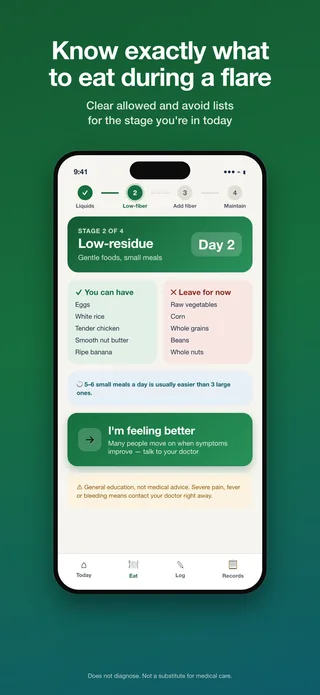
When you speak to a doctor, the useful details are where the pain is, when it started, whether it is constant or comes in waves, what makes it worse, your temperature, and any change in bowel habit or bleeding. Diverticulitis Coach keeps a record of symptoms and the stage you are in during a flare, so those details are ready rather than reconstructed from memory.
Frequently asked questions
What does diverticulitis pain feel like? +
Usually a steady, persistent pain rather than cramps that come and go, most often in the lower left abdomen, tender to the touch and worse with movement. It commonly comes with fever, nausea and a change in bowel habit.
Can diverticulitis pain be on the right side? +
Yes. Right-sided diverticulitis is less common overall but more common in people of Asian descent. Right-sided pain can also be appendicitis, so it needs medical assessment.
Can diverticulitis cause back pain? +
Pain can spread to the back or side alongside abdominal pain. Back pain on its own, without abdominal symptoms, is rarely caused by diverticulitis.
What are the first signs of a diverticulitis attack? +
A new, persistent pain in one area of the lower abdomen, often the left, that does not ease like wind would, followed by tenderness, feeling unwell, sometimes fever and a change in bowel habit.
What could be mistaken for diverticulitis? +
Appendicitis, irritable bowel syndrome, constipation, urinary infection or kidney stones, gynaecological problems including ectopic pregnancy, inflammatory bowel disease and, less commonly, bowel cancer. Assessment often involves blood and urine tests and sometimes a scan.
How is diverticulitis pain different from IBS pain? +
IBS pain tends to cramp, come in waves and ease after a bowel movement, and does not cause fever. Diverticulitis pain is more often constant, localised, tender to touch and may come with fever.
When is diverticulitis pain an emergency? +
When pain is severe or worsening, the abdomen feels rigid, there is high fever with shivering, you cannot keep fluids down, or there is significant bleeding. Seek urgent care.
This article is general information from Velora Health, not medical advice. It cannot tell you whether you are having a flare and it does not replace medical care. If you have severe or worsening pain, a fever, rectal bleeding, persistent vomiting, or you cannot keep liquids down, contact your doctor or your local emergency number now.