Can diverticulitis pain last for months?
A typical diverticulitis flare improves within days and settles within a couple of weeks. When pain hangs on for many weeks or keeps coming back, something else is going on. There are several possible explanations, most of them manageable, and telling them apart is a job for your doctor with the right tests.
Yes, some people have pain for months, but it is not the normal course of a flare and should be reassessed. Common explanations are a complication such as an abscess or narrowing, repeated flares close together, low-grade smouldering diverticulitis, ongoing pain after the inflammation has cleared (symptomatic uncomplicated diverticular disease), or a different condition. A CT scan, blood tests and often a colonoscopy are how doctors tell these apart.
What a normal flare looks like
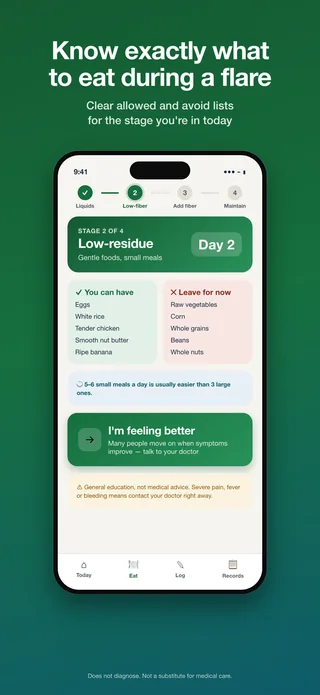
With an uncomplicated flare, pain usually starts to ease within two to three days of treatment and is gone or nearly gone within one to two weeks. Bloating, an unsettled bowel and tiredness can take longer, but steady, localised pain should not. The usual shape is in how long a diverticulitis flare lasts.
Pain that has not improved after two or three days of treatment, or that is still there several weeks later, is a reason to go back rather than wait it out.
Why pain can last for weeks or months
A complication
An abscess (a pocket of pus next to the bowel), a fistula (an abnormal channel, often to the bladder), or a stricture (narrowing of the bowel from repeated inflammation and scarring) can all cause ongoing pain. Clues include fever, pain that stays in one spot, bubbles or debris in urine, or constipation with bloating that keeps getting worse. These usually show on a CT scan.
Flares close together
Two or three flares in a few months can feel like one long one. Keeping a record of when pain started and stopped, whether you had a fever, and whether each episode was confirmed on a scan makes it much easier for a doctor to see the pattern.
Smouldering diverticulitis
A small number of people have low-grade inflammation that never fully settles, sometimes called smouldering or chronic diverticulitis. Pain is usually constant or nearly constant and in the same place, and scans or blood tests may show ongoing inflammation. It is uncommon, and in persistent cases a surgeon may discuss removing the affected section of bowel, which relieves pain for most people who have it.
Pain after the inflammation has cleared
Some people keep having abdominal pain, bloating and changes in bowel habit even when scans and blood tests show no active inflammation. Doctors call this symptomatic uncomplicated diverticular disease. It overlaps with irritable bowel syndrome and is thought to involve a gut that has become more sensitive after a flare. It is real pain, but it is managed differently from a flare: antibiotics do not help it, while fiber, attention to trigger foods, and treatments used for IBS often do.
Something other than diverticulitis
Ongoing lower abdominal pain has other causes, including IBS, inflammatory bowel disease, gynaecological conditions, urinary problems and, less commonly, bowel cancer, which can look similar on a scan. This is one reason a colonoscopy is often advised some weeks after a flare has settled, particularly after a first episode or a complicated one.
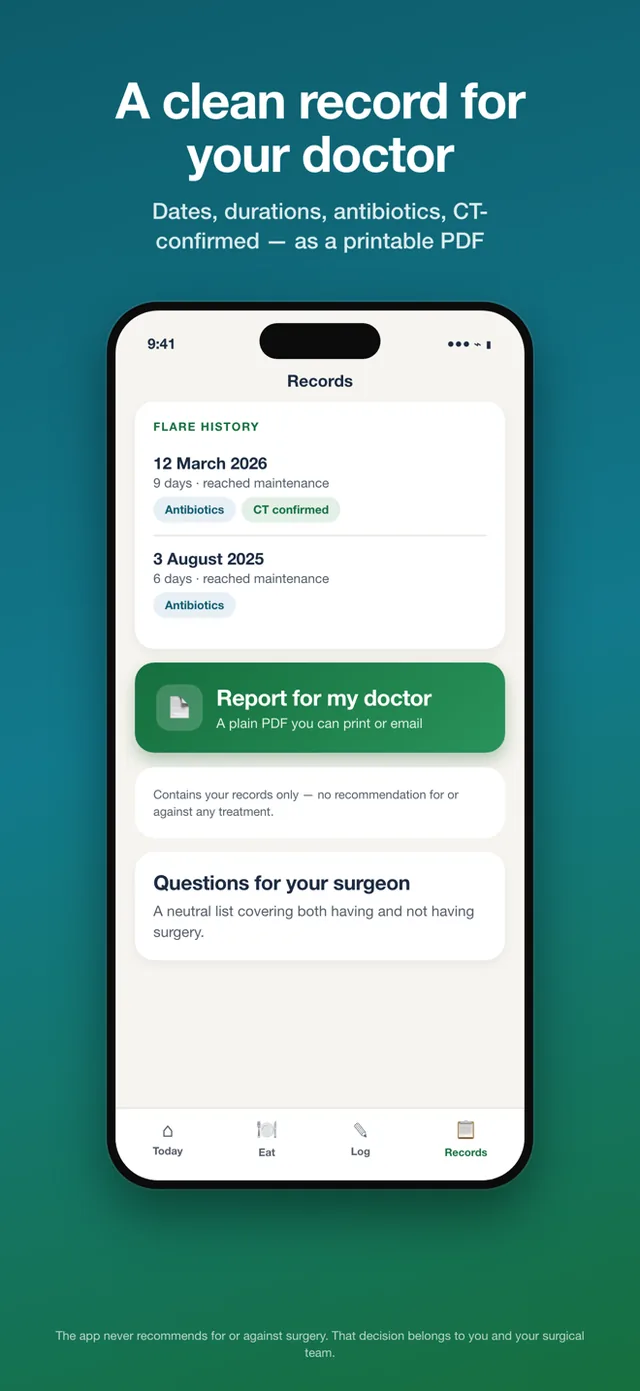
What to ask your doctor
- Is there active inflammation now? Blood tests such as CRP and a white cell count, and sometimes a repeat CT scan, answer this
- Was each episode confirmed? A flare diagnosed on symptoms alone and one confirmed on CT are different evidence
- Is there a complication? Ask specifically about abscess, fistula and stricture if pain is in one spot or comes with urinary symptoms
- Do I need a colonoscopy, and when?
- Could this be pain without inflammation? If so, ask what the plan is, since it is treated differently from a flare
- Should I see a colorectal surgeon? Worth asking if pain is persistent or flares are frequent and affecting your life
What to keep track of in the meantime
A short daily note makes the appointment far more useful: pain from 0 to 10 and where it is, temperature if you feel feverish, bowel habit, what you ate, and any antibiotics with start and end dates. Patterns such as pain after particular foods, or pain that never fully drops to zero, are exactly what helps a doctor decide between the explanations above. What diverticulitis pain feels like covers how to describe it.
Frequently asked questions
Can diverticulitis pain last for months? +
Some people do have pain for months, but it is not the normal course of a flare. It can point to a complication, repeated flares, low-grade smouldering inflammation, ongoing pain after the inflammation has cleared, or a different condition, and should be reassessed by a doctor.
What is smouldering diverticulitis? +
A term for low-grade inflammation that does not fully settle after a flare, causing constant or near-constant pain in the same place. It is uncommon. In persistent cases, surgery to remove the affected section of bowel relieves pain for most people.
Can you have diverticulitis pain without a flare? +
Yes. Some people keep having pain, bloating and bowel changes with no active inflammation on tests. This is called symptomatic uncomplicated diverticular disease and is managed more like IBS than like a flare.
How long does it take for diverticulitis to settle? +
In an uncomplicated flare, pain usually eases within two to three days of treatment and settles within one to two weeks. Tiredness and bowel changes can take a few weeks longer.
What tests check for ongoing diverticulitis? +
Blood tests for inflammation such as CRP, a CT scan of the abdomen to look for inflammation or complications, and often a colonoscopy some weeks after the flare to rule out other causes.
This article is general information from Velora Health, not medical advice. It does not replace an assessment by a clinician who knows your history. If you have severe or worsening abdominal pain, a fever, rectal bleeding, or you cannot keep fluids down, contact your doctor or your local emergency number now.