What does a fibromyalgia flare feel like?
People with fibromyalgia live with some level of pain and tiredness most days. A flare is different: a stretch of days when everything turns up at once and ordinary life stops working. Knowing what yours look like helps you spot one early, explain it to others, and tell it apart from something that needs a doctor.
A fibromyalgia flare is a period of days to weeks when symptoms rise well above your usual baseline. Most people describe widespread pain that is deeper, burning or flu-like, exhaustion that sleep does not fix, worse fibro fog, stiffness, and sensitivity to touch, noise, light or temperature. Flares are often set off by poor sleep, stress, overdoing it, illness or weather changes. Fever, swollen joints, a rash, real muscle weakness or numbness are not typical of fibromyalgia and should be checked.
The symptoms of a flare
Pain that spreads and deepens
Flare pain is usually widespread rather than in one joint, and people describe it as aching, burning, throbbing, stabbing or like the whole-body ache of flu. Areas that are normally tender become sore to light pressure, and clothing, a hug or a seatbelt can hurt. This heightened sensitivity is a core feature of fibromyalgia, explained in why fibromyalgia causes fatigue and pain.
Exhaustion that rest does not touch
Flare fatigue is heavy and physical. Lifting your arms to wash your hair or climbing stairs can feel like a workout, and a full night in bed does not leave you rested. Many people say this, not the pain, is the hardest part.
Worse fibro fog
Losing words mid-sentence, reading the same paragraph three times, forgetting why you walked into a room, and struggling to follow a conversation in a noisy place all get worse during a flare.
Sleep, stiffness and the senses
- Lighter, more broken sleep, which then feeds the pain and fatigue
- Morning stiffness that takes longer than usual to ease
- Sensitivity to bright light, noise, smells or cold
- Headaches, an irritable bowel, or feeling hot and cold without a fever
- Low mood, irritability or anxiety, which are part of a flare, not a failure to cope
How a flare differs from a bad day
A bad day is a dip that recovers by the next morning or two. A flare builds and stays: several days in a row well above your baseline, often with more than one symptom rising together. Many people notice early signs a day or two before, such as sleep getting worse, a stiff neck, unusual irritability or a sense of being wired and tired at once. Catching those signs is what lets you cancel plans and rest before the worst of it.
How long flares last varies widely, from a few days to several weeks. How long a fibromyalgia flare lasts covers the usual range, and fibromyalgia flare triggers covers what tends to set them off.
When it might be something else
Fibromyalgia does not cause inflammation or damage, so some symptoms point elsewhere. See a doctor if a flare comes with:
- A fever, night sweats or weight loss without trying
- Red, hot or swollen joints
- A new rash, especially across the cheeks or on sun-exposed skin
- Real muscle weakness, as opposed to tiredness, or numbness that does not go away
- A new type of pain, or pain in one specific place that keeps getting worse
These can point to conditions such as inflammatory arthritis, lupus, thyroid problems or an infection, which can also occur alongside fibromyalgia.
Getting through a flare
- Drop to your minimum. Decide in advance what the essential tasks are on a flare day and let the rest go
- Keep moving gently. Short, easy movement, stretching or a warm shower usually helps more than lying still all day
- Use heat. Heat packs and warm baths ease muscle pain for many people
- Protect sleep with a regular wind-down, even if you nap
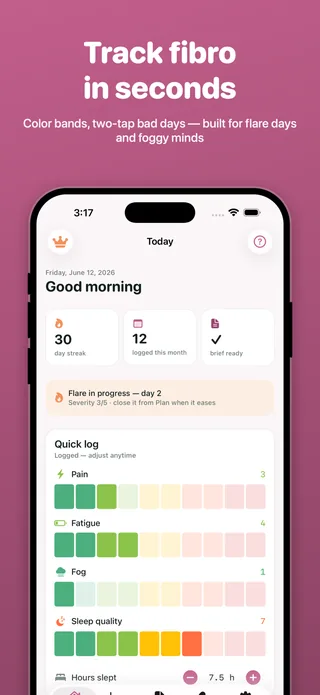
- Write it down. Two taps a day on pain, fatigue, fog and sleep builds the record that shows a rheumatologist how often flares happen and what comes before them
Frequently asked questions
What does a fibromyalgia flare feel like? +
Most people describe widespread pain that is deeper, burning or flu-like, exhaustion that sleep does not fix, worse fibro fog, stiffness, and sensitivity to touch, noise, light or temperature, all well above their usual baseline for days at a time.
How do I know if I am having a fibromyalgia flare? +
A flare builds and stays for several days, usually with more than one symptom rising together, rather than a single bad day that recovers by the next morning. Early signs often include worse sleep, stiffness and irritability.
Can a fibromyalgia flare feel like the flu? +
Yes. Many people describe a whole-body ache, chills and exhaustion similar to flu, but without a fever. A real fever is not typical of fibromyalgia and should be checked.
What triggers a fibromyalgia flare? +
Common triggers include poor sleep, stress, overexertion, illness or surgery, and changes in weather. Triggers vary between people, which is why tracking helps.
When should I see a doctor during a fibromyalgia flare? +
If you have a fever, swollen or hot joints, a new rash, real muscle weakness or numbness, unexplained weight loss, or a new pain that keeps getting worse in one place.
This article is general information from Velora Health, not medical advice. It does not replace an assessment by a clinician who knows your history. If you have chest pain, sudden weakness, numbness on one side, or thoughts of harming yourself, contact your local emergency number now.