Fibromyalgia flare triggers, and the warning signs that come first
Trigger lists for fibromyalgia tend to include everything, which makes them useless: if the list is weather, stress, sleep, food, exercise, hormones and infection, it has not narrowed anything. Here is what people actually reported when researchers asked them, and how to find out which ones are yours.
When 124 people were followed for six months and asked to describe their flares, the triggers they reported most were continuous stress (56%), intense stress (39%), physical overexertion (37%) and climatic changes (36%). These are reports, not proven causes. The way to find yours is to record the days before a flare, not to work through a general list.
What the research found people reporting
The figures above come from a prospective study published in Reumatologia in 2022, where patients noted their own flares and what they believed set them off. Two things stand out. Stress appears twice, counted separately as a continuous state and as a single intense event, which fits what people describe: a long grinding month and a single awful day are different experiences and both are reported. And physical overexertion sits close behind, which is the push and crash pattern showing up in data.
What this kind of study cannot tell you is causation. People attribute a flare to what they noticed, and a bad week with weather in it gets attributed to weather. That is not a reason to dismiss the list. It is a reason to test it against your own record instead of accepting it.
The warning signs that arrive before the pain
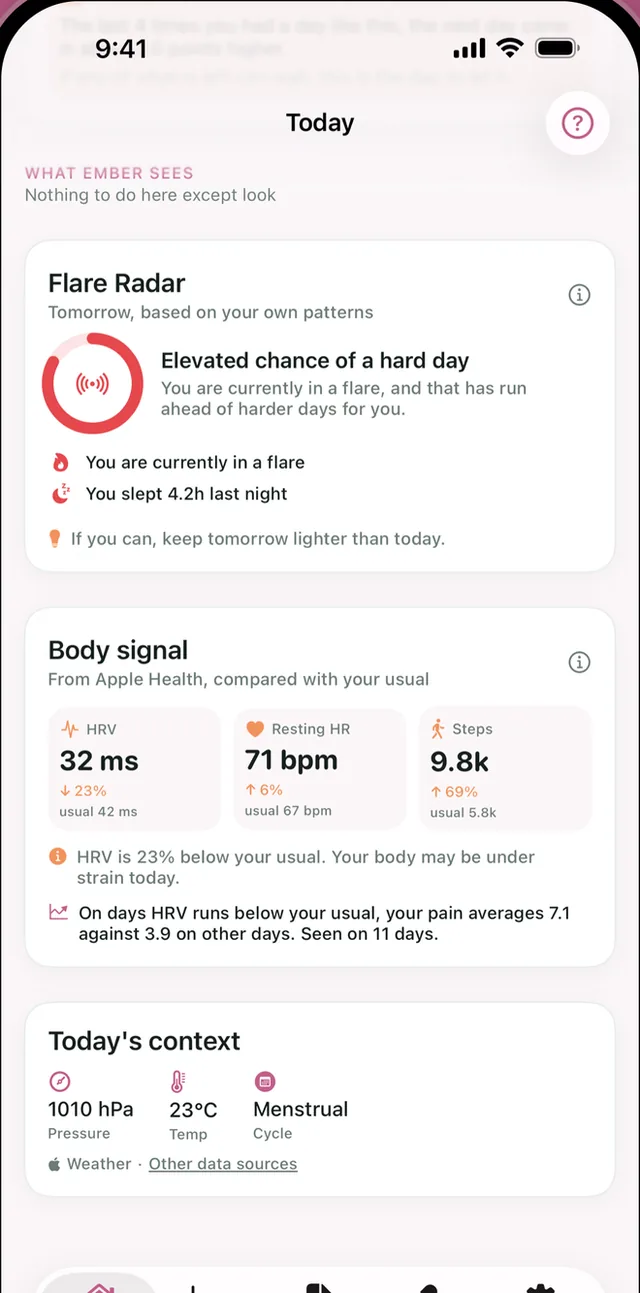
Most people describe something changing a day or two before a flare is obvious, and it is usually not pain that moves first.
- Sleep breaking up, or waking as tired as you went to bed, often before anything hurts more
- Cognitive fog thickening: losing words, rereading the same line, forgetting why you walked into a room
- Stiffness in the morning lasting longer than your usual
- Sensitivity turning up: noise, light or touch being more than you can tolerate
- A heavy, flu-like feeling without an infection to explain it
These are worth recording precisely because they are early. A flare that is recognised on day one can be met with pacing. A flare recognised on day four has usually already been fed by three days of trying to carry on.
How to tell a trigger from a coincidence
The honest problem with trigger hunting in fibromyalgia is that flares are common, candidate triggers are constant, and the human mind is excellent at connecting the two. Three things make the difference between a real pattern and a story.
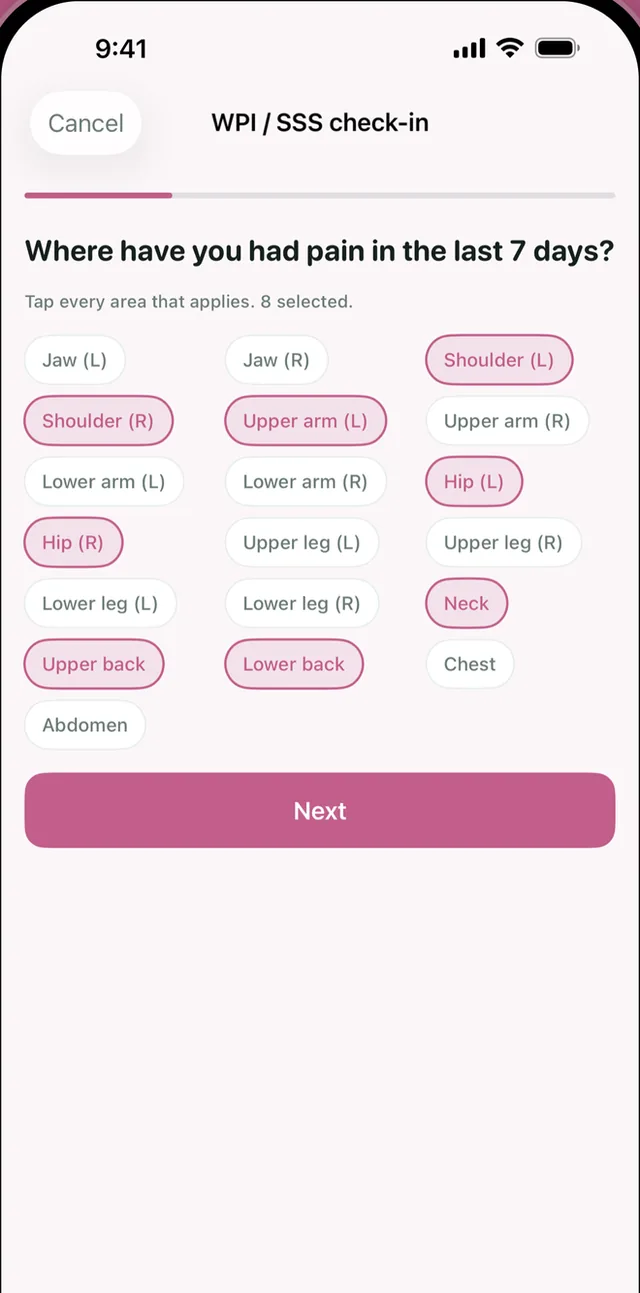
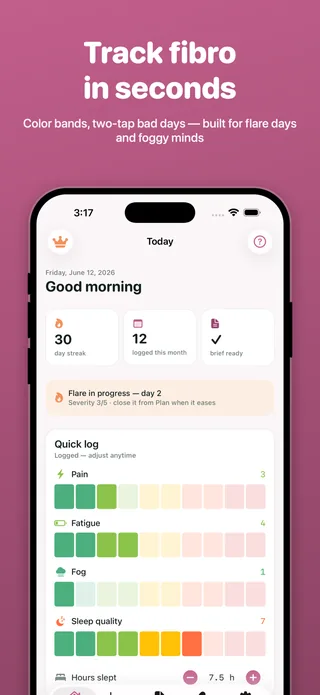
- Record the candidate before the flare, not after. Sleep, activity and stress logged daily are evidence, and the free printable fibromyalgia flare diary has a line for each. The same things recalled after a bad week are a narrative
- Look at the good weeks too. If poor sleep precedes your flares but also precedes plenty of ordinary weeks, it is not doing the work you think
- Give it months, not weeks. With flares arriving a couple of times a year on average, a fortnight of data cannot show a pattern
The triggers people can usually do something about
Weather is on the list and is not actionable, which is worth saying so nobody wastes effort there. Knowing you are weather sensitive is still useful, because it changes what you plan on a bad forecast rather than what you blame afterwards.
Stress and overexertion are different. Neither is fully controllable, and telling someone with fibromyalgia to avoid stress is close to useless, but pacing on good days is specific, learnable and the intervention with the most support behind it. The pattern to interrupt is the familiar one: a good morning arrives, the backlog gets cleared, and the next three days pay for it.
What to bring to an appointment
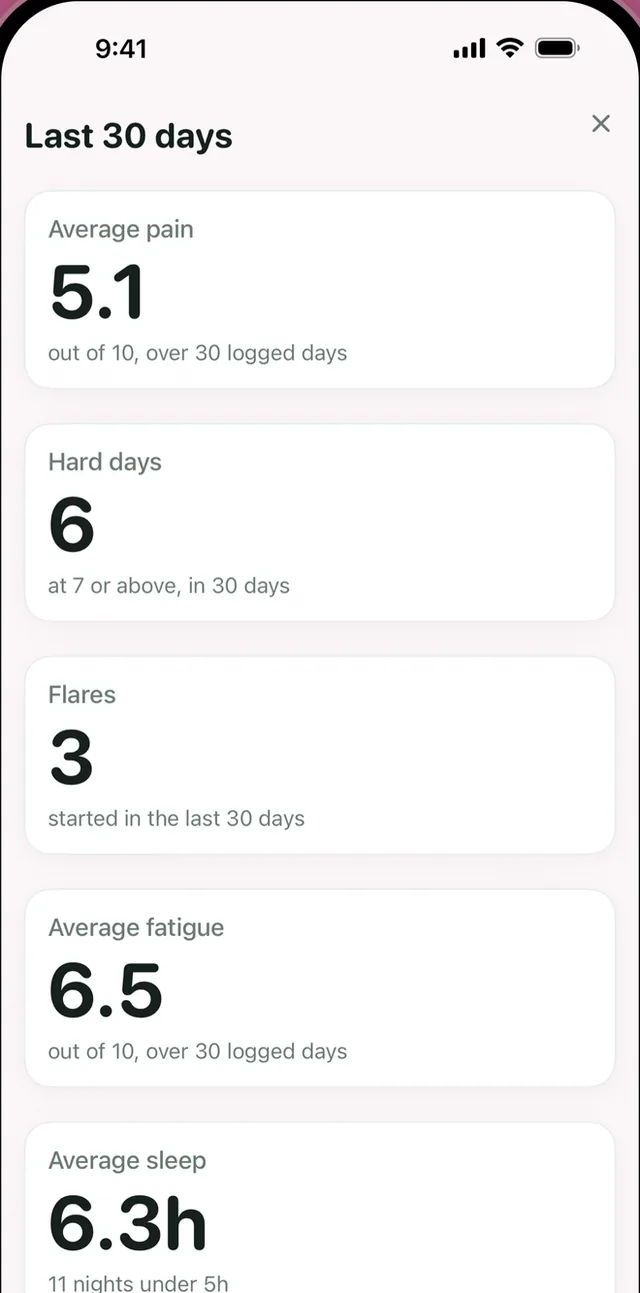
Frequency, length and what preceded each flare is what a clinician can act on. It is also what separates fibromyalgia behaving the way it does from something new arriving on top of it, which is the question worth asking when a flare does not fit your own pattern. How long flares typically run, and what the same study found, is in how long a fibromyalgia flare lasts.
Frequently asked questions
What are the most common fibromyalgia flare triggers? +
In a prospective study of 124 patients, the most reported were continuous stress (56%), intense stress (39%), physical overexertion (37%) and climatic changes (36%). These are what patients attributed their flares to rather than proven causes.
Can weather really trigger a fibromyalgia flare? +
Around a third of patients in that study reported climatic changes as a trigger. It is not something you can change, so the use of knowing you are weather sensitive is in planning lighter days around a forecast rather than in explaining a bad week afterwards.
What are the early warning signs of a fibromyalgia flare? +
People most often describe sleep breaking up, cognitive fog thickening, morning stiffness lasting longer, sensitivity to noise, light or touch increasing, and a heavy flu-like feeling, often a day or two before pain clearly worsens.
Does overdoing it cause fibromyalgia flares? +
Physical overexertion was reported by 37% of patients in that study, which is the push and crash cycle appearing in data: a good day gets overspent and the following days pay for it. Pacing on good days is the usual answer and is better supported than any trigger avoidance.
How do I find my own fibromyalgia triggers? +
Record candidates daily before flares rather than reconstructing them afterwards, check whether the same candidate also precedes ordinary weeks, and give it months rather than weeks. Flares arriving roughly twice a year in research samples means a short record cannot show a pattern.
Is a fibromyalgia flare the same as my condition getting worse? +
Usually not. A flare is a temporary worsening against your own baseline, and fibromyalgia often stays at a similar level for years with better and worse stretches. A flare that does not fit your usual pattern, or new symptoms, deserves a medical opinion rather than a place in the diary.
This article is general wellness information about fibromyalgia, not medical advice. It does not diagnose fibromyalgia, which is a clinical assessment, and tracking is not treatment. New symptoms, or symptoms that do not fit the pattern you know, deserve a medical opinion rather than a place in a diary.