A printable fibromyalgia flare diary, free, no sign-up
The problem with fibromyalgia diaries is that they ask most on the days you have least. This one is six numbers and a line of notes, which is a complete entry. It is designed so that the worst week of the month is still recorded, because that is the week the whole record exists for.
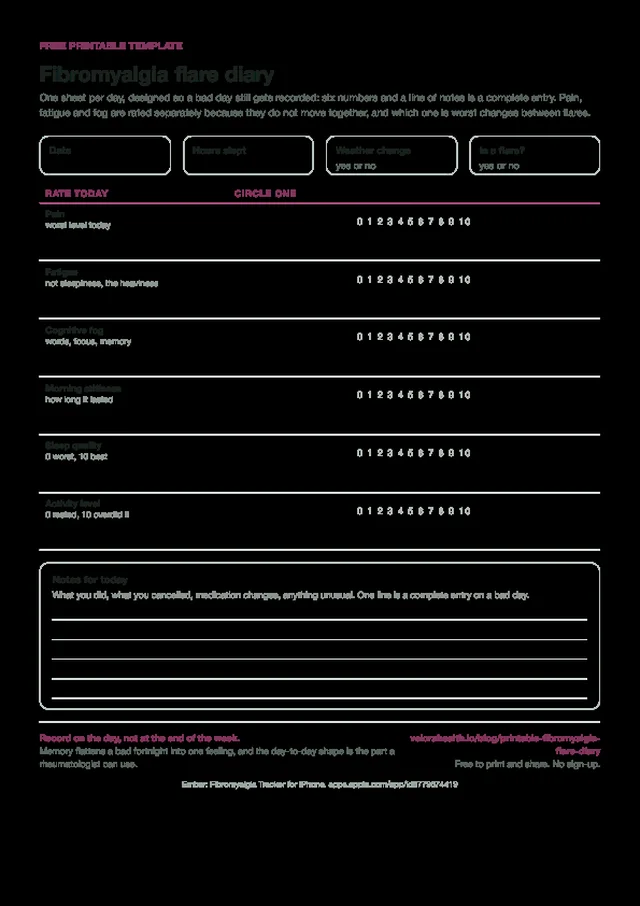
Two pages, A4 and US Letter friendly. Page one is six numbers and a notes box, so a bad day still gets recorded. Page two is the flare and trigger review. 82 KB, no sign-up and no email.
Download the fibromyalgia diary PDFPaper is a fine place to start. When even six numbers is too much to write, Ember takes the same entry in two taps.
What is on the two pages
Page one: the daily sheet
- Pain, fatigue and cognitive fog rated separately, 0 to 10, because they do not move together and which one is worst changes between flares
- Morning stiffness and sleep quality, since poor sleep both precedes and follows flares and nobody can recall the direction afterwards
- Activity level on the same scale, which is how the push and crash pattern becomes visible rather than theoretical
- Hours slept, weather change and whether you consider today a flare at the top, as yes or no boxes rather than more writing
- A notes box for what you did, what you cancelled and any medication change. One line is a complete entry on a bad day
Page two: the flare and trigger review
Fibromyalgia has no test that says a flare started, so the only comparison available is with your own recent weeks. This page asks you to mark the day a flare began before you are certain it is one, then write what the three days before it contained. The checklist of what to look for comes from the research rather than from a general list: continuous stress, a single intense stress, physical overexertion and weather changes were what patients reported most. The rule printed alongside is the one that separates a pattern from a story: if the same candidate also appears before your ordinary weeks, it is not your trigger.
How to use it
- Print a week at a time. Six circles a day is the whole commitment
- Rate at roughly the same time each day, since pain in the evening and pain at waking are different numbers
- Do not skip the bad days. They are the data. A gap in a diary reads as a good week later
- Review weekly, not daily. Day to day noise in fibromyalgia is large and means little
- Bring several months to a rheumatology appointment, because frequency and length are what a clinician can act on
When paper is enough
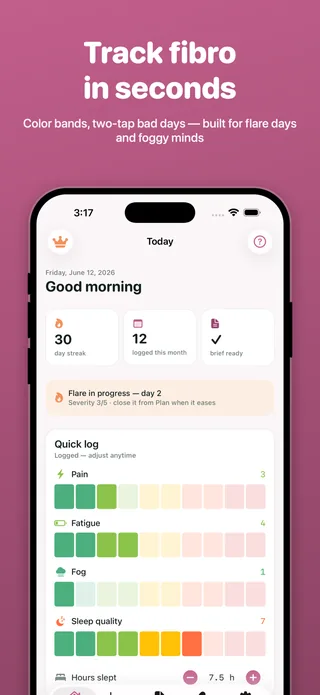
If you want a record for one appointment, paper is faster to start than any app and there is nothing to learn. Where it struggles is time: flares arrive a couple of times a year in research samples, so the pattern you are looking for sits across months of sheets, and finding it means reading them all at once. That is also the comparison trigger hunting depends on. Ember keeps the same six ratings in two taps, charts them against sleep and activity, and tracks the FIQR so a change over months is measured rather than remembered.
How long flares actually run, from the one study that followed people prospectively, is in how long a fibromyalgia flare lasts, and a method built for low energy is in how to track fibromyalgia symptoms without draining yourself.
Frequently asked questions
Is the fibromyalgia diary template free? +
Yes. It is a PDF you download directly from this page, with no email address and no sign-up. Print as many daily sheets as you need.
What size paper is it for? +
It is laid out for A4 and prints correctly on US Letter with the default fit-to-page setting.
Why rate pain, fatigue and fog separately? +
Because they do not move together. Plenty of flares are mostly fatigue and fog with pain no worse than usual, and a single overall score hides that, which also hides what helped.
How long should I keep the diary? +
Months rather than weeks. In research samples flares arrive roughly twice a year, so a fortnight of sheets cannot show a pattern, though even two weeks is better than describing a year from memory.
Will this help at a rheumatology appointment? +
It gives a clinician what they usually have to extract by questioning: how often flares come, how long they last, what preceded them, and how pain, fatigue and fog each moved. That is more useful than any description of a typical day.
This article is general wellness information about fibromyalgia, not medical advice. It does not diagnose fibromyalgia, which is a clinical assessment, and tracking is not treatment. New symptoms, or symptoms that do not fit the pattern you know, deserve a medical opinion rather than a place in a diary.