How to track fibromyalgia symptoms, even on the bad days
The cruel irony of fibromyalgia tracking is that the days most worth recording are the days you least have the energy to record them. Pain, fatigue and fibro fog make detailed diaries collapse within a week. The answer is not more discipline - it is a system designed for your worst days.
Why most symptom diaries fail with fibro
Fibromyalgia involves widespread pain, deep fatigue and cognitive fog that fluctuate day to day. A diary that demands ten fields every evening works fine on good days and gets abandoned on flare days - which means your record quietly skips the exact data your rheumatologist needs most. Missing bad days makes your condition look milder than it is.
Design for the bad day first
Pick a logging method you can complete in under thirty seconds, one-handed, lying down. That means:
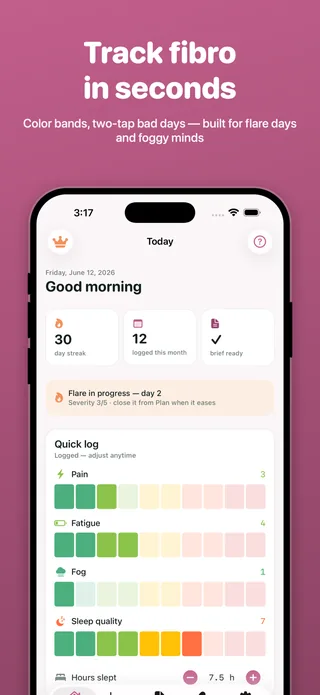
- A two-tap bad-day mode: overall severity plus one word for the day
- A tap-to-rate body map instead of typing where it hurts
- Color bands (green to red) instead of precise numbers when fog is heavy
- Voice-free, glare-free input you can do from bed
On better days you can add detail - sleep, stress, activity. But the floor of the system has to be almost effortless, because consistency beats completeness.
Use the scales your rheumatologist already knows
Two validated instruments matter in fibromyalgia care. The FIQR (Revised Fibromyalgia Impact Questionnaire) measures how much fibro affects your function and daily life. The WPI and SSS (Widespread Pain Index and Symptom Severity Scale) are the basis of the diagnostic criteria and useful for following change over time. Completing them monthly, rather than describing your month from memory, gives your clinician numbers they can compare visit to visit.
Track weather pressure alongside your pain
Many people with fibromyalgia report flares around weather changes, particularly swings in barometric pressure. The evidence is mixed, and that is exactly why your own data helps: capturing local pressure automatically next to your pain ratings lets you see whether the pattern is real for you, or whether something else - poor sleep, overexertion the day before - is the better predictor.
Watch for the push-crash cycle
This is the pattern behind one of the most reported triggers, covered in fibromyalgia flare triggers. A common fibro pattern is doing too much on a good day and paying for it across the next two or three. If your log captures activity level even roughly, the lag between a big day and a crash becomes visible - and pacing decisions get much easier to make and to justify to yourself.
Turn it into something your doctor can act on
A monthly one-page summary - average severity, worst days, FIQR trend, likely triggers, medication changes - beats any amount of describing. It is also powerful evidence when you need documentation for work accommodations or insurance. Ember generates an AI Visit Brief like this automatically from your logs.
Frequently asked questions
What is the FIQR score? +
The Revised Fibromyalgia Impact Questionnaire is a validated instrument measuring how much fibromyalgia affects your daily function. Rheumatologists use it to follow change over time, so a monthly FIQR trend is genuinely useful data to bring to appointments.
Does weather really affect fibromyalgia? +
Research is mixed, but many individuals report pressure-change flares. Tracking your pain alongside automatically captured barometric pressure lets you find out whether the link is real for you.
How do I track symptoms during a flare? +
Lower the bar: a two-tap log of overall severity is enough on bad days. A system you can use from bed in seconds keeps your record honest, because flare days are the ones that matter most.
Can Ember diagnose fibromyalgia? +
No. Ember is a wellness tracker that helps you record symptoms, complete standard scales and prepare for your rheumatologist. Diagnosis and treatment are medical.
This article is general wellness information from Velora Health, not medical advice, diagnosis or treatment. Always consult a qualified healthcare professional about your symptoms and before changing anything about your care.