Can an AI food diary find your food triggers?
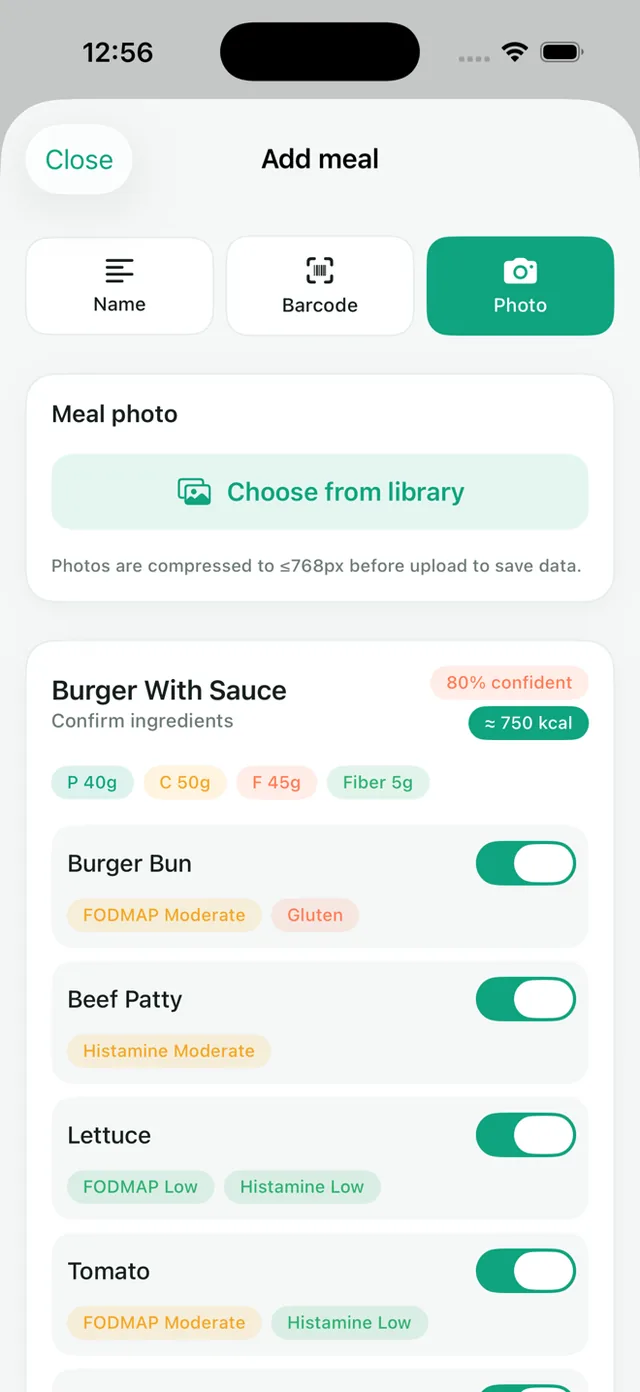
A new wave of food diary apps promise to find your triggers from a photo of your plate. Some of that promise is real: AI has made logging much faster and can surface patterns you would miss. Some of it is not: no app can prove a food is causing your symptoms from a diary alone. Knowing the difference saves weeks of cutting out the wrong foods.
An AI food diary can speed up logging, read hidden ingredients such as garlic, onion and dairy from a dish, and rank which foods most often came before your symptoms. It cannot tell you a food is the cause. Treat its list as suspects to test, not a diagnosis: log consistently for at least two weeks, then confirm one suspect at a time by leaving it out and bringing it back. Allergies and severe reactions need a doctor, not an app.
What AI genuinely helps with
Logging that people actually keep up
The biggest reason food diaries fail is that people stop writing in them. Snapping a photo or typing "chicken curry from the takeaway" and getting a full ingredient list back takes seconds, which is the difference between a diary that has three days in it and one that has thirty.
Ingredients you would never write down
Most trigger foods hide inside dishes: garlic and onion in sauces and stocks, milk solids in bread, wheat in soy sauce, histamine in leftovers and aged cheese. A model that knows what usually goes into a dish will list ingredients you would not think to record, which is exactly where many triggers turn out to be.
Patterns across weeks
Once there is enough data, software is good at the dull part: counting how often each ingredient appeared in the hours before each symptom, and how often it appeared on days you felt fine. That comparison is hard to do in your head and easy for a phone.
What it cannot do
- Prove cause. A food that often comes before a symptom may be a coincidence, or travel with the real trigger. If you always eat bread with cheese, the diary cannot tell which one it is
- Know your portion and preparation exactly. Photo estimates are approximations, and dose matters for many intolerances
- See what you do not log. Symptoms, sleep, stress, alcohol, medication and the menstrual cycle all affect gut and skin symptoms. A diary that only has food in it will blame food
- Work in a few days. Most patterns need around two weeks of consistent logging, and longer for symptoms that are occasional
- Diagnose an allergy or a condition. Hives, swelling or breathing trouble after eating, blood in stools, weight loss or symptoms that wake you at night need a doctor
Timing is another trap. Some reactions show within minutes, others a day or more later. How long after eating food intolerance symptoms appear covers the usual windows, and why the meal right before a symptom is not always the culprit.
How to use one well
- Log every meal and every symptom for two weeks, including the days you feel fine. Good days are half the comparison
- Rate symptoms, do not just tick them. A 1 to 5 scale shows which foods come before bad days rather than any day
- Add the non-food context the app lets you record: sleep, stress, period, alcohol, new medication
- Treat the top of the list as suspects, and pick the strongest one
- Test it properly: leave it out for about two weeks, then bring it back on its own and see if symptoms return. How to do an elimination diet covers this step by step
- Take the record to your doctor or dietitian, especially before cutting out whole food groups
If you are comparing apps, the best food and symptom tracker apps sets out what each one records and how each finds patterns, including ours.
Frequently asked questions
Can an AI food diary find food triggers? +
It can find patterns: which foods most often came before your symptoms. It cannot prove a food causes them. Use the results as suspects, then confirm one at a time by leaving the food out and bringing it back.
How long do you need to keep a food diary to find triggers? +
Around two weeks of consistent logging is usually the minimum for patterns to show, and longer if your symptoms are occasional.
Are AI food photo apps accurate? +
They are good at naming dishes and listing their usual ingredients, including hidden ones such as garlic and onion. Portion sizes and exact recipes are estimates, so check the ingredient list for dishes that matter.
Can an app diagnose a food intolerance or allergy? +
No. An app can organise your record and suggest suspects. Allergies, coeliac disease and other conditions need a doctor, and some need specific tests.
What should I log besides food? +
Symptoms with a severity rating, and context such as sleep, stress, alcohol, medication and your menstrual cycle, since all of these can affect symptoms.
This article is general information from Velora Health, not medical advice. It does not replace an assessment by a clinician who knows your history. Velora Health makes Velora, one of the apps discussed. If you have swelling of the lips or throat, difficulty breathing or feel faint after eating, contact your local emergency number now.