IBS flare up: what to eat, what to avoid, and how long it lasts
An IBS flare tends to arrive at the worst moment and leave you unsure what is safe to eat. There is no special flare diet, but there is a sensible way to eat for a few days that gives your gut less to work with, and there are a few signs that mean it is time to stop managing it on your own.
During a flare, eat small, regular meals of plain foods that are low in FODMAPs: rice, oats, potatoes, eggs, chicken or fish, firm tofu, carrots, courgette, spinach, a firm banana, strawberries or an orange. Drink water steadily. For a few days, cut back on the usual triggers: onion, garlic, large wheat portions, beans and lentils, milk, apples and pears, honey, sugar-free sweets with sorbitol, alcohol, fizzy drinks and more than about three cups of coffee or tea. There is no fixed length: many flares settle within a few days, some take a week or more. Blood in your stool, weight loss you cannot explain, a fever, or symptoms that wake you at night are not typical of IBS and need a doctor.
What a flare is, and what usually sets one off
IBS symptoms come and go. A flare is a stretch of days when they are clearly worse than your usual: more pain or cramping, more bloating and wind, and stools that swing towards diarrhoea, constipation or both. Common triggers are a large or rich meal, a run of high FODMAP food, alcohol, stress, poor sleep, a period, a stomach bug, travel and new medicines such as antibiotics. Often it is two or three of these at once.
What to eat during an IBS flare
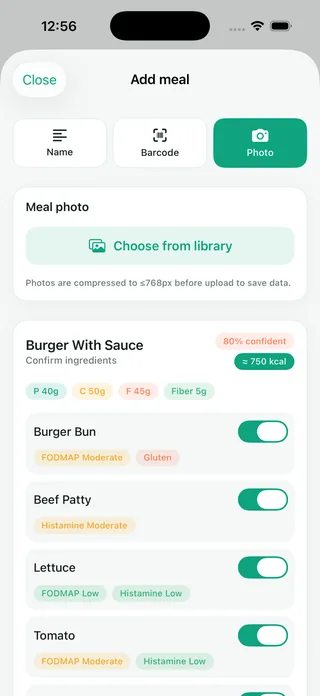
For a few days the aim is simple: smaller amounts, more often, of foods that give gut bacteria little to ferment. Do not skip meals; NICE advises regular meals without long gaps. These are gentle staples, with the FODMAP label Velora gives each one:
| Food type | Gentler choices | Velora's FODMAP label |
|---|---|---|
| Grains and starch | Rice, rolled oats, potatoes, quinoa, rice noodles, corn tortillas | Low |
| Protein | Eggs, chicken, turkey, fish, firm tofu | None or low |
| Vegetables, cooked | Carrot, courgette, spinach, green beans, bell pepper, tomato | Low |
| Fruit, one portion at a time | Strawberries, blueberries, orange, kiwi, a firm banana | Low (a ripe banana is moderate) |
| Dairy and alternatives | Lactose-free milk or yogurt, hard cheese such as cheddar or parmesan, almond milk | Low |
| Fat and flavour | Olive oil, garlic-infused oil, chives, ginger, fresh herbs | None or low |
Cooked vegetables are often easier than a large raw salad during a flare. Plain does not have to mean bland: garlic-infused oil, the green tops of spring onions, chives, ginger and fresh herbs add flavour without the fructans in onion and garlic. To check a particular food, see is it low FODMAP? 45 common foods checked.
What to cut back on for a few days
- Onion and garlic, including in stock, sauces and ready meals, where they are the most common hidden source of fructans
- Large portions of wheat: a big bowl of pasta, several slices of bread, couscous
- Beans, chickpeas and lentils, which carry GOS
- Milk, soft cheese, cream and ice cream, if lactose bothers you
- Apples, pears, mango, watermelon and honey
- Sugar-free sweets and chewing gum with sorbitol or other sweeteners ending in -ol; NICE advises people with diarrhoea to avoid sorbitol
- Alcohol and fizzy drinks, which NICE suggests reducing
- More than about three cups of coffee or tea a day, the limit NICE suggests
- Fatty, fried or very spicy meals, and very large meals of any kind
This is a short step back while symptoms settle, not a new diet. Cutting out whole food groups for weeks without a plan narrows what you eat and rarely tells you anything.
Tips by symptom
Diarrhoea
Drink plenty: water, weak tea, or an oral rehydration solution from a pharmacy if you are losing a lot of fluid. Avoid sorbitol and other sweeteners ending in -ol, cut back on coffee, alcohol and fatty food, and keep meals small. A pharmacist can advise on loperamide, which NICE lists as the first medicine to try for diarrhoea in IBS.
Constipation
Drink steadily and add soluble fibre gradually, such as oats or psyllium (ispaghula husk). The American College of Gastroenterology recommends soluble fibre for IBS, while insoluble fibre such as wheat bran can make bloating and pain worse. Build fibre up over a few weeks rather than all at once in the middle of a flare.
Bloating and wind
Smaller meals, eating slowly, and fewer fizzy drinks and less chewing gum help many people. NICE suggests oats and up to one tablespoon of linseeds a day for wind and bloating. A gentle walk after a meal can help too.
Pain and cramping
A hot water bottle or heat pad on the tummy is an old remedy that many people find comforting. Peppermint oil capsules are suggested in the ACG guideline for overall IBS symptoms; ask a pharmacist whether they suit you, as they can make heartburn worse. Antispasmodic medicines are another option NICE lists, through a pharmacist or GP.
How long does an IBS flare last?
No guideline sets a length, because flares vary so much from person to person and from one flare to the next. People with IBS commonly describe flares lasting from a day or two to about a week, occasionally longer, often with a recognisable trigger behind them. Symptoms usually ease as the trigger passes: a big meal is digested, a stressful week ends, a period finishes.
The most useful number is your own. Writing down when each flare starts, how bad it gets and when it settles, alongside what you ate, how you slept and what was going on in the days before, turns "they come out of nowhere" into a pattern you can plan around. How to keep a food diary for IBS explains what to record, and Velora keeps that record from a photo of each meal.
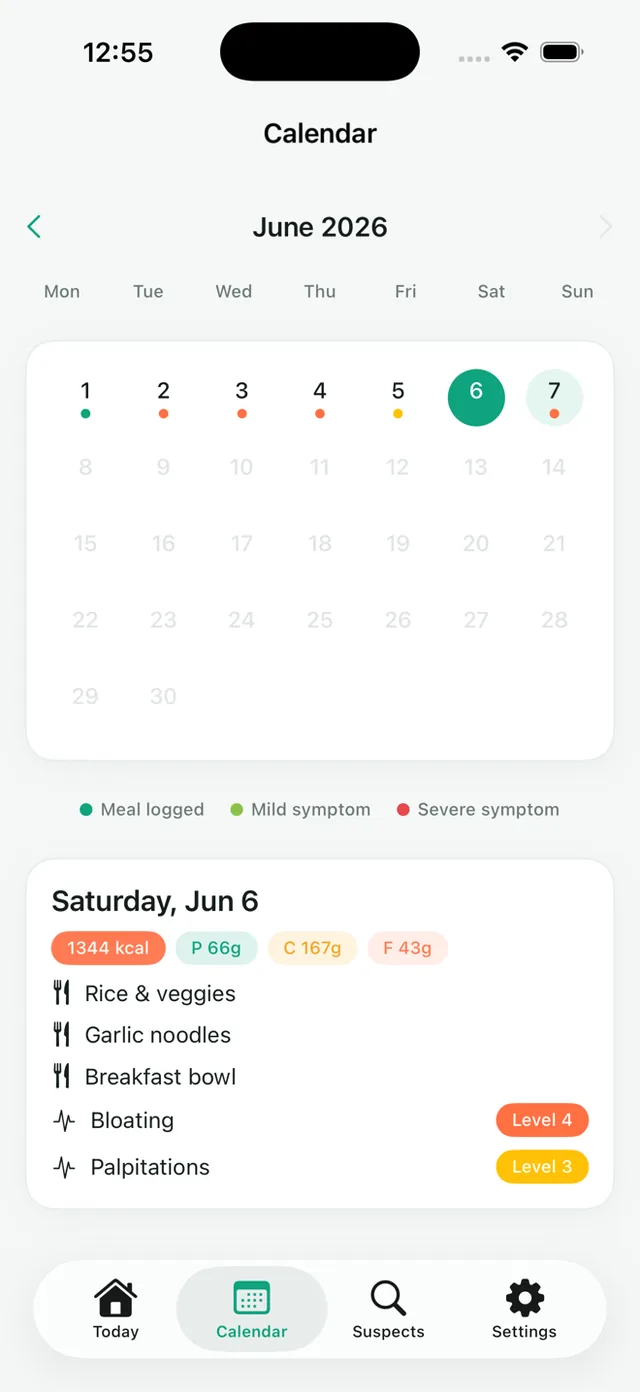
A flare that lasts much longer than your usual ones, or that comes with any of the warning signs below, needs a doctor rather than more waiting.
After the flare: getting back to normal eating
Bring foods back over a few days rather than all at once, starting with the ones you usually tolerate. If flares keep coming back with no clear pattern, the low FODMAP diet is worth discussing with a GP or dietitian. Monash University describes it in three steps: two to six weeks of low FODMAP eating, reintroducing one FODMAP group at a time, then a personalised diet that restricts only what you react to. It is a test, not a permanent diet.
When it may not be just IBS
See a doctor promptly, rather than waiting for a flare to pass, if you have:
- Blood in your stool, or black, tarry stools
- Weight loss you cannot explain
- A fever, or pain that is severe or getting steadily worse
- Symptoms that wake you up at night
- A lasting change to looser or more frequent stools, especially if you are over 60
- A lump in your tummy, or a family history of bowel or ovarian cancer
- Signs of dehydration: dark urine, passing very little, or dizziness when you stand
Get urgent help or call your local emergency number for severe pain that does not ease, vomiting blood, heavy bleeding from the bottom, or fainting.
Auf Deutsch: Reizdarm-Schub: was essen, was meiden, wie lange er dauert.
Sources
- Monash University: Starting the low FODMAP diet
- Monash University: High and low FODMAP foods
- NICE CG61: Irritable bowel syndrome in adults, diagnosis and management (2008, updated 2017)
- Lacy BE et al. ACG Clinical Guideline: Management of Irritable Bowel Syndrome. Am J Gastroenterol 2021;116:17-44
Frequently asked questions
What should I eat during an IBS flare up? +
Small, regular meals of plain, low FODMAP foods such as rice, oats, potatoes, eggs, chicken, fish, firm tofu, cooked carrots, courgette and spinach, with water through the day. Cooked vegetables are often easier than raw salads.
What foods make an IBS flare worse? +
The most common are onion and garlic, large portions of wheat, beans and lentils, milk, apples, pears, honey, sugar-free sweets with sorbitol, alcohol, fizzy drinks, and more than about three cups of coffee or tea a day. Fatty and very large meals can also make symptoms worse.
How long does an IBS flare up last? +
There is no fixed length. Many people find a flare settles within a few days, and some last a week or longer. A diary of when each flare starts and ends shows your own pattern.
Can stress cause an IBS flare up? +
Yes. Stress and poor sleep change how the gut moves and how sensitive it is, and they are common flare triggers alongside food.
Should I stop eating during an IBS flare? +
No. Skipping meals and leaving long gaps can make symptoms worse. Smaller, regular meals of gentle foods are usually better.
When should I see a doctor about an IBS flare? +
If you have blood in your stool, black stools, weight loss you cannot explain, a fever, pain that is severe or getting worse, symptoms that wake you at night, or a flare that lasts far longer than usual.
This article is general information from Velora Health, not medical advice. It does not replace an assessment by a clinician who knows your history. If you have severe or worsening abdominal pain, blood in your stool or black stools, a high temperature, or you are vomiting and cannot keep fluids down, contact a doctor urgently or call your local emergency number.