What triggers rosacea, and how to find yours
Rosacea flares feel unpredictable, but they rarely are. The trouble is that triggers are personal and often environmental, so the same advice that helps one person does nothing for another. The fix is to track your own flushing alongside the conditions around you and let your real triggers reveal themselves.
The usual suspects (and why lists are not enough)
Commonly reported rosacea triggers include sun and UV exposure, heat, alcohol (red wine especially), spicy food, hot drinks, stress and temperature swings. But a generic list cannot tell you which ones actually affect you, or how strongly. Only your own data can.
Log your flush, simply and daily
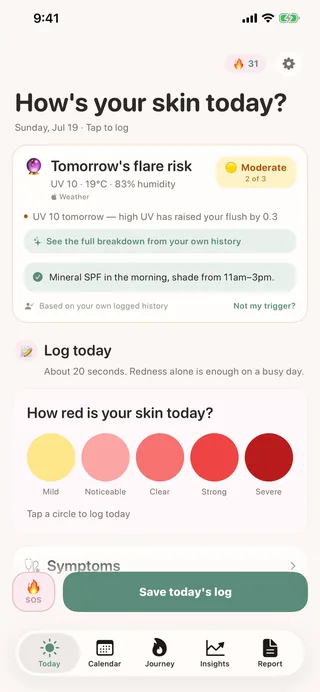
Each day, rate your flushing on a short scale (say 1 to 5) and tap the factors that applied:
- Foods and drinks - alcohol, spicy food, hot drinks
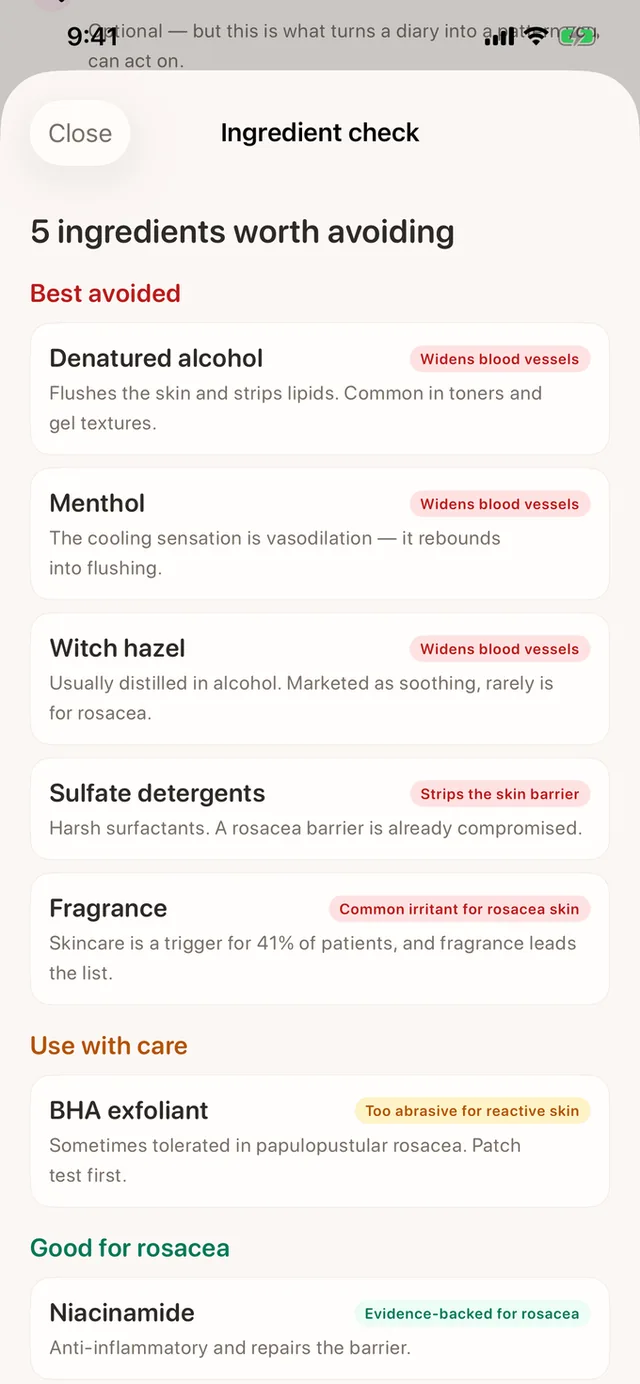
- Skincare and products used
- Stress and sleep
- A quick photo, if you want a visual record
Let weather and UV track themselves
Two of the biggest rosacea triggers, heat and UV, are easy to forget to record. The smarter approach is to capture local weather and the UV index automatically each day, so they sit right next to your flush rating. Many people discover their "random" flares line up neatly with high-UV days, even indoors.
Find the correlations that matter
After a few weeks, compare your flare days with the conditions and inputs you logged. Look for the factors that show up again and again before a flush. The goal is a short, personal shortlist - perhaps UV above a certain level and red wine - rather than avoiding everything.
Use it to build a routine and a derm visit
Once you know your triggers you can act: check the UV forecast, adjust a few habits, and bring a clear summary to your dermatologist. A structured record of flush severity, top triggers and a photo timeline makes that appointment far more productive.
Frequently asked questions
What is the most common rosacea trigger? +
Sun and UV exposure and heat are among the most frequently reported, along with alcohol, spicy food and stress. Your personal triggers may differ, which is why tracking is so useful.
Does weather really affect rosacea? +
For many people, yes - heat and high UV are common flare drivers. Logging weather and UV automatically alongside your symptoms helps you confirm whether they affect you.
How do I prove a food is a trigger? +
Track consistently, look for foods that repeatedly precede flares, then reduce a suspect for a week or two and watch whether things improve.
Can Flarewell treat rosacea? +
No. It is a wellness tracking tool that helps you find patterns and prepare for your dermatologist. Treatment is medical.
This article is general wellness information from Velora Health, not medical advice, diagnosis or treatment. Always consult a qualified healthcare professional about your symptoms and before changing anything about your care.