When your dog has a seizure: what to do, what to track
Watching your dog seize is terrifying, and the fear does not fully go away with experience. What does change is your control over it: knowing exactly what to do in the moment, and capturing the details that let your vet make good decisions afterwards. Both are learnable, and both matter.
During the seizure: four things
- Stay calm and time it. Start a timer the moment it begins - duration drives every decision that follows
- Keep them safe. Move furniture away, cushion the head area, keep them away from stairs and water. Do not touch their mouth - dogs cannot swallow their tongue, and you may be bitten involuntarily
- Film it if you can. A short video tells your vet more than any description - what the movements looked like, which limbs, whether awareness was lost
- Dim the room. Lower light and noise, and keep other pets away
The 5-minute rule and other emergencies
Most seizures stop on their own within one to two minutes. Go to an emergency vet immediately if a seizure lasts more than five minutes (status epilepticus), if seizures come in clusters (more than one in 24 hours), or if your dog does not regain normal awareness between them. These situations are genuinely time-critical. Agree on the plan with your vet in advance so you are not deciding while panicking - and make sure everyone in the household knows it.
After: the post-ictal phase
Following a seizure, dogs are often disoriented, wobbly, temporarily blind-seeming, very hungry or thirsty. This post-ictal phase can last minutes to hours. Keep them in a safe, quiet space and note how long recovery took - it is part of the picture your vet needs.
Track every event, not just the dramatic ones
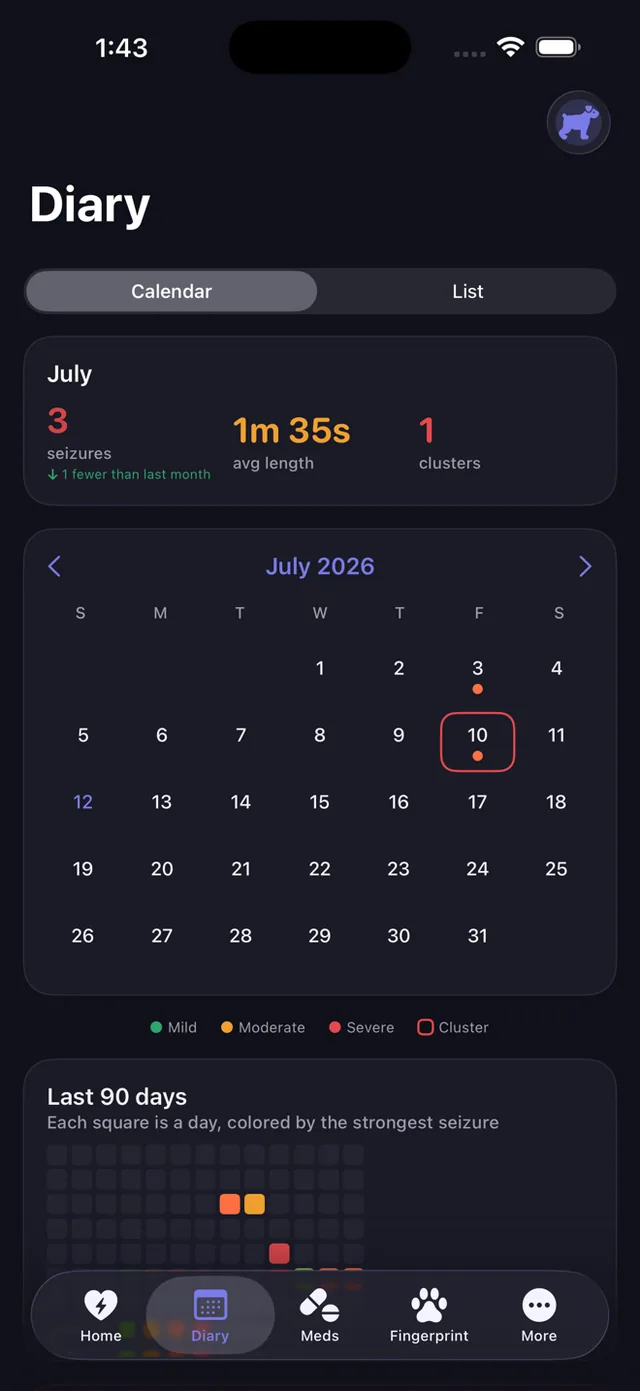
For each seizure, record: date and time, duration, what it looked like, what preceded it (sleep, excitement, missed meds, heat), and recovery time. Over months this log reveals your dog's own pattern - some owners discover reliable pre-seizure signs like restlessness or clinginess hours before an event. Knowing your dog's pattern turns dread into preparation.
Medication levels are part of the log
If your dog takes anti-seizure medication such as phenobarbital, blood levels are checked periodically and doses adjusted. Tracking doses given, missed doses and blood-test results alongside seizure frequency is precisely the evidence your vet needs to fine-tune treatment. Never adjust doses yourself.
Turn the household into a crisis-ready team
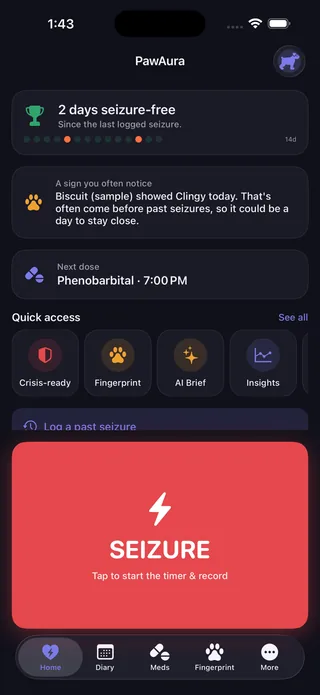
The best seizure response is one anyone in the family can execute: a visible plan with the timer rule, the emergency vet's address, medication details and each person's job. PawAura keeps this crisis plan, a one-tap seizure timer with video, your dog's pattern and med tracking in one place - so the 2 a.m. seizure meets a prepared household, not a scramble.
Frequently asked questions
Should I put my hand in my dog's mouth during a seizure? +
No, never. Dogs cannot swallow their tongue - that is a myth - and a seizing dog can bite with serious force without any awareness of doing so. Keep your hands away from the mouth entirely.
When is a dog seizure an emergency? +
A seizure lasting more than five minutes, multiple seizures within 24 hours, or failure to regain normal awareness between seizures all mean emergency vet care immediately. Agree on the plan with your vet ahead of time.
Why should I film my dog's seizure? +
Because your vet was not there. A short video shows the seizure type, which limbs were involved and whether awareness was lost - details that shape diagnosis and treatment, and that are very hard to describe accurately from memory.
Can PawAura predict my dog's seizures? +
PawAura finds patterns in your own logs, including signs you recorded before past seizures. It is pattern recognition from your data, not a medical prediction device - always work with your vet.
This article is general wellness information from Velora Health, not medical advice, diagnosis or treatment. Always consult a qualified healthcare professional about your symptoms and before changing anything about your care.