A Sjogren's symptoms checklist, including the ones people do not connect
Sjogren's is usually described as dry eyes and dry mouth, which makes it sound minor and makes a lot of people underreport everything else. The symptoms that dominate daily life are often fatigue and pain, and several of the others get mentioned to a different specialist as if unrelated. This is a checklist to take to one appointment.
Sjogren's is an autoimmune condition whose best known feature is dryness of the eyes and mouth, but fatigue and joint pain are frequently the most disabling part. It can also affect skin, nose, throat, digestion and other systems. Only a clinician can diagnose it, using symptoms alongside blood tests and eye or gland testing. This checklist is for organising what to report, not for self diagnosis.
Dryness: the part with a name
- Eyes: grittiness, burning, a feeling of sand, redness, stringy discharge, light sensitivity, blurring that clears when you blink
- Mouth: difficulty swallowing dry food, needing water to finish a meal, trouble speaking for long, altered taste, waking at night to drink
- Dental: increased cavities or gum problems despite unchanged habits, which is a common early clue
- Nose and throat: dryness, crusting, hoarseness, a persistent dry cough
- Skin: dryness, itch
- Vaginal dryness, which is frequently not mentioned at a rheumatology appointment and probably should be
The two that usually matter most day to day
Fatigue in Sjogren's is not ordinary tiredness and is often described as the single hardest symptom to live with. It is also the one most likely to be dismissed as stress or poor sleep, so it helps to describe it in terms of what it stops you doing rather than how tired you feel.
Joint and muscle pain is common, often without the visible swelling that people associate with arthritis. Morning stiffness, aching that moves around, and pain out of proportion to activity are all worth recording specifically rather than folding into a general I ache.
The ones people mention to the wrong doctor
These come up often enough to be worth listing, and they tend to get reported separately to different specialists, which is exactly how the connection gets missed:
- Fingers or toes changing colour in the cold (Raynaud's phenomenon)
- Numbness, tingling or burning in hands or feet
- Reflux, indigestion or difficulty swallowing
- Swelling of the glands in front of the ears or under the jaw
- Rashes, particularly ones that appear or worsen in sunlight
- Brain fog: word finding trouble, losing the thread, slowed thinking
- Recurrent urinary or kidney symptoms
- Shortness of breath or a dry cough that does not resolve
One thing to know about, without alarm
People with Sjogren's have a higher than average risk of lymphoma, which is why persistent swelling of the salivary glands or new lumps are specifically things to have looked at rather than watch. The absolute risk remains low for most people. The reason to know it is not to worry, it is so that a swollen gland gets mentioned at the next appointment instead of ignored for a year.
How to turn the checklist into something usable
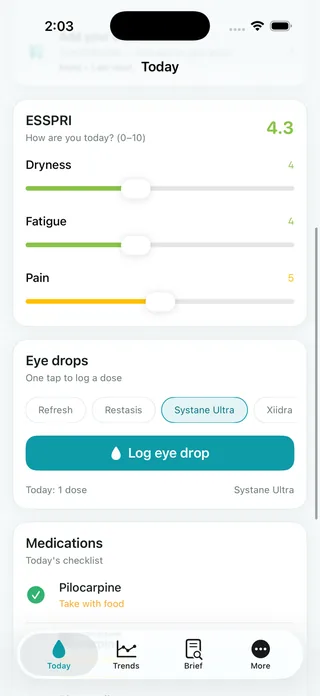
A tick list of everything you have ever felt is less useful than you would think, because the question a rheumatologist is really asking is how much and how often. The ESSPRI score exists for exactly this: three daily numbers from 0 to 10 covering dryness, fatigue and pain. Weeks of those numbers say something a checklist cannot.
- Tick the symptoms you actually get, and cross out the ones you do not
- For each ticked item, note roughly how many days a week
- Rate dryness, fatigue and pain daily for a few weeks before the appointment
- Bring the average, the range and your worst week, not a single day
- Add any recent labs and dry eye scores such as OSDI or Schirmer if you have them
The method behind that daily scoring, including how to test which eye drops actually help, is in how to track Sjogren's symptoms.
What this checklist cannot do
It cannot tell you whether you have Sjogren's. Dryness has many causes, including medication side effects, and diagnosis involves blood tests such as anti-Ro/SSA and anti-La/SSB, tear and saliva testing, and sometimes a lip gland biopsy. Plenty of people with several items ticked here do not have Sjogren's, and some people with Sjogren's have negative antibody tests. That is a conversation with a rheumatologist, and this list exists to make that conversation faster.
Frequently asked questions
What are the main symptoms of Sjogren's syndrome? +
Dry eyes and dry mouth are the defining features, but fatigue and joint pain are frequently the most disabling in daily life. It can also involve dry skin, nose and throat, digestive symptoms, gland swelling, Raynaud's, neuropathy and brain fog.
Is fatigue a symptom of Sjogren's? +
Yes, and many people describe it as the hardest symptom to live with. It is often underreported because the condition is usually described in terms of dryness, so it helps to raise it explicitly and in terms of what it prevents you doing.
Can you have Sjogren's without dry eyes? +
Presentations vary, and some people notice fatigue, joint pain or other features more than dryness, particularly early on. Diagnosis is made by a clinician using symptoms together with blood tests and tear or saliva testing rather than on dryness alone.
What tests diagnose Sjogren's syndrome? +
Typically a combination: blood tests including anti-Ro/SSA and anti-La/SSB antibodies and ANA, tear production and eye surface testing, saliva measures, and in some cases a minor salivary gland biopsy. Your rheumatologist decides which are needed.
Why does Sjogren's cause dental problems? +
Saliva protects teeth, so reduced saliva flow means more cavities and gum problems even with unchanged brushing habits. A sudden rise in dental problems is a common early clue and is worth mentioning to both your dentist and your doctor.
What should I bring to a rheumatology appointment? +
A few weeks of daily dryness, fatigue and pain scores, roughly how often each symptom occurs, recent lab results and any dry eye scores, plus three or four questions you want answered. Averages and ranges are more useful than describing a single day.
This article is general wellness information from Velora Health, not medical advice, diagnosis or treatment. Always consult a qualified healthcare professional about your symptoms and before changing anything about your care.