How to check on your elderly parent every day, without calling every day
The daily phone call sounds like the loving answer, and sometimes it is. But for many families it slowly turns into something else: an obligation for you, an interrogation for her, and still no real answer on the days she does not pick up. There are gentler ways to know she is okay every single day.
Why the daily call stops working
A check-in call has to do two jobs at once: be a warm conversation and be a safety check. Mixing them corrodes both. She starts hearing "are you still coping?" inside every hello, and you start listening for warning signs instead of listening to her. Worse, the system fails exactly when it matters: a missed call could mean a nap, a walk, a dead battery, or a fall - and you cannot tell which from another city.
What a good daily check-in system looks like
Families that make this work long-term usually converge on the same principles:
- One tiny action for her - a single tap, not a form or a conversation she owes anyone
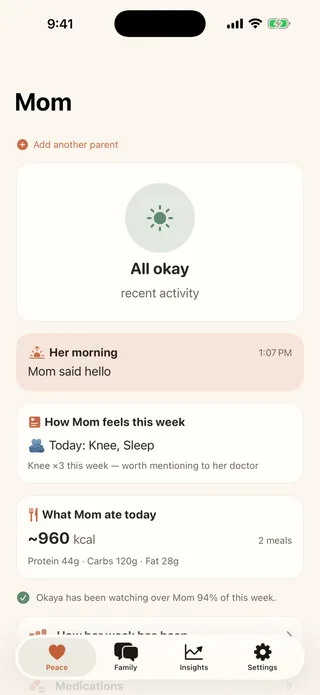
- A quiet signal for you - reassurance you can glance at, not a dashboard that turns her into a patient
- A clear meaning for silence - everyone knows what happens, and when, if there is no sign of her
- Her hand on every switch - she chooses what is shared, and she can change her mind silently
The last point is not a nicety. Systems imposed on a parent get quietly abandoned; systems she owns get used.
Separate the safety check from the relationship
Once a one-tap morning check-in answers "is she okay today?", your calls stop carrying that weight. You call to talk about the garden, the grandkids, the neighbour's dog - because you already know she is up and moving. Many families find they talk more, and better, after the checking is automated away.
Decide in advance what silence means
The most stressful moment is the ambiguous one: no answer at 11 a.m. Is that an emergency? Agree on a ladder while everyone is calm. A sensible shape: a gentle reminder to her first, then a heads-up to one family member, then a real alert to everyone, and only then a call to a neighbour or emergency contact with her address. Write down the steps and the timings, and make sure she helped write them.
Respect the difference between quiet and wrong
Some days she will not feel like being visible, and that has to be allowed. A good system distinguishes "she has chosen privacy today" from "her phone has shown no sign of her at all" - and only escalates the second. If your setup cannot tell those apart, it will cry wolf until everyone turns it off.
Tools can help, if they follow the rules above
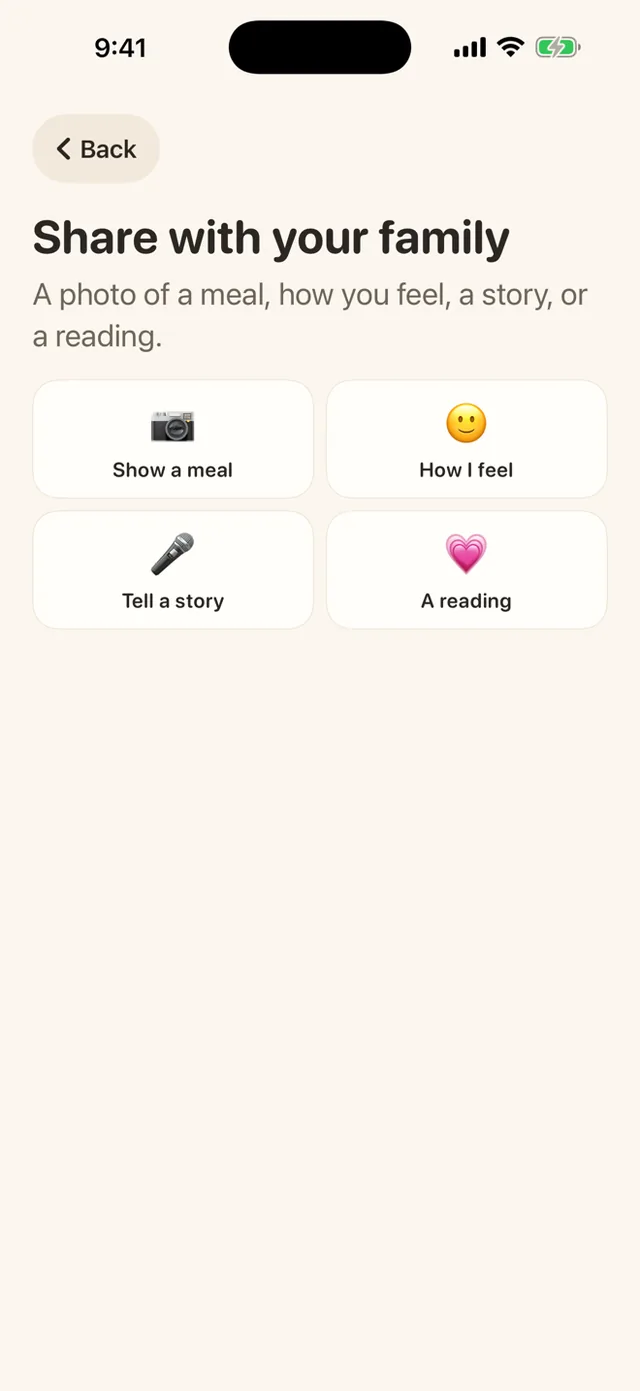
This is exactly the shape we built Okaya around: she taps once each morning, you see a quiet card, a free Silence Alarm escalates through the family only when her phone goes truly still, and every sharing switch belongs to her. But the principles matter more than the product - even a family group chat with an agreed morning emoji and a written escalation ladder beats an unstructured worry.
Frequently asked questions
How often should I check on my elderly parent? +
For a parent living alone, most families settle on one light touchpoint per day plus richer calls a few times a week. The daily touchpoint should be near-effortless for the parent, or it will not last.
What should I do if my elderly parent doesn't answer the phone? +
Agree on an escalation ladder in advance: wait a set time, try a second channel, then contact a nearby person, and only then treat it as an emergency. Deciding the steps while calm prevents both panic and dangerous delay.
Are cameras a good way to check on aging parents? +
Most parents experience cameras in their home as surveillance, and many families abandon them. Consent-based check-ins and activity signals answer the same question - is she okay today? - without filming anyone.
Is Okaya a medical alert system? +
No. Okaya is a family wellness app: check-ins, a Silence Alarm and an SOS button that alert family members. It is not a medical device, does not detect falls, and never calls 911 automatically.
This article is general information from Velora Health, not medical, legal or safety advice. Every family's situation is different; consult the professionals involved in your parent's care, and in an emergency always call your local emergency number.