The cold sore prodrome, and why the first hours matter
Most people who get recurrent cold sores describe the same thing: a tingle, an itch, a tightness that arrives hours before anything is visible. That sensation has a name, the prodrome, and it is the reason clinicians ask you to start treatment at the first sign rather than when you can see something.
What the prodrome actually is
A recurrence begins before the skin changes. The prodrome is the window when the virus has reactivated and travelled along the nerve, but before blisters appear. People describe it differently: tingling, itching, burning, a tight or numb patch, sometimes an ache. It is usually in the same place each time, because it follows the same nerve.
The prodrome typically lasts hours rather than days. For genital HSV some people also notice a leg or hip ache in the same window.
Why timing is the whole point
Antiviral medicines work by interfering with viral replication. That means their effect depends on there being replication left to interfere with, and prescribing information for these medicines is explicit that treatment should start at the earliest signs. Start late and the episode is largely already written.
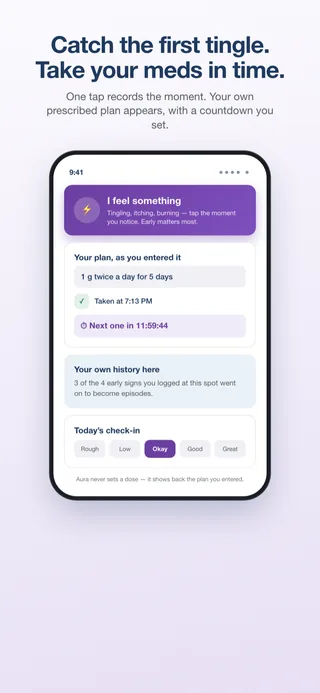
This is why the practical problem is rarely the medicine and almost always the logistics: it is 11pm, the tingle has started, and you are trying to remember what your prescriber told you and where the box is. The window is short and finding the information eats it.
Nothing here tells you what to take or when. Only your prescriber decides that. What is worth doing before the next episode is writing their instructions down somewhere you can reach in ten seconds.
Learn your own early signs
Prodrome symptoms vary between people and are easy to dismiss. Logging them, even roughly, tends to make the pattern obvious within a few episodes:
- What you felt, in your own words, and exactly where
- The time you first noticed it
- Whether it became an episode, and how long that took
- What was going on, such as poor sleep, illness, sun, stress or your cycle
The fourth item is where people over-interpret. With a handful of episodes a year, a factor appearing before three of your four episodes is a weak signal, not a cause. It is still useful for planning, as long as nobody dresses it up as prediction.
Commonly reported triggers
People frequently report recurrences after illness or fever, physical or emotional stress, poor sleep, strong sun exposure on the lips for oral HSV, friction, and hormonal changes around the menstrual cycle. Individual patterns vary widely, which is exactly why a personal log beats a generic list.
A number to bring to your doctor
If recurrences are frequent, the conversation about daily suppressive therapy usually starts with how often they happen. "I think I get them quite a lot" is easy to underweight; a count over twelve months is not. If you take that number to an appointment, you and your clinician are discussing the same thing.
The part that is not about the virus
Qualitative research keeps finding that people rate the emotional weight of an HSV diagnosis as heavier than the physical symptoms, particularly around disclosure to a partner. That is worth naming, because it means the useful preparation is not only medical. Reading accurate information about transmission, having language ready that you did not have to invent under pressure, and knowing your own facts all reduce the load. Your clinician can also talk you through how treatment affects transmission risk, which is a conversation better had calmly than mid-episode.
When to see a clinician
Get medical advice for a first suspected episode, which is when accurate diagnosis matters most, if episodes are severe or very frequent, if a sore is not healing, if you are pregnant or immunocompromised, or if sores appear near the eye, which needs urgent attention.
Frequently asked questions
What is the prodrome before a cold sore? +
The period after the virus reactivates but before visible skin changes. It is often felt as tingling, itching, burning or tightness in the same place each time, and usually lasts hours rather than days.
Why do antivirals need to be started early? +
They work by interfering with viral replication, so their effect depends on being taken while replication is ongoing. Prescribing information for these medicines states treatment should begin at the earliest signs. Your prescriber decides what you take and when.
Can I predict my next outbreak? +
No, and be wary of anything that claims to. Tracking can show which factors appeared before your past episodes, but with a handful of episodes a year those counts are weak evidence about a pattern, not a forecast.
How many outbreaks is too many? +
There is no universal number, but frequency is usually what a conversation about daily suppressive therapy turns on. Counting your episodes over twelve months gives your clinician something concrete to work from.
Does an app like Aura diagnose herpes? +
No. Aura is a private personal log. It does not diagnose, treat or prevent anything, and it never chooses a medication or dose. It records the moment and shows back the plan your own clinician gave you.
This article is general information from Velora Health, not medical advice, and it is not a substitute for care from a clinician. It does not tell anyone when or whether to take a medication; only your own prescriber can do that. Speak to a healthcare professional about diagnosis, treatment options and transmission risk.