Caring for a cat with kidney disease: what to track at home
A chronic kidney disease diagnosis for your cat comes with a sudden home-care job: fluids, medications, diet changes, recheck appointments. It is overwhelming at first. But CKD is a condition where organised home care genuinely changes outcomes - and where good records make every vet visit more useful.
Understand the IRIS stage
Veterinarians stage feline CKD using the IRIS system (International Renal Interest Society), from stage 1 (mild) to stage 4 (severe), based primarily on blood creatinine and SDMA, with substaging for blood pressure and urine protein. Knowing your cat's stage tells you what monitoring matters most and what the treatment goals are. Keep every lab result - creatinine, SDMA, phosphorus, potassium, urine specific gravity - in one place so the trend across rechecks is visible, not buried in paperwork.
Make subQ fluids a calm routine
Many CKD cats are prescribed subcutaneous fluids at home to support hydration. The difference between a stressful wrestling match and a two-minute routine is usually preparation and consistency:
- Same time, same quiet place, warm the fluids to body temperature
- Rotate injection sites so no spot gets sore or scarred
- Log the volume given and how your cat handled it
- Track your supply so you reorder bags and needles before you run out
Site rotation is the detail most people lose track of - a simple log of which spot you used last solves it.
Track the quiet indicators: appetite, weight, thirst
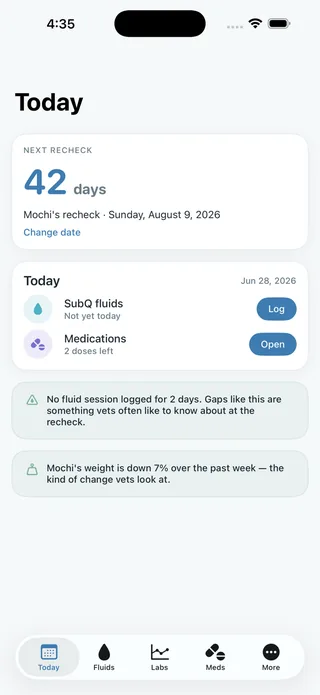
Between lab tests, the most telling home data is unglamorous: how much your cat ate, their weight, water intake and litter box output. Gradual weight loss or a slipping appetite often signals trouble before the next blood panel would catch it. A daily ten-second log builds the early-warning system.
Diet: why phosphorus becomes the main lever
As kidney function declines, cats lose the ability to clear phosphorus efficiently, and rising phosphorus is linked to how quickly CKD tends to progress. This is why a vet-prescribed renal diet, formulated with restricted phosphorus and controlled high-quality protein, is usually the single most consequential change you make - more so than any supplement. Some cats need a phosphate binder mixed into food as well, prescribed once bloodwork shows it is needed.
The practical difficulty is not deciding to switch food. It is that CKD cats are often the pickiest patients you will ever feed, on the food that matters most. A slow transition - the new diet mixed in gradually over one to two weeks, warmed slightly to bring out the smell, never introduced during a vet visit or while your cat feels unwell - has a far higher success rate than switching food on the day of diagnosis.
When it is more than a bad day
Some signs need a vet call today, not tracking. Repeated vomiting, not eating at all for more than a day, visible weakness or collapse, breathing that looks laboured, or a sharp drop in urination can mean a crisis rather than a slow decline, and CKD cats can deteriorate quickly around an infection, a blockage or severe dehydration. No app, including RenalPaw, can tell you which situation you are in. If you are asking yourself whether this is normal for a CKD cat, that question itself is a reason to call.
Hydration is the other daily signal
Cats with CKD often drink more to compensate for kidneys that concentrate urine less efficiently, so watching water intake and litter box output catches dehydration and progression early, alongside appetite and weight. A wet-food-forward diet, a water fountain, and multiple water stations around the house are the usual low-effort ways to keep intake up between vet visits.
Keep every caregiver on the same page
CKD care usually involves more than one human - partners, family, a pet sitter. Missed fluids or double-dosed medication happen in the handoffs. A shared log that shows what was given, when and by whom removes the guesswork entirely.
Walk into rechecks with a summary
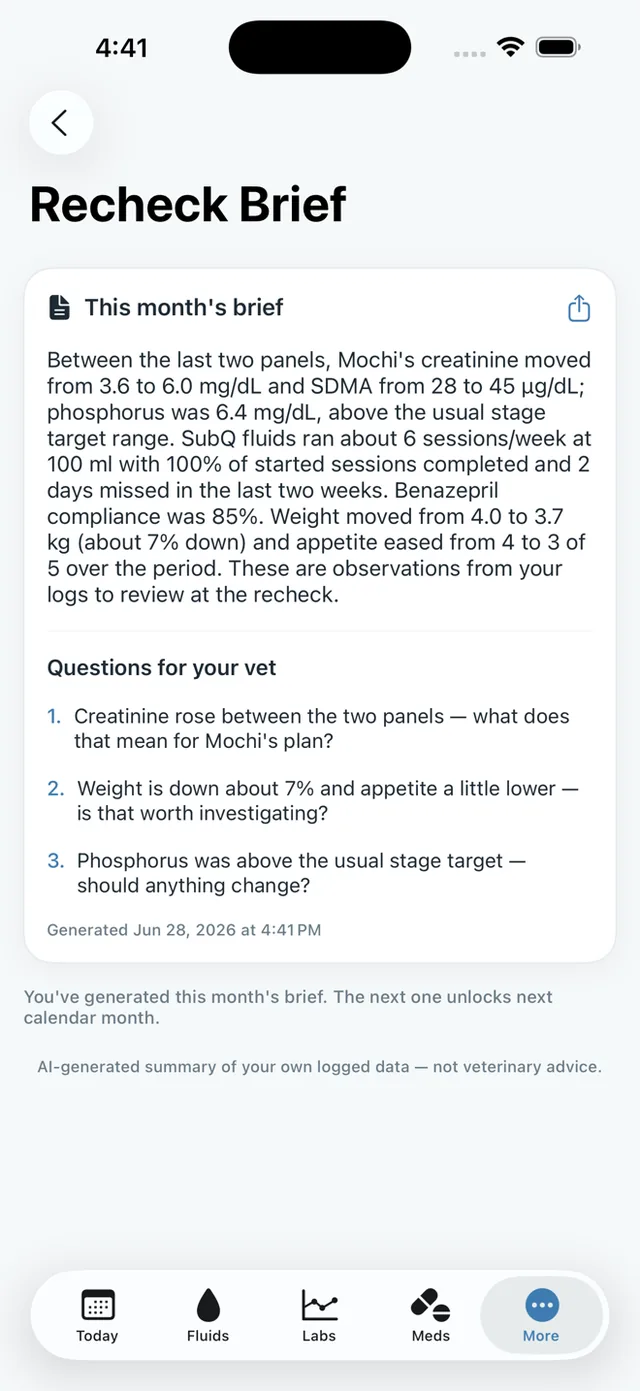
Your vet gets a few minutes to assess months of change. A one-page summary - fluid compliance, appetite and weight trend, medications, anything unusual - plus your lab history in one chart lets them adjust the plan based on evidence rather than recollection. RenalPaw generates an AI recheck brief in exactly this format.
Frequently asked questions
What are the IRIS stages of cat kidney disease? +
IRIS stages feline CKD from 1 to 4 based mainly on creatinine and SDMA blood values, with substages for blood pressure and urine protein. Your vet uses the stage to set monitoring and treatment goals.
How do I make subQ fluids easier for my cat? +
Consistency: same time and place, warmed fluids, a calm setup, and site rotation so no spot gets sore. Most cats settle into the routine within a couple of weeks.
What should I track daily for a CKD cat? +
Appetite, water intake, weight (a few times a week), fluids and medications given, and anything unusual like vomiting. These quiet indicators often flag problems before the next lab test.
Can RenalPaw tell me if my cat is getting worse? +
RenalPaw shows your logs and lab trends clearly and helps you prepare for rechecks, but interpreting changes and adjusting treatment is always your veterinarian's call.
Why is phosphorus so important in a CKD diet? +
Failing kidneys clear phosphorus less efficiently, and higher phosphorus is linked to faster progression. A vet-prescribed renal diet with restricted phosphorus, sometimes combined with a phosphate binder, is usually the most consequential dietary change for a CKD cat.
When should I call the vet instead of just logging it? +
Repeated vomiting, not eating for more than a day, visible weakness, laboured breathing or a sharp drop in urination are reasons to call today. CKD cats can deteriorate quickly around an infection or dehydration, and no tracking app can tell you which situation you are in.
This article is general wellness information from Velora Health, not medical advice, diagnosis or treatment. Always consult a qualified healthcare professional about your symptoms and before changing anything about your care.