Managing cat asthma at home: zones, inhalers and tracking
Feline asthma is managed, not cured - and most of the managing happens at home, between vet visits. The owners who do best at it tend to do three things: watch the breathing rate, make the inhaler routine stick, and keep records that show whether the plan is working. All three are very learnable.
Know your cat's breathing zones
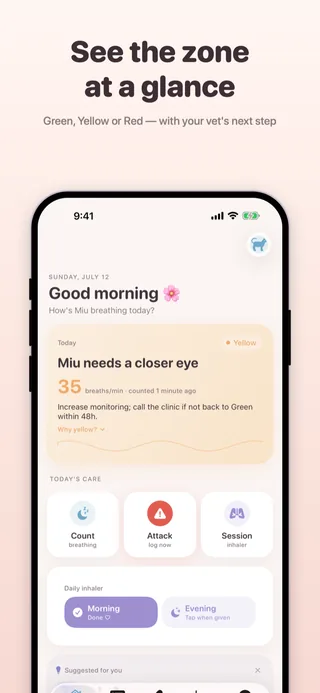
A healthy cat at rest breathes well under 30 breaths per minute. With asthma, the resting rate is your daily dashboard: a green zone around your cat's normal baseline, a yellow zone of elevated rates that warrant closer watching and possibly a vet call, and a red zone where breathing is rapid, labored or open-mouthed - an emergency. Count when your cat is calm or asleep: one rise and fall of the chest is one breath, count 30 seconds and double it. Ask your vet where your cat's yellow and red thresholds should sit.
Recognise an attack, and what counts as an emergency
Asthma attacks can look like hunched, neck-extended coughing (often mistaken for hairballs), wheezing or rapid shallow breathing. Open-mouth breathing in a cat is always an emergency. So is blue or grey gum colour, or a cat that cannot settle because it is working to breathe. For milder episodes, follow the action plan you agreed with your vet, and log the event once your cat is stable.
Make the inhaler routine actually happen
Inhaled corticosteroids and bronchodilators, given through a feline spacer such as the AeroKat, are the backbone of most treatment plans - and the hardest part is simply doing it twice a day, every day, with a cat that has opinions. What helps:
- Pair sessions with a fixed anchor - before breakfast and dinner
- Train gradually: mask near face, then on face, then with the puff
- Log every session, including refused ones - adherence data matters
- Track puffs remaining so you reorder the canister before it runs dry
Hunt the triggers in your home
Common feline asthma triggers include dusty litter, cigarette or fireplace smoke, aerosol sprays, scented candles, pollen and dust mites. Change one variable at a time - switching to a low-dust litter is the classic first move - and watch your attack log for a few weeks. Your data will tell you which changes actually moved the needle for your cat.
Listen at night
Coughing often happens when you are not watching, especially at night. Some owners keep a log of overheard coughing; an on-device night listener that flags cough-like sounds while you sleep fills in the gaps without recording anything to the cloud. The point is a complete picture: attacks you did not witness still count.
Bring evidence to every recheck
Whether a steroid dose can be tapered or needs increasing depends on attack frequency, breathing-rate trend and adherence - exactly the things a good home log captures. A one-page summary turns that into a decision your vet can make confidently. PawBreeze builds an AI vet brief from your logs for precisely this moment.
Frequently asked questions
What is a normal breathing rate for a cat? +
A healthy cat at rest typically breathes well under 30 breaths per minute, often in the low twenties. Count while your cat is calm or asleep: one chest rise and fall is one breath, count for 30 seconds and double it.
Is open-mouth breathing in a cat an emergency? +
Yes, always. Cats do not pant like dogs - open-mouth breathing, blue or grey gums, or visibly labored breathing mean emergency vet care immediately.
How do I get my cat to accept the AeroKat inhaler? +
Train gradually and pair it with a routine: mask near the face with treats, then briefly on the face, then with a puff. Most cats accept it within a few weeks of consistent, calm practice.
Can PawBreeze diagnose my cat's asthma? +
No. PawBreeze is a tracking tool for cats already under veterinary care - it makes monitoring, inhaler adherence and vet communication easier. Diagnosis and treatment are your vet's job.
This article is general wellness information from Velora Health, not medical advice, diagnosis or treatment. Always consult a qualified healthcare professional about your symptoms and before changing anything about your care.